Monday, April 11, 2011

Trout-lily time

Every year at about this time I go on a usually hopeless quest for trout-lilies. We've found a few solitary blooms growing near our creek once or twice but none in the past three or four years.

But yesterday there they were all over the place--mottled leaves and lovely little yellow blossoms shyly poking up through the dry brown leaves in the woods along the creek. Why this year and not last year or the year before? What conditions changed to allow trout lilies to grow? I wish I knew.

Nearby we saw buckeye buds bursting open and dutchman's breeches hanging dainty and white among their feathery green leaves.

And trilliums. I've been worrying about the trilliums ever since last fall, when the power company sprayed weed-killer all up the slope where trilliums usually grow. Yesterday we found trilliums blossoming abundantly on either side of that slope, but the sprayed area still looks scorched and lifeless, like the aftermath of a massacre.

Today storms are moving in and my schedule looks about as grim as that scorched slope. I'd like to surround myself with a margin of green studded with blossoms and buckeyes, but I can't uproot my woods and carry them to campus. Instead, I'll keep the images in mind, and whenever I feel the grim slope sliding into my vision, I'll just shift a little to the left and look at the trilliums and trout-lilies.

Saturday, April 09, 2011

Spring sends a wake-up call

I went down to the garden, raked away the mulch, and found that the carrots we'd left in the ground last fall had kept growing--five feet long and still delicious.

In my dreams.

The fact that I'm dreaming about gardening suggests that it's about time to get out there and see what's going on underground. In the front flower garden I need to rake off the mulch, pull up the tattered weed barrier, work on eradicating the ant colony, pull the weeds, tame the daisy patch, and plant some spring color. Empty out the planters and put in some pansies and ivy. Build a deck-like cover for the cistern with a big planter and maybe a bench. Mow the grass. Move the birdfeeders.

In the back: check on the hostas, do some weeding, clean the deck, mow the grass. Persuade the hubby to put doors on the shed and transform wood and old windows into a cold frame.

Next to the garage: weed around the irises and the pachysandra and plant some more. Pull weeds from the path and find a way to stabilize the slope. Figure out what's wrong with the forsythia. They tell me it's hard to kill forsythia but we seem to have found a way.

Up to the herb gardens: fix the wall, till the soil, plant some herbs, and install a bench to make it easy to sit and inhale the aromas.

Down to the berry patch (prune canes, pull weeds, harvest horseradish) and the vegetable gardens (till, plant, weed, repeat). I doubt that we'll find any carrots five feet long. Horseradish, maybe. A five-foot-long horseradish root--that would be quite the wake-up call!

Thursday, April 07, 2011

Stage check

At a campus function I overheard some colleagues comparing notes on their young children's developmental milestones: Is he walking yet? Has she learned to eat with a spoon? Is he still afraid of dogs? Does she sit on the potty?

I remember those days when every little sign of progress called for celebration and commemoration and a cry of "How adorable!" from all who witnessed the momentous event, but yesterday I felt a little left out of the conversation. You want to talk about adorable developmental milestones? My daughter called last week and suggested that we go out for sushi tomorrow night. Trust me, there's nothing so adorable as the Taking Mom Out for Sushi stage, unless it's the developmental milestone my son will soon reach: the College Graduation "I Believe I Can Fly" stage. (Calling my son adorable in public would violate every rule of mother/son communication, so pretend you didn't hear that.)

I celebrate with my colleagues whose children are reaching those important milestones, but I'll celebrate even more tomorrow night when I'm enjoying sushi with my daughter. Yes, she knows how to eat with a spoon, but with sushi, chopsticks are more appropriate.

Wednesday, April 06, 2011

The end is near...but not near enough!

As much as I love my job, lately I find myself prefacing a lot of statements with "As much as I love my job...."

As much as I love teaching, I'm tired of saying the same things over and over on student drafts. I'm tired of trying to explain the difference between a colon and a semicolon. I'm tired of repeating the Quotation Mantra (Integrate, Punctuate, Cite) and I don't want to devote any more class time to showing students how to use hanging indent. You know that little Help menu on your word-processing program? It's called Help for a reason.

As much as I love reading, I'm tired of snatching brief moments of time between classes and meetings to read bits and snippets of stuff related to faculty governance and pedagogy and assessment. I look forward to spending long uninterrupted hours reading real literature, digging deeply into current scholarship, mulling over what I read at my leisure. It's hard to relish living the life of the mind when the mind is too rushed and crowded to function properly.

As much as I love writing, I'm tired of writing agendas and bits of institutional prose to insert into documents and e-mails explaining why and when and how certain things are happening. My mind is abuzz with ideas for essays and articles, but they get shoved aside to make room for reports and requests and recriminations. It's hard to write freely when it feels as if the entire campus is looking over my shoulder every time I sit at the keyboard. I refuse to take them all home with me this summer and they're certainly not going along on my sabbatical next year.

As much as I love my job, I'm just tired. This semester has worn me down and I'm the first to admit that I took on too many projects, said Yes to too many requests for help. Now, though, it's all winding down. In a few weeks I'll close the books on this semester, open a big fat novel, and sit down on my back deck for a refreshing rest.

Monday, April 04, 2011

Soul food

When I sat down to read the poet James Wood's essay "Taxonomy and Grace" in Open Letters Monthly (read it here), I had just finished leading my American Lit Survey class through Allen Ginsberg's "Howl," with its vivid evocation of poets lost in the "total animal soup of time" who strive "to recreate the syntax and measure of poor human prose and stand before you speechless and intelligent and shaking with shame, rejected yet confessing out the soul to conform to the rhythm of thought ....with the absolute heart of the poem of life butchered out of their own bodies good to eat a thousand years." I always get a little excited about the image of the poet violently tearing a pound of flesh from his body and offering the bloody mess to readers and saying, "Eat! It's good for what ails you!"

Wood's essay expresses a yearning for poetry that feeds readers. "I still believe," he writes, "that poems can speak to other human beings and can make collective society consider our own convictions, experiences, and beliefs," but he finds this belief fading among the academics who teach poetry and attend academic conferences. For instance, he describes his experience at a recent annual conference of the AWP (the Association for Writers and Writing Programs):

When I mingle with other writers there, rarely do I speak of how individual poems transformed my life. Honestly, I rarely hear any writers talk about this. Instead, we talk about our bona fides and aesthetic theories because we want to participate in the academic world—one whose tenure-line opportunities are dwindling as our numbers grow exponentially.

Woods joins a chorus of voices complaining that something is wrong with poetry these days, but he's not sure how to fix the problem or whom to blame. He criticizes creative writing programs not because they produce formulaic work but because they privilege taxonomy, dividing poems and poets into discrete groups and demanding loyalty to particular theoretical approaches until poet are stuck wriggling to the wall like Prufrock pinned by a formulaic phrase. Taxonomy is attractive, explains Wood, because it produces a sense of certainty, but poetry lives in the realm of the tenuous. "Literature matters to most people," he says, "not because it reinforces a dominant ideology or singular politic, but because it reflects tension and uncertainty."

Taxonomy flattens tension and uncertainty, but both characteristics easily coexist with the characteristics Wood would like to see more often in poetry--passion, connection, grace. "I take what I need from theory, history, or politics, and dispense with the rest," he claims, adding, "I believe that my work can reach other people--that it can matter not solely for its theme and message but for its crafting and attention to detail....I write with the belief that I will reach someone but once the poem is out of my hands and in the world, I also know I have no control over how people interpret or react to it."

So the poet stands humbly offering his bloody pound of flesh, but he can't make readers eat. He can only hope that it will be "good to eat a thousand years."

Friday, April 01, 2011

Avoiding the avalanche

Minutes after I told a whole host of people how great I felt after completing several exhausting projects, a great big boulder of responsibility unexpectedly crashed down on my shoulders. Lesson learned: she who shouts her joy from the mountaintops may dislodge an avalanche.

So I don't want to say this too loud, but here's a secret: I'm not taking any school work home for the weekend. I thought I had achieved a work-free weekend a few weeks ago, but I was mistaken; this time, though, I think I'm in the clear: I've graded all papers and exams, commented on an honors thesis, met with advisees and updated their files, prepared Monday's classes, turned in receipts and expense reports, posted documents regarding faculty governance, and cleared up all the urgent items on my desk.

A few long-term projects could use attention over the weekend, but here's the thing: my college laptop is no longer portable. After all the time and money our wonderful IT department has invested in keeping this laptop alive, they've finally decided it's not worth the effort and ordered a new one, which has not yet arrived. I don't dare unplug my college laptop to take it home, but my home computer lacks the programs for working on these long-term projects, so I guess I'll just have to force myself to take a weekend off.

Yes, I'm going home empty-handed...but let's keep it quiet, okay? I don't know how many more avalanches I can handle!

Thursday, March 31, 2011

From write and learn to crash and burn

It looks like a pretty good idea in theory, but in practice? The jury is still out.

In a sophomore-level literature course that fulfills the Writing Proficiency requirement, one of the goals is to help students learn to write as a process involving a series of steps. In a straight writing course, I would devote plenty of class time to focused peer review and also offer my own comments on student drafts, but in a literature course, I can't devote quite so many class periods to peer review.

So for the past few semesters I've offered a compromise: for each of the first two papers, I devote a full class period to focused peer review and also require students to submit drafts for my comments. For the third and fourth papers, on the other hand, I schedule no in-class peer review, nor do I require submission of drafts, although I do offer to read and comment on drafts if students want my feedback. "By this point in the semester," I tell the class, "You should know what kind of help you need on your writing, and you should know where to find that help--by setting up informal peer-review sessions outside of class or by seeking individualized instruction from me or from the Writing Center."

Does it work? Sort of. A few students still send me drafts, and a few visit the Writing Center. I don't have any way to track whether they do any informal peer review outside class, but I certainly haven't seen any massive epidemic of wretched papers. Most students produce papers very similar in quality to their earlier work, and a few improve.

I'm a little concerned, though, about the exceptions. Every time I offer this compromise, a handful of students crash and burn--the ones most in need of help with their writing. If their earlier papers hover on the edge of coherence, their later papers (lacking peer review) fall over the edge into chaos. Students who early in the semester benefit from feedback on their drafts now fail to submit drafts for comments (because it's not required!) and also don't visit the Writing Center or show any other signs of seeking help. Theoretically, students who know the benefits of getting help and know the sources of help will be motivated to get help, but perhaps the theory is flawed.

One thing this system does really well is distinguish between students willing to seek help on their writing and those who will seek help only when it is required. What can I do with the second group: abandon them to their fate or find another way to motivate them? The jury's still out on that question.

Wednesday, March 30, 2011

We don't need no literary geniuses

Cranky? Okay, I'll admit it: I'm cranky, but you'd be cranky too if---

And that's where I have to stop, because most of the things that are making me cranky (1) are a normal part of my job (which I love) and therefore I need to just deal with it and move on, or (2) cannot be discussed in public.

So, um, nice weather we're having.

How's your basketball bracket doing? Ooh, look who's cranky now!

And speaking of sports, here's something to make all of us literary types a little cranky: in an article in Slate (read it here), Bill James wonders why we're "so good at developing athletes and so lousy at developing writers." Here's his argument in a nutshell:

We are not so good at developing great writers, it is true, but why is this? It is simply because we don't need them. We still have Shakespeare. We still have Thomas Hardy and Charles Dickens and Robert Louis Stevenson; their books are still around. We don't genuinely need more literary geniuses. One can only read so many books in a lifetime. We need new athletes all the time because we need new games every day....

If that doesn't make you cranky, nothing will.

Tuesday, March 29, 2011

Trudge, nudge--oh, fudge!

I started the morning (for the second time) like a Queen making a Royal Progress around her Vast Domain--except that I was trudging tiara-less around a domain few would consider vast. A half-vast domain? Don't say it out loud. (I wish I could take credit for that very bad pun, but sadly, I can't even remember where I first heard it.)

This Royal Progress was not, strictly speaking, necessary. The documents I delivered to (nearly) every department on campus could have been distributed through the campus mail system, but I wanted to deliver them myself for a variety of not very compelling reasons:

1. My schedule is so crowded today that this walk around campus may well be my only chance for exercise. Call it Trudge-Aerobics.

2. I don't often get a chance to visit many of the departments on campus and see what's up, and after this morning I can tell you definitively what's up in many departments at 8:00 or 8:15 or 8:30 a.m.: namely, not much. I was happy to chat with some early-rising colleagues but found several department offices either empty or locked up tight.

3. An early-morning tour of campus seemed like an appropriate penance for my part in the comedy of errors that resulted in the need to distribute this particular document. If I had been a tad more diligent and undistracted, a big fat mistake could have been avoided and this document would not have needed to be created and distributed. (Any obfuscation is entirely intentional.)

4. I hoped that a brisk walk in the cool morning air would wash away the lingering effects of the first start to my morning, when a splitting headache and upset stomach awoke me at 3:45 a.m. and would not allow me to get back to sleep. How am I supposed to attend meetings, prepare classes, and respond to 18 freshman composition drafts on so little sleep? Trudge-Aerobics works for me!

Temporarily, at least. I'm alert now but I don't know how long it will last. If you hear me snoring in the middle of a meeting, do me a favor and give me a nudge. If my lack of alertness spreads, watch out for a vast campus-wide epidemic of Nudge-Aerobics. Or if not vast, maybe half-vast.

Monday, March 28, 2011

A Spring by any other name

One name won't do for a season that shows a different face every day. Call it the season of Too Many Coats at the Office: cold mornings make me choose warm outerwear, but midafternoon sunshine drives all memory of cold from my mind and I go home empty-handed. Next morning, the temperature is below freezing but where's my winter coat? Back at the office--with my raincoat and two light jackets.

Or call it the season of Wondering When It's Safe to Plant Pansies. They don't need as much warmth as other plants but they do need some. Is it warm enough yet? How about now?

One day it's the season of Welcoming Back Buzzards and the next day begins the season of Waiting for the Trilliums to Return. Soon it'll be the season of Getting Serious about the Lawn, quickly followed by House-Painting Season and the season of Who Moved My Umbrella?

Today it was the season of Only Occasionally Just Right: the fleece pullover I wore while walking the dog kept me uncomfortably cold in the shady spots, unbearably hot in the steep sunny spots, and Only Occasionally Just Right. But what else could I wear? All my coats are still in my office.

Saturday, March 26, 2011

Going for the gold (star)

This morning I was talking to the pleasant young man who answered the phone at the motel in Monterey where my California Lit class stayed two weeks ago--have I lost you yet?--when he started apologizing for the weather. "I'm sorry you had such bad weather for your trip," he said, but I quickly corrected him: in a full week in San Francisco, Monterey, and environs, we got rained on only once.

"Well, it's done nothing but rain since you left," he pointed out, and he's right. I see in the news that Highway 1 to Big Sur is closed in places because of flooding, and those rich farm fields we viewed near Salinas are turning to mud. Let's give a gold star to whoever was responsible for the planning the weather on our class trip!

I'm not sure yet whether I'll get a gold star for planning the budget on the trip. In fact, I called Monterey this morning in order to ask about a discrepancy I discovered while assembling my receipts to submit to the business office: my college credit card was charged nine cents more than the amount shown on the motel's receipt. The two of us put our heads together but still couldn't figure out where the nine cents came from, and eventually I realized that the long-distance phone call was going to cost more than the nine cents I was trying to track down.

On Monday I'll submit this big batch of receipts, reports, and spreadsheets to the business office and the other entities with an interest in the trip. We were fortunate enough to get funding from several different sources, so I'll spend the afternoon Monday trotting around campus spreading joy in the form of receipts, one off by nine cents and one written entirely in some variety of Chinese and one almost entirely blank. Planning this kind of trip is an adventure in itself--one that doesn't stop until long after we've arrived back home.

Friday, March 25, 2011

Mickey vs. Muse

In a review in Commentary of The Oxford Book of Parodies (read it here), Rob Long asks the eternal question: "Why is Mickey Mouse more famous than Bugs Bunny?" He continues:

Mickey isn’t funny or interesting. He cannot produce an anvil or a Carmen Miranda hat out of the air. All in all, his “good mouse” act is a toothless, nice-guy bore.

But Bugs, on the other hand, can do accents, knows how to use basic weaponry, and looks terrific in drag. He’s a gender-bending gun nut who makes gleeful and hurtful fun of people with disabilities (Elmer Fudd—speech impediment). About the only respectable thing about him, from the perspective of the academic and cultural policemen, is that he appears to be a vegan.

This made me laugh--and then it made me want to buy the book. Bugs Bunny is my muse, but Mickey? Mice guys finish last!

Thursday, March 24, 2011

This old house

Recently sighted on a campus near you: English majors who don't like to read. I've never understood why anyone who didn't like to read would pursue an English major, but on further examination, it generally turns out that the English major who doesn't like to read actually does like to read--just not the works we're assigning.

I sympathize. I had to read Main Street for my comprehensive exams and I resented every moment I spent with those insipid and predictable characters, but on the other hand, I knew that the novel influenced a whole generation of writers and therefore ought to be accorded some room in the mental space where my knowledge of literature resides, my internal House of Literature.

It starts small, a Little House in the Big Woods of the evolving mind, but by the time an English major completes a college degree and then a Ph.D., that House grows into an immense palatial library where the books hop of the shelves and converse freely at all hours. The foundation is built on books I may never use, if use is defined as incorporate into my research, writing, or teaching, but the House of Literature needs that foundation or it's in danger of falling down.

For instance, I'll probably never teach Pamela or Tristram Shandy. They're outside my field, and my colleague who has devoted many years to understanding them does a far better job of teaching them than I ever could. But that doesn't mean I regret having read them; they inform my understanding of the history of the novel. For the final paper in my Later American Novel class, I ask students to trace a particular idea or literary technique through novels published since 1900 and then predict what will happen next, but how can anyone speculate about where the novel is heading without some understanding of where it has been?

My internal House of Literature is built on reading, some of it dull and some unpleasant and some apparently pointless, but it's all there somewhere rattling around the attic or wandering the halls or rumbling through subterranean passages where half-forgotten texts conspire to create their potent home-brews that ferment and bubble and suffuse the entire House with fresh aromas.

When I open the door of that House, I never know who might be on the other side--Edna Pontellier or Captain Ahab, Huck Finn or Finn MacCool, Gandalf or Grendel's Mother--but I know someone will be there willing to sit down for a chat amongst the yeasty aromas. This House suits me just fine, but that doesn't mean I'm done building. I'll never be done as long as there are new books to read or old ones to rediscover. My greatest fear is that I'll someday knock on the door and find no one at home.

I enjoy watching my students build their own internal Houses of Literature, very different from mine but still impressive. Those who hate to read condemn themselves to cramped quarters where wind whistles through the cracks in the walls and the foundation constantly shifts, but that doesn't mean it's time to call in the wrecking crew. Shaky houses can be shored up, expanded, rescued from oblivion. All it takes is a willingness to read.

Wednesday, March 23, 2011

Don't cry for me, Raymond Carver

Today I introduce my American Lit students to two stories that always make me laugh or cry--"Do Not Go Gentle" by Sherman Alexie and "Cathedral" by Raymond Carver--and I sincerely hope that I can get through the discussion without dissolving into a big blubbering mess.

I hate crying in front of students. I cried in 2005 when I read a poem by David Citino to a class the day he died, but the poet had recently visited our campus and his death hit home. I cried the semester I kept teaching through cancer treatment and a group of students expressed their support with a particularly touching gift, but that year I spent a lot of time in tears.

Crying over a short story is another thing entirely, and today I get a double whammy. "Do Not Go Gentle" is hysterically funny as long as you focus on the image of poverty-stricken Native Americans chanting, singing, and drumming with the aid of an immense vibrator named Chocolate Thunder--and the happy ending helps too. Just don't think about the fact that it's set in a hospital ward full of dying children. I'm always amazed at how few students recognize the title as an allusion to the Dylan Thomas poem "Do Not Go Gentle Into That Good Night," so I start the class by getting someone to read the poem out loud. Okay young people, let's think about death!

And then let's think about despair! The unnamed narrator in Carver's "Cathedral" is so unpleasant at the start that I'm always amazed at how moving I find the ending, when the blind lead the blind into new insight and a sort of transcendence: "My eyes were still closed. I was in my house. I knew that. But I didn't feel like I was inside anything. 'It's really something,' I said." It hits me right in the tear ducts every time.

But I can't teach while I'm blubbering so I try to breathe deeply and let Carver's words speak for themselves. Death and despair are essential to the human condition, but that doesn't mean we can't build from them something beautiful.

Monday, March 21, 2011

On the rebound

Geologists tell us that land masses can take thousands of years to rebound after glaciers retreat and take their immense weight with them. Today I feel as if I'm experiencing a thousand years of post-glacial rebound in a single day as a whole continent of weight lifts from my shoulders.

The provost search is over. The editing project is complete and approved and ready for publication. I took a class to California at just a smidgen over the projected budget. The poetry papers are graded. The daily assignments for freshman comp are coming to an end. And tonight I will preside at my penultimate faculty meeting before someone else takes over as Faculty Chair.

As all that weight drains from my shoulders, I feel something deep within me springing back to life. Goodbye glaciers! Hello spring!

Saturday, March 19, 2011

Weekend worrier

My plan for the weekend was simple: take no work home and instead spend time cleaning the house, getting caught up on some reading, and attending a baseball game. The plan started going to pieces on Thursday morning with the onset of the Defective Sub Calls, or maybe it was Wednesday night with the Furnace Clang of Doom, or maybe it started in January with Search Committee Madness. At any rate I find myself at home today with a pile of grading, no radio, no car, and no way to make my work-free weekend a reality unless I run away from home on foot in the shoes I almost abandoned in California because they're falling apart.

Where to begin? Search Committee Madness resulted in no hire, so this week I spent a number of hours I cannot reveal interviewing internal candidates to serve in the interim. I collected poetry analysis papers in my American Lit class on Monday, but despite all the interviews, I made good progress on grading so I should have been able to finish up and bring no work home this weekend.

But I hadn't counted on the Furnace Clang of Doom. I don't know when the furnace started clanging because I was in California at the time, but last weekend my son-in-law, who can fix anything, diagnosed the problem, ordered the part online, and devised a way to make the furnace continue to provide heat without the clang while we await the arrival of the part. (For peace of mind, I heartily recommend marrying someone who can fix anything, and if you can't marry him yourself, get your daughter to marry him or, as a last resort, try kidnapping--except a person who can fix anything might possess a MacGyver-like ability to wriggle away.)

Anyway: the Furnace Clang of Doom started up again on Wednesday night. The clangs were timed perfectly, arriving just as I was about to drift off to sleep. I don't know how to make the clanging stop so I tried to rouse my husband, who could sleep through the Apocalypse. He resisted alertness, muttering odd and unhelpful phrases about turning socks inside out, but I finally applied sufficient motivation to get him to attend to the clanging and make it go away sometime after midnight.

The Defective Sub Calls started at 5 a.m. No, they weren't calling for Defective Subs; the calls themselves were defective. Normally, early-morning robo-calls offer the resident substitute teacher an opportunity to press 1 for "sign me up!" or press 2 for "go away and leave me alone!" These calls offered no robo-voice and no options, and they kept cycling around again and again, ringing us urgently to alertness about every six minutes.

With all that clanging and ringing and midnight stress, I was in no condition to grade a zillion papers on Thursday, and Friday was totally clogged with meetings, which is why I have a pile of poetry analysis papers to grade this weekend.

But I could put them off until tomorrow and spend the morning cleaning house while listening to my favorite Saturday-morning NPR shows...except the radio suddenly isn't working. How can I clean without "Car Talk" and "Wait, Wait, Don't Tell Me?"

I could zip off to the nearest little town and buy a cheap radio...except my husband's car wouldn't start this morning and he was in too big a hurry to jump the battery so I told him to take my car to the Farmers' Market and he won't be back until around 4 this afternoon, long after my favorite NPR shows are over.

I could walk to the baseball game. Let's see, 17 miles each way...if I start now, I can probably get there before the seventh-inning stretch if my walking shoes don't fall to pieces first.

So I find myself in a silent but dirty house with papers to grade and floors to sweep and miles to go before I sleep and no way to get there except by walking.

This calls for a walk in the woods with the dog and the camera. Spring is coming! I welcome the season with open arms as long as it doesn't clang, ring, analyze poetry, or demand an interview.

Thursday, March 17, 2011

Testing reality

I'm seeing a lot of online chatter about the SAT essay question asking students to comment on authenticity in reality television, and I don't know what to think (read about it here). Not so long ago, the SAT took criticism because its highbrow references might have discriminated against students who did not grow up attending regattas or listening to symphonies, but now the shoe is on the other foot: students unfamiliar with reality television are crying "Foul!"

I sympathize. Because we have no television service at home, most reality television is largely a myth to me. I've never watched American Idol. I saw Dancing With the Stars only once--in Czech. I saw a few episodes of Survivor during the second or third season but not since then. I hear people talking about these shows but I'm out of the loop, and I'm fine with that. But would my ignorance prevent me from responding to the SAT essay question on reality television?

According to Jacques Steinberg (writing on The Choice, a New York Times blog devoted to higher education admissions), the complete question reads like this:

Reality television programs, which feature real people engaged in real activities rather than professional actors performing scripted scenes, are increasingly popular.

These shows depict ordinary people competing in everything from singing and dancing to losing weight, or just living their everyday lives. Most people believe that the reality these shows portray is authentic, but they are being misled.

How authentic can these shows be when producers design challenges for the participants and then editors alter filmed scenes?

Do people benefit from forms of entertainment that show so-called reality, or are such forms of entertainment harmful?

Could I write an essay responding to that question despite my ignorance of reality television? Sure, but I've read Baudrillard. What about a high-school student who has spent his time attending regattas and listening to symphonies? He would have to focus on the idea of authenticity and whether simulation is harmful, but how convincing would his essay be without specific examples from reality television shows? Who would earn a better grade: a so-so student armed with a wealth of knowledge about reality television or a brilliant thinker and writer with no specific examples to back up his claims?

I hope the articulate student capable of saying something interesting about authenticity would earn high marks regardless of familiarity with reality television--that's the student I would prefer to have in my class. But then again, I'm not grading the SAT.

Tuesday, March 15, 2011

A soul and its alarms

I've been trying to explain to people why I loved The Manual of Detection by Jedediah Berry, the 2009 novel in which a reluctant detective armed only with a book, a bicycle, an umbrella, and an alarm clock rescues civilization from a nefarious plot to steal all the alarm clocks in a city.

See? You're already dozing off.

Trust me: it's a terrific book, capable of capturing my entire attention through two long, uncomfortable flights in crowded airplanes last weekend. It's a detective novel and a meta-detective novel at the same time, set in a Kafkaesque but thoroughly recognizable world set at a slight tilt from the real. The hero, Charles Unwin, wants only to be allowed to continue doing his job unnoticed, a difficult task for a man whose shoes always squeak:

At home he went about in his socks. That way he could avoid disturbing the neighbors and also indulge in the occasional shoeless swoop across the room, as when one is preparing a breakfast of oatmeal and the oatmeal wants raisins and brown sugar, which are in the cupboard at the other end of the room. To glide with sock-swaddled feet over a world of glossy planes: that would be a wondrous thing! But Unwin's apartment was smallish at best, and the world is unkind to the shoeless and frolicsome.

The stolid Unwin, squeakily shod, moves through the city slowly, deliberately, patiently piecing together the pieces of a puzzle involving criminal carnival workers, a sleep-walking janitor, an assistant who always carries her lunchbox, and a mountain of stolen alarm clocks:

Somewhere amid the hills of clocks, a bell began to ring, a futile attempt to wake some sleeper a mile or more away. To Unwin the sound was a hook to his heart: the world goes to shambles in the murky corners of the night, and we trust a little bell to set it right again. A spring is released, a gear is spun, a clapper is set fluttering, and here is the cup of water you keep at your bedside, here the shoes you will wear to work today. But if a soul and its alarms are parted, one from the other? If the body is left alone to its somnolent watches? When it rises--if it rises--it may not recognize itself, nor any of brief day's trappings.

In the course of the novel, Unwin comes to recognize himself as more than a mindless functionary serving a mysterious faceless Agency. I closed the book with the sound of alarm clocks ringing in my ears and immediately wanted more--but alas, Jedediah Berry has not yet published another book. When he does, I'll be waiting, hoping for another book like The Manual of Detection that can provide a wonderful wake-up call.

Monday, March 14, 2011

Serendipity, baby

I'm feeling my way around campus today, suffering from the aftereffects of jet lag and time change and the rigors of responsibility and many cramped hours of travel with six students, and I keep hearing the same question: "Would you do it again?"

My answer: Yes, but not today. Not tomorrow either. Give me some time to collect myself and wash my socks and sort through the piles of receipts and then we'll talk.

So many things went right on this trip: terrific students, wonderful weather (only one rainy day!), pretty good (and occasionally great) food, sparkling conversations about interesting authors at amazing sites. I especially enjoyed those moments of serendipity that can't be planned in advance, like the pit stop at a farm stand where we ate deep-fried artichoke hearts and fresh strawberries and gummy frogs, or the the time we accidentally stumbled upon the perfect place to pull off and hike on craggy rocks near Big Sur. My new motto: Serendipity, baby.

I'm not feeling particularly serene today because somehow the work I left piled on my desk didn't get done while I was gone, but classes are canceled while flood waters recede so I've got some time to work through the mess. The first thing I did when I returned to campus, though, was to print out a bunch of photos from the trip and post them on the English Department bulletin board so students can see them when they return to classes. We did it! We went to California and learned things and had fun and came back in one piece! And we could do it again tomorrow!

Well, maybe not tomorrow. Wednesday will do.

Friday, March 11, 2011

From one waterworld to another

The news from Japan is horrific (earthquake, tsunami, death and destruction) and the news from Ohio is distracting (rain, snow, floods, classes cancelled Monday to let the river recede), but the news from here is less dramatic: we're fine. Really. We appreciate all the phone calls and expressions of concern, but the tsunami warnings didn't affect our travel plans at all except that we had to cancel our visit to Point Lobos, which was closed because of the threat of high waves.

We saw some high waves, but they looked pretty normal for the beach we visited, which was posted all over with signs warning of dangerous waves and undertows. We sat on the sand and shared a picnic to the sound of crashing waves, our final visit to the Pacific before returning home. This morning we climbed the tower Robinson Jeffers built with his bare hands, a labor he compared to putting together words to make poetry. Tonight we're staying at an airport near the San Francisco airport so we can catch a 6 a.m. shuttle and fly back home, where a wet world awaits.

Thursday, March 10, 2011

Swimming with the otters


First of all, we weren't swimming. We were sore and tired after a long day of walking around the National Steinbeck Center in Salinas and Cannery Row and the Monterey Bay Aquarium, so when we found a rocky stretch of beach, we couldn't resist taking off our shoes, rolling up our pants, and wading in the water. I'm pretty sure this was the first time I've ever stuck my feet in the Pacific Ocean. It was cold. And sandy. And cold.

Then of course we had to sit and let our feet dry off before getting back into our shoes and socks, so we were sitting on a wall brushing sand off our toes when someone called out, "Otters!"

And there they were, two frolicsome otters diving and dining beyond the rocks. We had visited the otter exhibit inside the aquarium, but seeing them in the wild was somehow different, special, as if they were our own private personal otters. I wish I could take them home with me but it would be difficult to smuggle them through security ("These are not the otters you are looking for") and it would be hard to make them behave in the overhead bins.

I also wanted to take home the jellyfishes and the kelp forest and the teeny-tiny baby seahorses, but my favorite undersea creatures are the sea dragons. They look as if they were designed by cartoonists to star in a musical involving a great deal of dancing and singing. And swimming. With or without otters.

Wednesday, March 09, 2011

Big Sur rocks!


I'm standing on a crag jutting out into the Pacific, waves crashing on the rocks below and laughter floating through the air and I can't stop smiling. This morning we left the city behind and drove through insane traffic and constant shifts in terrain, through pine forests and artichoke fields, sand dunes and wind-weathered rock, arriving in Big Sur in time for lunch and stone-skipping lessons followed by a hike up a steep hill to a scenic waterfall in Pfeiffer State Park, which would have been wonderful enough in itself, but then we pulled off the highway at a serendipitous spot and found a rough path down to the cliff edge where we stood like Walt Whitman facing west from California's shores, "Inquiring, tireless, seeking what is yet unfound."

Like Whitman we are children reveling in the wonders of earth and feeling both very old and utterly new. Not so long ago I lay awake with a bad case of the jitters after a bout of chemotherapy and to calm myself I planned long road trips including one along this highway between Big Sur and Monterey (read it here), but at the time I wondered whether I would ever drive this road and walk these cliffs. Tomorrow we travel to Salinas and Monterey to commune with John Steinbeck and in a few days I'll be ready, like Whitman, to "face home again, very pleas'd and joyous." Today, though, I'm here and I'm happy and I wonder how anyone could live here and not be a poet.

Tuesday, March 08, 2011

The house that Jack built

"Rest/Read" says the sign on the green mailbox. Next to the box is an inviting bench, and inside the box is a collection of short stories by Jack London. London himself rests not far from here, or his ashes do, buried in an urn beneath a mossy boulder. We're visiting the Jack London State Historic Site, the farm where the author spent his final days.

First we visit the ruins of the dream house London built in 1913, a massive structure of stone and redwood that burned before he could move in. It makes a lovely ruin. At the cabin where the author wrote his last books we see how he organized his ideas: scraps of paper covered with his notes are clipped with clothespins to ropes festooned across his sleeping porch. The view from the porch features a koi pond and herb garden and vineyards stretching into the distance.

We share a picnic lunch and listen to a guest lecturer by Dr. Charles Crow, who taught the California Lit class I took in grad school years ago but is now retired to California. We sit beneath trees and discuss London's work as Charles draws Jungian diagrams on an invisible blackboard. We rest. We read. We carry on, as Jack would want us to do.

Heard on the street

Woman on cell phone: "Yeah, I'm unhappy with my eyebrows, I'm trying to grow them out...."

Sign on the cash register at a coffee shop: "We would be happy to take your order after you've finished your cell-phone conversation."

Student finding sticks on the ground on the path to Coit Tower: "Look, they have magic wands!"

Helpful tour guide in Coit Tower elevator: "[indiscernible] the [unintelligible] when [incomprehensible] the [unimaginable]."

Woman trying to lure us into a restaurant in Chinatown: "Yummy yummy, yummy yummy, yummy yummy" (repeat x 8000).

Monday, March 07, 2011

Wordswalk

We walked most of the day through the streets of San Francisco and sometimes we walked on words. This morning in Jack Kerouac Alley next to City Lights Books a student read us poetry by Lawrence Ferlinghetti, and this evening another student translated the characters written on the gateway to Chinatown and read from Maxine Hong Kingston's China Men.

In between we walked and walked: to Fisherman's Wharf to see the sea lions and the view across the bay, to eat fish and chips and bacon fudge and turn up our collars against the wind. Then we were off again, up to Coit Tower and down Lombard Street and then up again to Chinatown, where my students introduced a classmate to the joys of chopsticks and enjoyed an amazing meal.

Tonight my ankles and feet are complaining and my face feels tight from windburn, and I have a feeling I'll start the day tomorrow stiff and sore. But it makes me happy to recall how excited my students were to browse among the books at City Lights and then tramp around a city where words are underfoot everywhere we look.

Unhostile hostel

The light fixtures in the lobby of our hostel make me smile. Sidney opera house (upended) meets 60s mod to suggest modular clouds or birds with spectacular plumage or fat floating angels. Whatever they are, they amuse me.

The hostel as a whole amuses me. It's noisy and busy and full of lively voices chattering in many languages, but it's bustling with a freshness I find relaxing. I've never stayed at a youth hostel before and although I chose this one primarily because it provides very cheap lodging in a great location, it's turning out to be a terrific experience. The students are staying in dorm-style rooms with visitors from other countries, but I have a private room about the size of my childhood bedroom (except I don't have to share the bathroom with my brothers). True, we have to make our own breakfast and wash our own dishes, but we can do that. Besides, it's a small price to pay for lodging in the heart of San Francisco, just three blocks from Union Square.

Now I just need to get my internal clock adjusted so I can sleep past 4 a.m.

Sunday, March 06, 2011

Trees and fog and mud and trees


Raindrops plop gently on umbrellas, shoes slop through mud, and students chatter down the trail until, suddenly, silence and a whispered "Wow." That's how our tramp through Muir Woods started this morning, and it proceeded from mud to slop to Wow to "where are we?" A two-hour hike, a satisfying lunch, and an illuminating presentation made for an invigorating day. Tomorrow: Beat walk and Chinatown. Today: mud and wet and wow, and now it's time to relax.

Step across this line

I think it started with the liminal nesting dolls. There we all were enjoying our four-hour layover in the Minneapolis/St. Paul airport (which showed up on the boarding passes as "Minneapolis SPA" but we never found the spa) when a student said, "This is like liminal nesting dolls!" Meaning, I think, that we were straddling several overlapping thresholds, in the middle of our trip and the middle of the midwest while preparing to cross over to our California adventure.

We stepped across that line and made it to San Francisco, but not before attempting to assemble a syllabus for a Concepts of Place class focusing on Hell. What would you put on the reading list? A student suggested House of Leaves and another called for Dante's Inferno, but when I asked how we could plan a class trip to Hell, the answer was simple: Virgil Airlines.

Maybe next time. This week I think we'll stick with California.

Friday, March 04, 2011

Countdown

Ready to go? I suppose so: midterm exams graded, grades submitted, classes prepped for my return to campus.

Bags packed (mostly), petty cash picked up, maps and receipts and itineraries all present and accounted for.

Editing project submitted. Desk cleared (mostly). Bills paid? Not yet.

Cell phone, camera, netbook charged and packed and chargers packed. Still figuring out how to send text-messages. Can't find the apostrophe. Use question mark instead?

The countdown has started; we leave first thing tomorrow morning. I'm ready for California--but is California ready for me?

Thursday, March 03, 2011

Listing

I live by To-Do Lists but this week as I prepare for our class trip to California I'm also working on a list of things not to do--may I call it a To-Don't List?

Don't think about bedbugs.

Don't worry about what the spouse will eat all next week. The spouse can take care of himself.

Don't start reading any big fat novels that can't be finished before Saturday.

Don't think about earthquakes. Or plane crashes. Or bedbugs.

Don't worry about the weather.

Don't pro-actively apologize for the weather. The weather can take care of itself.

Don't pack until the laundry is done. And don't pack stupidly. In fact, don't do anything stupidly.

Finally, don't forget to have fun--after everything gets crossed off the list!

Tuesday, March 01, 2011

Excuse the schmooze

I need an excuse. Well, I have an excuse, but it simply won't do, so I need a better one--more plausible. Somehow I don't believe my freshman composition students will be impressed if I confess that I haven't quite finished grading their midterms because I was too busy schmoozing and noshing.

Do young people these days even use the words schmoozing and noshing? And if they do, are they likely to believe that I'm the kind of person who shoves the grading aside in order to spend an entire day chatting randomly with colleagues while nibbling at the cheese tray and popping into my mouth the occasional olive?

Nevertheless, that's how I passed most of day. Today we held an open house for the Center for Teaching Excellence where I live and breathe and do my best work, so all day long we entertained faculty, staff, and administrators who dropped by for a schmooze and a nosh. The biggest crowd showed up around noon for lunch and the prize drawings, but we had a steady stream of visitors all day long, leaving me only a few brief disconnected moments to prepare for class. I can't grade papers while schmoozing and noshing, and by the time the open house closed its doors, I had to dash off to another long and complicated meeting, which left me too exhausted to remember to take any work home.

My freshpersons will expect their graded essays early tomorrow but I've read just over half of them. Can I possibly get up early enough to grade nine freshman essays before 9 a.m.? If not, I'll just have to fess up: Sorry, students. My dog ate your papers.

Monday, February 28, 2011

California dreaming

Across a rocky expanse of classes, papers, meetings, and annoying responsibilities, I see California looming in the distance--except looming sounds so negative, so threatening. California is not looming ominously but instead stands at the end of the week waiting to embrace me and carry me away from Ohio--except that sounds like an old commercial for dishwashing liquid: "Calgon, take me away!"

Readers were getting carried away by California long before Europeans caught sight of its shores. Around 1508, Garci Ordonez de Montalvo described his own private fantasy island: "Know ye that on the right hand of the Indies there is an island called California, very near the Terrestrial Paradise and inhabited by black women without a single man among them and living in the manner of Amazons. They are robust of body, strong and passionate in heart, and of great valor. Their island is one of the most rugged in the world with bold rocks and crags. Their arms are full of gold, as is the harness of the wild beasts which, after taming, they ride. In all the island there is no other metal."

This description shaped explorers' expectations of California, but I've seen California and I know better than to look for an island populated by Amazons bearing gold. Instead, I'll be looking at California through the eyes of its authors. All next week my California Literature students will present information connecting literature and place: we'll hear about John Muir while visiting Muir Woods, commune with the spirit of John Steinbeck in Monterey, evoke the Beat poets in San Francisco and Big Sur, discuss Maxine Hong Kingston in Chinatown, and hear Robinson Jeffers's voice while visiting the house he built in Carmel.

That's the California that beckons at the end of the week, but between me and that dream stands a mountain of midterm grading. I can't get to California without crossing the Sierras, so the best thing to do is just start climbing and hope I don't end up stranded in Donner Pass.

Friday, February 25, 2011

"Well done!" or "Weld on!"

Don't get me wrong: I love my job. I love my colleagues and I love my office and I love playing with words alongside my students, looking at terrific literature and trying out interesting ways to assemble ideas into sparkling syntax. But sometimes when I get tired of answering the same MLA format question for the 27th time this week, or when I'm facing a stack of student drafts starting off "In society today" or, for a little variety, "In today's society," or when I've been spending too much time in meetings full of busy people who seem content to merely tread water--when it all piles up a little too high I find myself thinking, "I could have been a welder."

Why a welder? I've never welded anything and I don't have any idea whether a welder's job is any less demanding or more satisfying than mine. Nevertheless, when I get discouraged with the way things are going, the alternate career I imagine for myself is welding.

Wouldn't it be better to imagine a more colorful career plan? I could have been a hot-air balloonist or a brain surgeon or President of the United States (except I get motion sickness and blood makes me queasy and political debates give me hives).

I could have run away and joined the circus. (As what, exactly? Trapeze artist? No spandex and spangles for me!)

I could have been a beach bum (except I hate getting sand in my shoes).

I could have been a princess (except look what happened to Princess Di, who would be my age if she weren't dead).

I could have been (and was) a journalist, but now journalism is morphing into something I don't recognize and I don't know whether what I used to do still fits anywhere.

I probably could not have been a welder, but sometimes it's appealing to think about wrapping myself up in protective gear and wielding powerful equipment that can make stuff stick together. The thought of producing something tangible, of setting goals and knowing when I've reached them, is very attractive. I don't always know whether my students have learned whatever I'm trying to convey in class on any given day, but if I welded something, success would be measurable (and so would failure): either the weld would hold or it wouldn't.

Today I'm collecting drafts in one class and giving a midterm essay exam in the other. I'll be collecting evidence of whether the welds between words and ideas are strong enough to hold, but the evidence is sometimes clear but more often incomplete or ambiguous or incomprehensible. And when things fall apart, it's often not at all clear why or what I could have done differently.

I love my job enough to keep doing it even when welding starts looking like an appealing alternate career. I couldn't have been a welder, but sometimes considering the possibility helps keep me committed to being a teacher.

Thursday, February 24, 2011

Flotsam

Recent heavy rains caused my creek to rise, and when it fell it left behind a hubcap and a rusty muffler. If we stand on the bank long enough, perhaps the creek will cough up the rest of the car.

In the seven years we've lived with this creek, it has brought us many gifts but few of any worth: a battered bathtub, a rusted barrel, lengths of tattered rubber hose, a deflated raft, shards of glass and clay pots, a child's car seat, twisted fenceposts and antenna wire and a stand for a basketball hoop. Once the creek brought us a chunk of coal weighing more than 60 pounds, and sometimes it brings silt for our garden and gravel for our driveway--not nearly enough, though, to replace the gravel the creek took away in our first big flood.

The creek brings other things, of course, enriching our lives with intangible gifts: the soothing chatter of water rushing over rocks, the beauty of fall leaves reflected on the water, the lacy patterns at the edge of winter ice. This week we've seen wood ducks paddling in the creek, perhaps just passing through but still an encouraging sight. The creek attracts herons and deer, frogs, fishes, and birds; the sight of a kingfisher swooping along its surface is enough to make my heart sing. The creek nourishes the columbines and dutchman's breeches that grow along its banks and feeds the stately sycamores that mark its course.

Will it ever bring me a car? Probably not, but even when it insists on washing away gravel and tossing up rusty mufflers, a creek like mine is a good friend to have around.

Wednesday, February 23, 2011

Juxtaposing the penultimate liminal palimpsest

"Who wants to get liminal?"

Two students jump up and say "I'll do it!" Then they walk across the room and stand in the doorway as I start singing that great old Olivia Newton John hit, "Let's Get Liminal."

I don't know what's more frightening about this scenario: the fact that I am singing in class or the fact that several of my students know that the easiest way to demonstrate liminality is to stand on the threshold. Apparently they've seen me get liminal before. It happens. "Liminal" is a word I work into many of my classes, along with "palimpsest" and "juxtapose."

"Palimpsest" takes me back to my first semester in grad school, when I studied Beowulf in a dim, musty seminar room that always made me wonder whether Grendel's mother might be hiding behind the curtains. I can still hear the great Kevin Kiernan explaining in his gravelly voice how scribes used to scrape ink off in order to re-use vellum but some of the original text would remain, creating layers of meaning with varying degrees of legibility. I don't teach Beowulf or anything involving vellum, but I find metaphorical palimpsests all over the place--and so, sometimes, do my students.

They also learn how to juxtapose, a tricky skill I demonstrate with a silly bit of theater: "Silence, please, while I juxtapose these two books" (or pens or papers or dry-erase markers). I move the two items slowly, carefully, closer together, a look of intense concentration on my face, and as soon as they are adjacent I say, "Look! Just like magic! They're juxtaposed!"

"Wait, that's all it means?"

I don't mind being a bit silly if it helps students realize that a word they employ as if it had profound and magical meaning really just indicates that two items are side by side. And then when we're all done juxtaposing and getting liminal and finding palimpsests all over the place, we can take up the penultimate challenge, which is informing students that all penultimate means is second to last.

"Wait, you mean it doesn't mean, like, really really ultimate?"

Sadly, no. But don't ask me to sing about it. I don't know any penultimate songs.

Tuesday, February 22, 2011

Hidden in plain sight

I'm making my usual rounds in the library when I notice a door I've never before walked through and suddenly I want to see what's on the other side.

I've always wanted to live in a library and for the past two years I have, more or less. My office and classroom and work area are in the library; I teach and write and research and lead workshops here, and I have taken students to Special Collections and read ghost stories to listeners in the stacks (read it here). But as much as I know and love my library, it still offers occasional surprises.

I walk through that unfamiliar door, and if this were a thriller I would find something shocking on the other side--a blood-drenched corpse, a Cheshire cat, a chance for romance or heroic action. But instead I find a stairwell. I've never used that stairwell before, but it's good to know it's there if I ever need it.

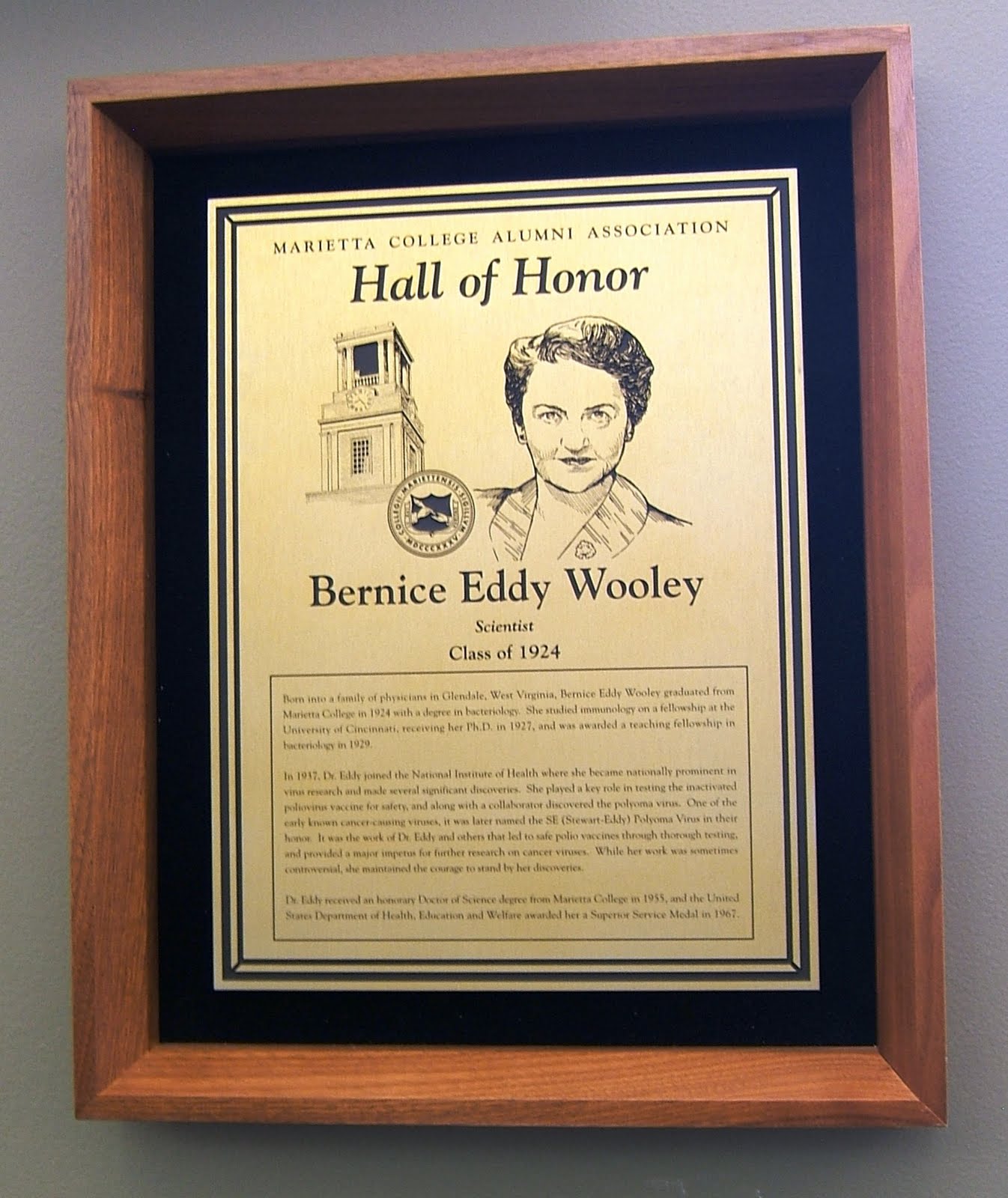
I look around some more and find corners I've never explored, cabinets full of microfilm I've never read, periodicals bound in marbled covers I've never cracked. On the top floor I find a new hero: Bernice Eddy Wooley, class of 1924, whose work contributed to the development of the polio vaccine and "provided a major impetus for further research on cancer viruses." Three cheers for Bernice! She's been hanging on the wall up there all this time and I never bothered to know her.

How many other heroes are hiding in my library? The only way to find out is to keep opening doors to see what's on the other side.

Monday, February 21, 2011

Phoney

This is the week I buy a phone.

Am I ready to give up my cell-phone-free status and start carrying around an annoying little beeping object? I don't know, but I need a cell phone for some upcoming events so it's time to take the plunge.

What kind of cell phone? Cheap and simple. We live too far out in the woods for cell-phone reception, so I can't give up my land-line and I'm too cheap to pay multiple phone bills. I need a phone I can carry with me when I drive my ancient Volvo to Texas for my son's commencement in May or to Florida for my sabbatical next January. More than anything, though, I need to take a cell phone with me during spring break when I'm taking my California Literature students on a journey through literary California. If I get lost on the way to Muir Woods or stranded on the Pacific Coast Highway, I want to have an easy way to call for help--and I want my students to be able to reach me if they can't find their way from Chinatown back to our hotel or if, God forbid, they should get mugged or need to be bailed out.

Frankly, I don't really want a cell phone; I've lived without one this long and I don't feel any urgent need for constant connectibility. But it's time to take the plunge, enter the fray, walk through the door to the world of tomorrow--

If someone will just tell me which phone I ought to buy.

Sunday, February 20, 2011

Q & A (without the Q)

People have been asking me all kinds of questions about the impending administrative changes on campus and it's about time I offered some clear answers:

1. Yes.

2. No.

3. No really, I mean no.

4. Cupcakes.

5. Only on Thursdays when the moon is full.

6. No no no no no.

7. The Grapes of Wrath.

8. Gila monsters.

9. Section III.D.1 of the Faculty Handbook.

10. What part of "No" don't you understand?

Thursday, February 17, 2011

High-fashion slide shows


Right now the New York Times offers two colorful online slideshows featuring fantastic photographs representing the height of fashion. "Best of Breed" highlights prime canines photographed by Fred Conrad at the Westminster Dog Show (click here), while this link takes you to highlights of runway shows at New York Fashion Week. I'm sure I'm not the first to notice some similarities amongst the subjects. Where do they go to master that steely gaze? Same finishing school, no doubt.


Tuesday, February 15, 2011

A bad idea that just might work

Inside Higher Ed features an article today about an idea that's really bad--and not just for the obvious reasons. In "Punching In at Kean U" (click here), Scott Jaschik reports that Kean University's administration has angered its faculty by "requiring them to fill out time sheets reporting how many hours they have worked each day, to demonstrate that they are working at least a 35-hour week."

Find me a faculty member who's working less than a 35-hour week. The profs I know attend meetings during lunch and late in the afternoon, grade papers late at night and all weekend long, respond to student e-mails in the wee hours of the morning, and spend vacations visiting archives, writing articles, and planning new classes. Compared to my current load, a 35-hour work week would feel like a walk on the beach.

Jaschik's article cites a study suggesting that most full-time faculty members work well over 40 hours a week, with the average working 48.6 hours. He also offers a telling quote from Cary Nelson, president of the AAUP, who told Jaschik, "Many of us work 12 or 15 hour days, seven days a week. If it became clear how many hours we put in, there'd be an unimpeachable argument for better compensation and more faculty positions."

So maybe requiring time sheets is not such a bad idea after all.

Alarms and diversions

First the septic tank backed up and sent sewage spurting all over the house and then my sister-in-law (who has never smoked) tossed a lighted cigarette into a trash can full of paper while a total stranger snorted cocaine on my living-room sofa, and then a diapered toddler went wandering off into the dark damp scary furnace room while a kid who couldn't have been more than three years old sat on the basement steps cursing.

I think it was the cursing child who finally woke me up. I intended to turn to my husband and comment on how odd it was to find a cursing child on the basement steps, but I looked at the clock first and said, "We've overslept! Up and at 'em!"

Who needs an alarm clock? My mind is creates its own alarms.

Monday, February 14, 2011

Whole lotta lovin'

We had a full plate of important faculty business at the faculty meeting today, but a plate of cookies took the cake. The Advancement office provided some really luscious heart-shaped Valentine cookies to let the faculty know how much we are loved, but those cookies sat on the big table up front through the course of most of the meeting. Finally, in the last 15 minutes, a rumble arose from the upper right corner of the big room and a brave colleague came forward to take the cookies and start passing them around. Who cares about curriculum? Let 'em eat cookies.

Saturday, February 12, 2011

Pre(pom-pom)posterous

We were sitting in the stands watching a stressful but exciting basketball game when the cheerleaders came out and started doing backflips and splits and tossing each other up in the air. A colleague asked me whether I've ever been a cheerleader and I responded with a bitter laugh. "I can't even do a cartwheel," I admitted.

"But maybe if you tried doing cartwheels, you'd enjoy it."

"Oh I've tried. Spent hours and hours in my childhood hanging around my friends' yards trying to do cartwheels, but I always sort of flopped about halfway over."

We watched a cheerleader go flying into the air, do a split, and land without a wobble.

"That's what you should do on your sabbatical," he said. "Learn a new skills. Cartwheels. You could lead the faculty cheerleading squad."

Sign me up! Where do I get some pom-poms?

Friday, February 11, 2011

Fringe benefits


When I see a picture of Justin Bieber, I always want to brush his hair out of his eyes. I can't help it: it's a mom thing. If my mom could see me right now, she would reach out and brush my hair out of my eyes and say in a soothing voice, "There now, sweetheart. Doesn't that feel better?"

I've needed a haircut for weeks but I can't seem to find the time to make an appointment, so instead I just gripe all day long about how much I hate having hair in my eyes. Today, though, as I sat at the cancer center waiting for my monthly port flush, I realized that there are worse things than having hair in my eyes. A year ago I was still pretty bald, but hey, I have hair! And my fingernails aren't falling off! No one is trying to pump me full of poisonous chemicals! I'm not suffering from radiation burns! I don't have to parade around half naked in front of medical personnel every afternoon! And sometimes I go for days at a time without even thinking about cancer!

Hair in my eyes may be an annoyance, but it's also a reminder of the passage of time and the process of healing. Considering where I've been, I don't mind so much looking at the road ahead through that fringe of wayward hair

Unfolding

Yesterday President Obama said in a speech that we are "witnessing history unfold" in Egypt, and while that may be true, I'm bothered by his syntax and I can't quite figure out why. Let's do some comparisons:

watching history unfold
witnessing history unfold
watching history unfolding
witnessing history unfolding

Watching and witnessing don't differ much in meaning, but witnessing history unfold sounds wrong to me while witnessing history unfolding sounds fine. Let's try some more:

watching a murder

witnessing a murder
watching a person murder someone else
witnessing a person murdering someone else

Why do I need to switch from murder to murdering in that last example? I need a noun phrase after witnessing: I witness a murder or I witness a person murdering, but I don't witness a person murder or witness history unfold.

But apparently our President (or his speechwriter) does. He's probably not the only one. In fact, a simple Google search shows 2.3 million hits for witnessing history unfold but 6.8 million for witnessing history unfolding. My way is more than twice as popular, but it would take a trained linguist to explain why.

Thursday, February 10, 2011

A new view

Here I am teaching a group of colleagues (faculty, staff, even a few random librarians) how to set up a blog, and they're coming up with such wonderful designs for their blogs that mine looks pathetic by comparison. Time for a change! How about a window on a world that's not covered with snow? Here we go!

Wednesday, February 09, 2011

Viscerally speaking

So my freshman comp class is talking about what sort of opening line makes us want to keep reading and a student offers the following from Dan Brown: "Physicist Leonard Vetra smelled burning flesh, and he knew it was his own."

"Gross," they say, but we agree that the line arouses curiosity and appeals to the senses. "It creates a visceral reaction," I said, but then I pause. Does "visceral" mean anything to these first-year college students?

So I ask, and it turns out that "visceral" is peripheral to my students' experience. But it's not every day that I get to use words like "guts" and "entrails" in a writing class, so I guess I ought to enjoy it while I can.

Tuesday, February 08, 2011

Writing in the dark

Denise Levertov prefaced her 1978 poetry collection "Life in the Forest" with a quote from Henry James's odd story "The Middle Years," penned in James's 50th year, in which the main character describes the artist's plight: "We work in the dark. We do what we can. We give what we have. Our doubt is our passion. Our passion is our task. The rest is the madness of art."

Later, though, Levertov offered more practical advice to artists and poets whose ideas well up in the middle of the night. "Wait till morning, and you'll forget. / And who knows if morning will come," she writes, but flipping on the light will startle you "stark awake" while the vision fades back into darkness. Instead, she encourages writers to keep paper and felt-tip marker at hand by the bed and to practice writing in the dark, using one hand to guide the pen and the other to feel the paper and "keep each line / clear of the next":

Keep writing in the dark,
a record of the night, or
words that pulled you from depths of unknowing,
words that flew through your mind, strange birds
crying their urgency with human voices...

Keep writing, she says, because writing in the dark "may have the power / to make the sun rise again."

Now if only Henry James and Denise Levertov could have taken paper and felt-tip markers along on their final rest!

Monday, February 07, 2011

De minimis non curat lex

I took a quilt to class this morning not because I was cold but because my American Lit Survey students were discussing Susan Glaspell's "Trifles," in which a key plot device hinges upon determining whether Mrs. Wright was planning to "quilt it or knot it." To fully comprehend the complexity of the question, students need to know that quilts are made of fragments of fabric carefully pieced together, just as the play portrays characters trying to piece together a jailed woman's life based on the fragments she's left behind. They need to know that quilts are assembled in distinct stages, from cutting the squares to piecing the top to connecting the top to the batting and bottom, and they especially need to distinguish between different methods of sewing together the layers in the final stage.

And then, like good detectives, they need to look at the evidence presented in the text and see whether it's possible to find the correct answer to the question "quilt it or knot it?" If Mrs. Wright is still piecing the quilt top and has not yet started connecting the layers, how can anyone possibly know whether she was planning to quilt it or knot it? And if no one can know the answer to that question, why do the women in the play insist that Mrs. Wright was planning to "knot it"?

Knot what?

My students have seen enough CSI and Law and Order to know that evidence doesn't lie, but like the men in "Trifles," they don't always know what counts as evidence. There are no smoking guns in this case, no big obvious answers to questions of motive; instead, we have to pay very close attention to very small matters: a row of crooked stitching, a broken birdcage, a lump of rising bread dough. "Quilt it or knot it" could be a life-or-death question if the lawman on the case put his mind to it, but he can't be bothered to notice the difference because, as Susan Glaspell knew, the law does not concern itself with trifles.

Sunday, February 06, 2011

Just another dip on the sofa

There's a Bev-shaped dip in the sofa where I like to sit by the big front window and watch the birds, and for the past few days I've been mostly living in that dip. No, I didn't go to Our Nation's Capital to give a paper at AWP. Yes, I backed out. No, I don't feel guilty. Much. Most of the time.

Instead, I stayed home and graded papers, and then I graded exams, and then I graded another set of papers, and then I dug into a big project editing a collection of conference proceedings. Since Thursday evening, I've spent so much time glued to this same spot on the sofa that I'm afraid I'm about to merge with the furniture. A few more hours of this and I'll be transformed into a lumpy spot toward the end that gets in the way when you try to vacuum.

Okay, I did leave the house a few times--a walk with the dog on Friday, a basketball game on Saturday, and church this morning--but other than that, I've been living right here in this spot, my butt glued to the sofa and my laptop glued to my lap. Now, though, it's time to put away the computer and break free, to step away from the sofa and turn toward whatever awaits on campus this week. Will the sofa let me go? If you don't hear from me soon, send in the St. Bernards.

Thursday, February 03, 2011

Don't ask, don't yell

Some questions I never remember to ask visiting job candidates:

1. If you were a tree, what tree would you be and how would you feel about having distant branches of your family chopped down to make paper for printing multiple hard copies of reports for those who dislike electronic document sharing?

2. Did you ever inhale? If so, where did you find any breathing room at all within the strenuous schedule we set up for your visit?

3. For faculty members who fail to complete their assessment reports, what punishment would you favor: tar and feathers, denial of tenure, ten lashes with a wet Excel spreadsheet, or permanent assignment to the Assessment Committee?

4. What color magic wand will you bring? Is it insured?

Wednesday, February 02, 2011

Don't tread on me

Whenever I hear someone talk about our "liberal arts foundation," I get a warm glow inside. That's me! The English Department is at the heart of our liberal arts foundation! We may not be the sparkly dress the starlet wears when she walks the red carpet, but we're the hidden stays that give the dress shape! And we may not be the marble facade that makes a building glitter in the sunlight, but we're the buried concrete on which it stands! Our work may be hidden, buried, walked all over, but without the foundation, the dress drags and the building sags.

But let's face it: when Joan Rivers stands on the red carpet and shoves a microphone in the starlet's face to ask who she's wearing, she's not asking about underwear. And when they're doling out the Pritzker prize and slapping the winning architect on the back, no one even thinks about the guy who poured the foundation.

I didn't get a PhD in English expecting to win an Oscar. Those of us who teach at the core of the liberal arts foundation have to accept the fact that we exist to be buried underground and walked all over. But every once in a while when someone with especially big feet stomps on me, I think I can be forgiven for wanting to rise up and say Ouch.

Tuesday, February 01, 2011

I'm not the right kind of doctor to do this diagnosis

Comedian and singer Mark Lowry recalls that when he was a child and tried to claim that he was too sick to go to church, his father would say, "Throw up and prove it." Then if he managed to throw up, his father would say, "Now don't you feel better? Let's go to church!"

All morning I've been trying to decide whether I'm too sick to go to--well, anywhere. I don't teach today but I have two important meetings plus two big piles of stuff to grade, and I need to finish the paper I'm supposed to present at the AWP conference in Washington, D.C., provided that I'm healthy enough to attend the conference, which at this point looks unlikely.

What's my problem? All I want to do is sleep.

Am I too sick to drive to campus? Clearly not since I've been here since 8. Am I too sick to think clearly? There is some evidence to suggest that this is the case, beginning with the incredibly stupid thing I said to a Very Important Person first thing this morning. Am I sick enough to visit a doctor? I have many symptoms of a sinus infection except I'm not running a fever, so I don't know. I would feel silly calling a doctor and saying I'm just really really tired and I might be sick but I can't throw up and prove it and even if I could I would feel so much better I'd probably just go right back to work.

I'm obviously too sick to write a scintillating blog post, but if you ask me to throw up and prove it, I'm afraid you'll be sorely disappointed.