There ought to be a law against waking up with a nasty headache on the day students are submitting drafts. Sorry, students, I won't be reading your drafts today! I just don't feel like it!
But no: I really need to read and respond to these drafts before the next round of student stuff comes in. So I'm doing all the anti-headache stuff I know (wait: too many uses of "stuff" in this paragraph...go back and revise) and waiting for someone to lift the anvil off the top of my skull before I actually start reading. Maybe this afternoon. After I teach two freshman classes back-to-back. With a headache.
Oh, stuff it.
Thursday, September 13, 2012

Tuesday, September 11, 2012
Ignorance, blitzed
Early this morning the river was shrouded by pink-tinted fog, like a massive bank of cotton candy or a wall of fluffy insulation. Was it a trick of the light or evidence of pollution? When I drive home in the evening and note the brilliant orange sky beyond the coal-fired power plant, I don't like to think about the airborne particulates responsible for that tint.
Too much knowledge might have polluted my aesthetic experience, so I chose ignorance--but then I came to campus and spent the morning stamping out ignorance. I made my students read a mess of poems and look up unfamiliar words in the dictionary and then write about what they'd learned. Right: no more reading right past the words you don't know. Get to know your language! Figure out how it works!
Then after spending an hour leading students through analysis of diction in poems, I put them to the test. "Take out a piece of paper and a writing implement," I said, to which a student responded, "I don't know what that means." I wanted to say "Look it up!" but we don't have a dictionary in the classroom.
As I often tell my colleagues, it's a good thing ignorance is a renewable resource. Otherwise, we'd all be out of a job.
Too much knowledge might have polluted my aesthetic experience, so I chose ignorance--but then I came to campus and spent the morning stamping out ignorance. I made my students read a mess of poems and look up unfamiliar words in the dictionary and then write about what they'd learned. Right: no more reading right past the words you don't know. Get to know your language! Figure out how it works!
Then after spending an hour leading students through analysis of diction in poems, I put them to the test. "Take out a piece of paper and a writing implement," I said, to which a student responded, "I don't know what that means." I wanted to say "Look it up!" but we don't have a dictionary in the classroom.
As I often tell my colleagues, it's a good thing ignorance is a renewable resource. Otherwise, we'd all be out of a job.
Monday, September 10, 2012
A voice for the mountain, silenced
Some time ago--can it really be four years?--I wrote about visiting Kayford Mountain, West Virginia, to see up close how mountaintop removal mining devastates the landscape (read it here). "Located a mere 45-minute drive from Charleston, West Virginia," I wrote, "Kayford Mountain might as well be on the dark side of the moon. Mountaintop removal mining is practiced far from the prying eyes of a public so addicted to coal power that we don't care that this method of mining recovers only a tiny percentage of the coal from the area--while transforming wilderness areas and inhabited hollows into land on which nothing can grow or live."
Larry Gibson lived out his life on Kayford Mountain, devoting the past two decades to educating anyone who would listen about the value of the mountain ecosystem and the irreparable harm caused by mountaintop removal mining. He spoke for the felled trees, the polluted streams, and the birds that have lost their habitat, but he also spoke for the pain of people whose lives are displaced and their environments degraded by a disruptive and unnecessary mining method.
Larry Gibson walked those hills and spoke for Kayford Mountain until he died there yesterday, age 66, of a heart attack (read about it here). His family's cemetery was destroyed by mining, but the mountain he so loved still stands as a monument to his work.
For now.
Larry Gibson lived out his life on Kayford Mountain, devoting the past two decades to educating anyone who would listen about the value of the mountain ecosystem and the irreparable harm caused by mountaintop removal mining. He spoke for the felled trees, the polluted streams, and the birds that have lost their habitat, but he also spoke for the pain of people whose lives are displaced and their environments degraded by a disruptive and unnecessary mining method.
Larry Gibson walked those hills and spoke for Kayford Mountain until he died there yesterday, age 66, of a heart attack (read about it here). His family's cemetery was destroyed by mining, but the mountain he so loved still stands as a monument to his work.
For now.
Friday, September 07, 2012
Friday poetry challenge: by the numbers
My long, empty afternoons this week left me feeling as if my talents were being underutilized, but not today! I've just collected my first round of drafts in the Postcolonial Lit class, so I'll have my hands full this weekend:
20 Lit drafts needing feedback,
4 class preps (no two the same),
2 vans full of rowdy students
traveling to a football game.
30 cucumbers in the kitchen
(or maybe more--I didn't count)
plus okra, squash, ripe red tomatoes
piling up in huge amounts.
2 church services on Sunday,
too few hours to sleep (boo-hoo!).
That's my weekend in a nutshell
by the numbers. How 'bout you?
Yes, it's time for the Friday Poetry Challenge to return from its long sabbatical! Leave a comment putting a number on your weekend tasks and making it into some sort of poetry. Who cares if it's good as long as it's fun?
20 Lit drafts needing feedback,
4 class preps (no two the same),
2 vans full of rowdy students
traveling to a football game.
30 cucumbers in the kitchen
(or maybe more--I didn't count)
plus okra, squash, ripe red tomatoes
piling up in huge amounts.
2 church services on Sunday,
too few hours to sleep (boo-hoo!).
That's my weekend in a nutshell
by the numbers. How 'bout you?
Yes, it's time for the Friday Poetry Challenge to return from its long sabbatical! Leave a comment putting a number on your weekend tasks and making it into some sort of poetry. Who cares if it's good as long as it's fun?
Thursday, September 06, 2012
Fast-break fundamentals
It had to happen eventually: here we are in Sports Literature class talking today about a bunch of basketball poems when I mix my sports metaphors. Let's step up to the plate and tackle the poem "Slam, Dunk, and Hook," shall we? If nothing else, this course illuminates just how heavily we rely on sports metaphors even in analyzing literature.
And how is the class going? Well, I don't know about anyone else, but I'm having fun, although I often feel as if I've run a marathon by the end of class. Today we did an in-class activity I'm calling "Fast-Break Poetry Analysis," designed to give the students practice in identifying certain elements of poetic form. I've been working really hard to get them to move beyond the idea that a poem is either a story (" 'Old Men Shooting Baskets' is a poem about old men shooting baskets...") or a random outpouring of unfiltered emotion ("It means whatever you want it to mean...."). I want them to look at a poem and observe the tools the poets employ, such as sound patterns, line lengths, rhyme, and rhythm, and then consider how those tools contribute to meaning. But first I have to help them know what to look for.
So we've been looking at poems both in class and out of class and taking note of what we see. Today I broke them into groups of three, assigned one poem to each group, gave them a few minutes to talk about what tools the poet chose to use, and then called out group numbers and gave each group 60 seconds to make a fast break to the whiteboard and write as many tools as they could identify in their particular poems.
It was a little chaotic at times, especially when the groups were cheering each other on, but I was pleased to see the groups competing to see who could identify the most poetic tools--even though I hadn't promised any prizes for the winner. When all the groups had finished, we used their notes on the board as the foundation for our discussion of the poems, which gave the groups a chance to explain their observations and provide examples from the poems and gave me a chance to say "You dunked it!" or "Three points!"
I'm confident now that they can look at a poem and identify the more common elements of form, a fundamental skill we'll strengthen and develop in the coming weeks. Yes, my Sports Lit team is shaping up, and if we keep drilling on our fundamentals, we can step up to the plate and tackle any poem with a slam-dunk.
(Ouch. My brain just exploded.)
And how is the class going? Well, I don't know about anyone else, but I'm having fun, although I often feel as if I've run a marathon by the end of class. Today we did an in-class activity I'm calling "Fast-Break Poetry Analysis," designed to give the students practice in identifying certain elements of poetic form. I've been working really hard to get them to move beyond the idea that a poem is either a story (" 'Old Men Shooting Baskets' is a poem about old men shooting baskets...") or a random outpouring of unfiltered emotion ("It means whatever you want it to mean...."). I want them to look at a poem and observe the tools the poets employ, such as sound patterns, line lengths, rhyme, and rhythm, and then consider how those tools contribute to meaning. But first I have to help them know what to look for.
So we've been looking at poems both in class and out of class and taking note of what we see. Today I broke them into groups of three, assigned one poem to each group, gave them a few minutes to talk about what tools the poet chose to use, and then called out group numbers and gave each group 60 seconds to make a fast break to the whiteboard and write as many tools as they could identify in their particular poems.
It was a little chaotic at times, especially when the groups were cheering each other on, but I was pleased to see the groups competing to see who could identify the most poetic tools--even though I hadn't promised any prizes for the winner. When all the groups had finished, we used their notes on the board as the foundation for our discussion of the poems, which gave the groups a chance to explain their observations and provide examples from the poems and gave me a chance to say "You dunked it!" or "Three points!"
I'm confident now that they can look at a poem and identify the more common elements of form, a fundamental skill we'll strengthen and develop in the coming weeks. Yes, my Sports Lit team is shaping up, and if we keep drilling on our fundamentals, we can step up to the plate and tackle any poem with a slam-dunk.
(Ouch. My brain just exploded.)
Wednesday, September 05, 2012
Meadow madness
I wish I could show you what I saw tonight when the sun peeped out from behind a cloud and sent glints of golden light dancing across the fuzzy tops of the tall grasses in the meadow, transforming the flat monotonous green to undulating waves of rustygolden yellowgreen, and then those three tawny deer bursting into motion across the meadow, their white tails bouncing above the grasses and the dark shape of Hopeful dashing off in pursuit despite the fact that she hadn't any hope of catching them, and then the deer leaping above the spiky purple thistle blossoms and disappearing into the woods, and then the sun going back behind the cloud, taking along the glimmer and glisten and rustygolden yellowgreen. I wish I could show you but I can't so you'll just have to go out and see for yourself.
Tuesday, September 04, 2012
Who wants to chair the Complaint Department?
I don't want to complain, but--wait a minute! Yes I do! I want very much to complain and gripe and whine and grumble because sometimes that's the only way stuff gets done! What I really don't want to do is to appear to complain, to develop a reputation as a constant whiner. So how can I complain under wraps, as it were?
And so here we are back in Passive-Aggressive-Land, where we motivate action through annoying indirection! What a dreary place, with everyone walking around weighed down by chips on shoulders and everyone withholding trust. Who wants to live here?
Maybe we need a Star Chamber where anyone can go whisper complaints into the ear of the Powers That Be without fear of repercussion or reprisal. But it's hard to follow up on anonymous complaints or to prevent people from pursuing personal vendettas. And then sometimes it matters who is making the complaint. If I've built up any credibility or force of character, I'd like to put that power firmly behind a cause that will do the most good.
So what do I do with this measly, gripey, fussy, petty little complaint that wears away at my spirit day after day? No one wants to lay claim to the problem or take responsibility, but I won't be able to get it off my back without dumping it on someone else's.
Well rats. I do want to complain--but sometimes I simply don't know how.
And so here we are back in Passive-Aggressive-Land, where we motivate action through annoying indirection! What a dreary place, with everyone walking around weighed down by chips on shoulders and everyone withholding trust. Who wants to live here?
Maybe we need a Star Chamber where anyone can go whisper complaints into the ear of the Powers That Be without fear of repercussion or reprisal. But it's hard to follow up on anonymous complaints or to prevent people from pursuing personal vendettas. And then sometimes it matters who is making the complaint. If I've built up any credibility or force of character, I'd like to put that power firmly behind a cause that will do the most good.
So what do I do with this measly, gripey, fussy, petty little complaint that wears away at my spirit day after day? No one wants to lay claim to the problem or take responsibility, but I won't be able to get it off my back without dumping it on someone else's.
Well rats. I do want to complain--but sometimes I simply don't know how.
Monday, September 03, 2012
Sureally speaking
The day has barely begun but I've already fulfilled my weekly quota for surreal moments, starting with arriving on campus to find my classroom building locked. I called campus police to complain and the helpful man at the desk said, "You can expect to find most campus buildings locked since it's a holiday."
"It may be a holiday for you," I said, "but not for me and my students. We have classes in this building starting in 15 minutes so the doors need to be unlocked."
"You should have submitted a request in advance specifying which doors you need to have unlocked," he said.
The conversation did not go well from that point. He accused me of being rude, and he may have been correct. It's annoying enough to be required to teach on Labor Day, but how can I fulfill that requirement if my students can't get into the building?
But they did! And we had a fun class, in which my next surreal moment arrived during our discussion of The Lion and the Jewel by Wole Soyinka. We were discussing how the village chief, Baroka, felt when a magazine published two large photos of the village beauty but consigned poor Baroka to a tiny photo in the corner alongside the village outhouse. "Nobody puts Baroka in the corner!" I said, setting off a bizarre mental cross-fertilization between The Lion and the Jewel and Dirty Dancing until I was suggesting (out loud!) that it might be interesting to put Baroka and Baby in the same room for a conversation--after all, he is looking for a new wife!
Strange moment, but nobody walked out in disgust. I'd taken the precaution of locking all the doors.
(Okay, I made up that last part. But not the rest!)
"It may be a holiday for you," I said, "but not for me and my students. We have classes in this building starting in 15 minutes so the doors need to be unlocked."
"You should have submitted a request in advance specifying which doors you need to have unlocked," he said.
The conversation did not go well from that point. He accused me of being rude, and he may have been correct. It's annoying enough to be required to teach on Labor Day, but how can I fulfill that requirement if my students can't get into the building?
But they did! And we had a fun class, in which my next surreal moment arrived during our discussion of The Lion and the Jewel by Wole Soyinka. We were discussing how the village chief, Baroka, felt when a magazine published two large photos of the village beauty but consigned poor Baroka to a tiny photo in the corner alongside the village outhouse. "Nobody puts Baroka in the corner!" I said, setting off a bizarre mental cross-fertilization between The Lion and the Jewel and Dirty Dancing until I was suggesting (out loud!) that it might be interesting to put Baroka and Baby in the same room for a conversation--after all, he is looking for a new wife!
Strange moment, but nobody walked out in disgust. I'd taken the precaution of locking all the doors.
(Okay, I made up that last part. But not the rest!)
Saturday, September 01, 2012
Poppin' peppers
 These cheery little peppers grow side-by-side in our garden but you wouldn't want to get them confused. The smooth one on the right is a dwarf sweet pepper, like a tiny orange pimento with just enough piquancy to remind you that it's a pepper. The wrinkly one on the left--the one that looks like it's smiling at you--is a ripe habanero, hot enough to make your hands tingle when you pick 'em. The one on the right would be great chopped in a salad, or you can just pop it into your mouth for a crunchy snack. If you tried that with the habanero, steam would come out of your ears and your lips would melt right off your face.
 The result? They look cute as a button and taste cute too, if you know what I mean. They're much like ordinary stuffed peppers except you can pop 'em into your mouth whole--which could be a mistake if you don't let them cool a bit first. Best of all, they're still growing. I put the leftover stuffing in the freezer so that next time a pile of tiny orange peppers shows up in my kitchen, I'll be ready to roll.
Just as long as they're the right peppers. The wrong ones would hurt.
Friday, August 31, 2012
The sound of stillness
Sitting on a sunny bench just outside the library, eating a salad while puzzling over the identity of the song pealing over the carillon: ah yes, this is where I belong. Students and others mill about, heading toward classes or lunch or simply killing time, as I am. I find my office in the dungeon much more bearable if I spend some time outside in the sun every day, so I'm idly watching colorful people pass by while soaking up some sun and trying to empty my mind.
Except for that song, that perky, jaunty song with the melody that sounds vaguely familiar. I ought to know it, but there's something not quite right, like a merry-go-round steam organ trying to perform a rendition of the Dies Irae.
Finally I've got it: "Something in the Way She Moves," not a particularly carnivalesque song but what can you do with a carillon? Next comes "The Sound of Silence." Apparently, the carillon is trying to take us down memory lane. It wouldn't surprise me at all to look up and see the carillon tower dressed in tie-dye and beads.
But I won't look up. I don't want to ruin the moment. I'm happy to just sit, eat my salad, and watch the passersby while the sound wafts over me.
Except for that song, that perky, jaunty song with the melody that sounds vaguely familiar. I ought to know it, but there's something not quite right, like a merry-go-round steam organ trying to perform a rendition of the Dies Irae.
Finally I've got it: "Something in the Way She Moves," not a particularly carnivalesque song but what can you do with a carillon? Next comes "The Sound of Silence." Apparently, the carillon is trying to take us down memory lane. It wouldn't surprise me at all to look up and see the carillon tower dressed in tie-dye and beads.
But I won't look up. I don't want to ruin the moment. I'm happy to just sit, eat my salad, and watch the passersby while the sound wafts over me.
Thursday, August 30, 2012
Solely sartorial solecisms
I'm crawling around the floor of my closet looking under and beside and behind all that dusty detritus and part of me wonders why. Why, if I am devoted to the life of the mind, do I start the day obsessing over the location of the only belt that goes with my new suit?
And while we're at it, why didn't I notice before today that this jacket has attractive buttons down both sides but no buttonholes anywhere? Why would I buy a jacket with nonfunctional buttons? Operating a button is really not all that difficult--slide button through hole, rinse and repeat--but it simply cannot be done without the requisite buttonholes.
I never found the belt and no other belt would do, which left me with a clear choice: change into an entirely different outfit or go beltless. Belts are supposed to hold up your trousers but in this case the trousers are in no danger of falling down, so the belt would be purely ornamental, much like the buttons on the jacket. However, everyone knows that the absence of a belt makes belt loops feel incomplete, unappreciated, and futile, so a belt is necessary even when it isn't, if you know what I mean.
But I didn't want to change so I came to campus wearing purely ornamental buttons and no belt, although you'll never notice the lack of belt unless I take off my jacket, which may be necessary if the temperature goes nuclear again. And on top of all that (or beneath all that, if you want to get technical about it), my feet hurt.
It is impossible to devote yourself to the life of the mind when your feet hurt. So today I'll bypass the mind entirely. No thinking allowed! Unless you're wearing my belt.
And while we're at it, why didn't I notice before today that this jacket has attractive buttons down both sides but no buttonholes anywhere? Why would I buy a jacket with nonfunctional buttons? Operating a button is really not all that difficult--slide button through hole, rinse and repeat--but it simply cannot be done without the requisite buttonholes.
I never found the belt and no other belt would do, which left me with a clear choice: change into an entirely different outfit or go beltless. Belts are supposed to hold up your trousers but in this case the trousers are in no danger of falling down, so the belt would be purely ornamental, much like the buttons on the jacket. However, everyone knows that the absence of a belt makes belt loops feel incomplete, unappreciated, and futile, so a belt is necessary even when it isn't, if you know what I mean.
But I didn't want to change so I came to campus wearing purely ornamental buttons and no belt, although you'll never notice the lack of belt unless I take off my jacket, which may be necessary if the temperature goes nuclear again. And on top of all that (or beneath all that, if you want to get technical about it), my feet hurt.
It is impossible to devote yourself to the life of the mind when your feet hurt. So today I'll bypass the mind entirely. No thinking allowed! Unless you're wearing my belt.
Tuesday, August 28, 2012
Sometimes it takes a sharp rap

"Ask me why I always keep an Altoid tin in my car," I insisted.
"Okay, why do you always keep an Altoid tin your your car?"
"So I can tell how much fuel I have in the gas tank."
She looked puzzled.
"My gas gauge is a little moody," I explained. "Some days it just doesn't feel motivated to rise above Empty, and then the only way to make it care is to rap sharply on the plexiglass covering the gauge."
She still looked puzzled.
"Sometimes a light tap will do," I added, "but sometimes the gas gauge gets so distraught about its sad, sorry, meaningless existence that it refuses to budge unless I hit it really hard, which hurts. Try it sometime--our delicate finger bones are not designed to take that kind of strain without complaining."
"Which is why you keep the Altoid tin," she said. "To beat on the dashboard."
"Correct," I said. "The Altoid tin is Curiously Strong and perfectly designed for rapping sharply on the gas gauge--plus it leaves behind that minty-fresh scent. In fact, I'm surprised the company doesn't promote the tin's fuel-gauge-motivating capabilities in its advertising."
She gave me that look--you know the look I mean. You're probably giving it to me right now, so find a mirror and you'll know what look I'm talking about. You wouldn't want to walk around with that look on your face all day, would you? I can help: here--have an Altoid. Curiously Strong, in more ways than one.
Monday, August 27, 2012
No sleeping in class--especially if you're the teacher!
After all these years you'd think I'd be able to relax before a new semester, but no: I was wide awake this morning at 4:00, long before I needed to get up. I had no teaching-panic nightmares, no racing mind, no pre-teaching jitters. I just could not sleep.
So here I am eight hours later getting ready to teach my second class of the day. The first went well (I think--I may be dreaming!) but I'm quickly running out of steam. I need to stand up and blab for about 30 minutes before making my students write, so I need enough energy and alertness to get through the standing-and-blabbing part and once they start writing, I can start snoring. (In theory. I haven't actually tested this theory in the classroom.)
Two new classes today, two new classes tomorrow--but I've already met with one of them during freshman orientation. It's my 17-football-players-and-one-softball-player class. They seem like a lot of fun, but they're definitely giving me a workout already. Which is a good thing considering how little sleep I've been getting.
All right, class! Drop and give me 40 (winks)!
So here I am eight hours later getting ready to teach my second class of the day. The first went well (I think--I may be dreaming!) but I'm quickly running out of steam. I need to stand up and blab for about 30 minutes before making my students write, so I need enough energy and alertness to get through the standing-and-blabbing part and once they start writing, I can start snoring. (In theory. I haven't actually tested this theory in the classroom.)
Two new classes today, two new classes tomorrow--but I've already met with one of them during freshman orientation. It's my 17-football-players-and-one-softball-player class. They seem like a lot of fun, but they're definitely giving me a workout already. Which is a good thing considering how little sleep I've been getting.
All right, class! Drop and give me 40 (winks)!
Friday, August 24, 2012
Bulletin bored
I've been in a crabby, cranky, cynical mood all day, ever since a cavalcade of pickup trucks went speeding past me during my morning walk on a gravel road, kicking up a dust cloud that seems to be following me wherever I go. It's time to spray some Cloud-B-Gon to clear the air, so let's write some poetry!
Colored paper, printed words,
Thumbtacks, staples, scissors:
time to decorate bulletin boards!
Mine's finished! How's yours?
Okay, that's pretty pathetic. I'm clearly out of practice. But it's true: I didn't realize when I moved offices that I would have not one but TWO bulletin boards to decorate, and that makes me really happy. My bulletin boards tend to be colorful and eclectic and maybe a little sloppy, with many lines verging from the perpendicular to varying degrees. Over in the Education building they dangle a weighted line from a thumbtack to keep lines straight on their perfectly balanced bulletin boards, but they're getting a grade. I'm just posting stuff that interests me and hoping someone occasionally takes a look.
The little board outside my office offers some helpful information (office hours, class schedule, how to contact the former resident of my office) plus some poetry and a mess of funny cartoons, while the larger one down the hall is called "Recommended Reading" and features photos of books recommended by faculty plus little blurbs about why they're good. Colorful. Eclectic. Interesting. Sometimes a little silly. I'd give my bulletin boards a solid B+, although the Education folks might quibble.
Colored paper, printed words,
Thumbtacks, staples, scissors:
time to decorate bulletin boards!
Mine's finished! How's yours?
Okay, that's pretty pathetic. I'm clearly out of practice. But it's true: I didn't realize when I moved offices that I would have not one but TWO bulletin boards to decorate, and that makes me really happy. My bulletin boards tend to be colorful and eclectic and maybe a little sloppy, with many lines verging from the perpendicular to varying degrees. Over in the Education building they dangle a weighted line from a thumbtack to keep lines straight on their perfectly balanced bulletin boards, but they're getting a grade. I'm just posting stuff that interests me and hoping someone occasionally takes a look.
The little board outside my office offers some helpful information (office hours, class schedule, how to contact the former resident of my office) plus some poetry and a mess of funny cartoons, while the larger one down the hall is called "Recommended Reading" and features photos of books recommended by faculty plus little blurbs about why they're good. Colorful. Eclectic. Interesting. Sometimes a little silly. I'd give my bulletin boards a solid B+, although the Education folks might quibble.
Thursday, August 23, 2012
There ought to be a prize
...for attending six meetings in 48 hours without succumbing to a mad urge to stuff pastries down the throat of the next person who announces that we need to appoint a new task force to study a problem we've studied numerous times before.
...for locating a clean, usable photocopy of a single article I haven't used in six years deep in a file drawer so full I needed a backhoe to dig it out.
...for getting all my syllabi done, all my materials uploaded to Moodle, and all my first-day-of-class lesson plans written out while many of my students haven't even started packing their bags to return to campus.
For all this, there ought to be a prize, but there isn't--unless the promise of a stress-free Friday counts.
...for locating a clean, usable photocopy of a single article I haven't used in six years deep in a file drawer so full I needed a backhoe to dig it out.
...for getting all my syllabi done, all my materials uploaded to Moodle, and all my first-day-of-class lesson plans written out while many of my students haven't even started packing their bags to return to campus.
For all this, there ought to be a prize, but there isn't--unless the promise of a stress-free Friday counts.
Tuesday, August 21, 2012
In the weeds

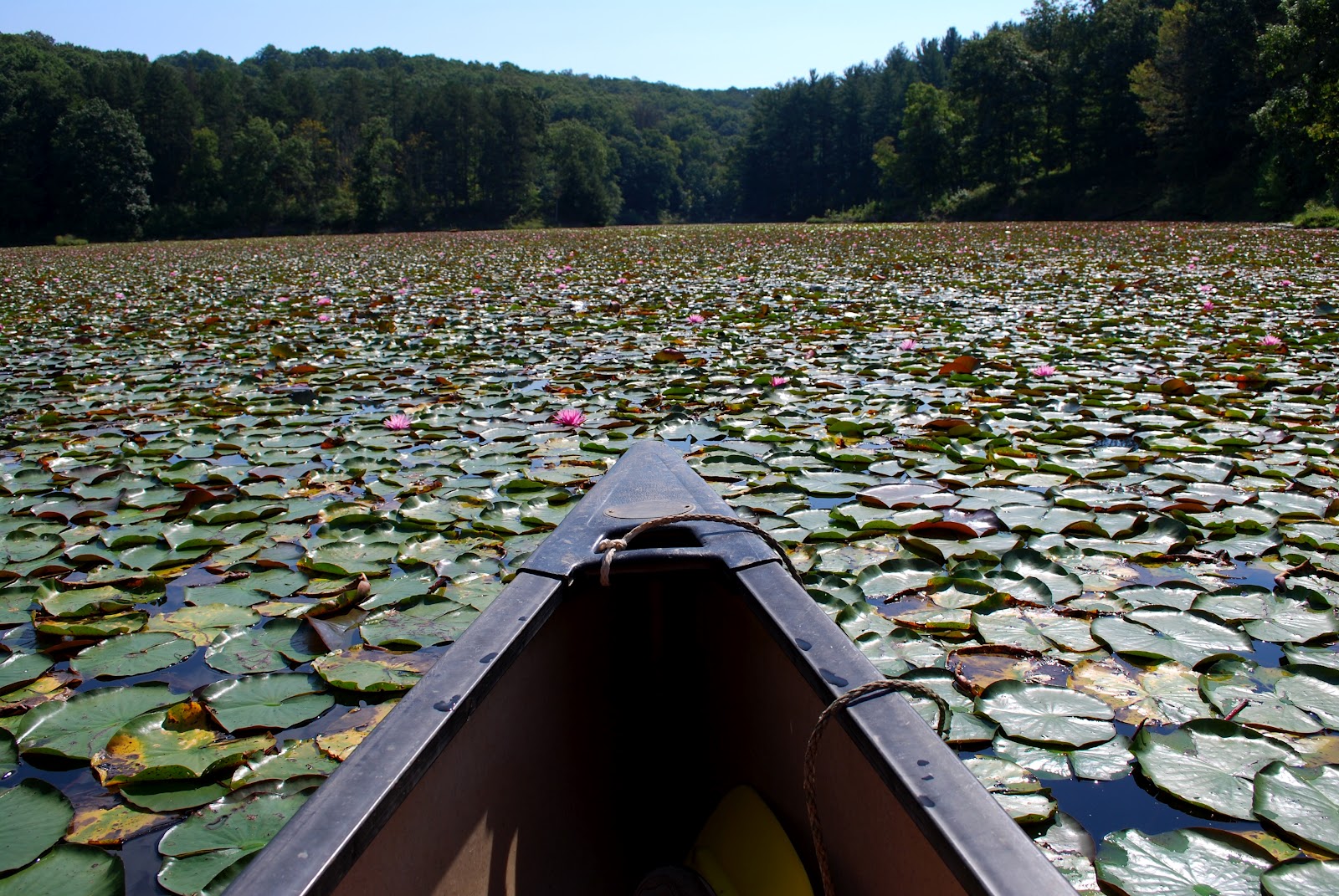
I worked like a maniac to get out of the weeds syllabus-wise yesterday and celebrated by spending most of this morning in a different kind of weeds. It was like canoeing through a series of Monet paintings, with the water shifting from absinthe to cobalt to deep midnight. Dragonflies and darning needles whizzed past in brilliant shades of blue, green, and orange while kingbirds chattered and swooped above the water. Next time I'm entangled in campus craziness, I'll think back to today and remind myself that sometimes the best place to be is in the weeds.


Monday, August 20, 2012
Antlympic antics
 I'm sitting in my living room minding my own business when out of the corner of my eye I catch some movement out on the porch. It looks like a gigantic horsefly sliding across the porch on his back, which is not the textbook method of horsefly locomotion. So I went out and took a look.
It was a fly all right, but it wasn't surfing the cement. Instead, it was being pulled, pushed, carried, and shoved by a group of intrepid red ants. They shoved the fly over the step and it landed in a crevice between bricks on the walk, and it took a handful of ants a good five or ten minutes to get the fly moving again. They moved in a straight line, pulling the fly over a clump of dirt and grass they could more easily have gone around, but nothing was standing in the way of those determined ants.

I watched them for awhile (yes I'm watching ants when I ought to be working on syllabi!) and then went inside to deal with something else, and about 20 minutes later when I looked outside again, there was no sign of ants or fly. Where did they go? No idea, but those little ants ought to get gold medals in the Antlympics!
Friday, August 17, 2012
And the semester hasn't even started yet!
Tearing out my hair, staring at a screen as I sit in a chair all afternoon, clicking here and there....and did I mention my nightmares? Every night I awake in a sweat, all het up over things I don't get: a former student screams in my face but I simply can't place her name or claim to attention, and a colleague smirks and exposes my quirks in sarcasm aimed toward humiliation.
Time to go home. I've been here too long. Stop me before I start crooning that "Friday" song!
Time to go home. I've been here too long. Stop me before I start crooning that "Friday" song!
So now I'm an art critic?

By any objective measure, the new mural is superior: it's bold, colorful, and massive; it livens up a particularly bleak commercial strip along the busiest street in town; and it was executed with skill by a professional artist. The old mural was small, subtle, easily overlooked, not at all colorful or bold or patriotic, and appeared to have been executed by some amateur skulking about in the dark of night with a simple stencil and a can of black spray-paint.
The new mural is a clear sign that a formerly derelict building is now occupied and contributing to the local economy, while the old mural was a reminder that the building was unoccupied, unprotected, and slowly falling to pieces. For all these reasons it would be right and proper and patriotic to send out a round of applause for the new massive flag mural, but once again I have to admit it: I miss the old mural.
Which was not, in the strictest sense, a mural at all, unless you want to call it a minimalist mural. It was composed mostly of white space marked by the high-water line from some recent flood, with a single command painted near the edge: "Be nice." That's it. Two simple words that I would occasionally glimpse while driving on a nerve-wracking stretch of road often congested with cars driven by frantic people unfamiliar with the proper function of the turn signal. "Be nice" was an appropriate message in that setting, and it always made me smile. So simple and yet so necessary: Be nice! Who could argue with that?
The new mural conveys an entirely different message: Be proud! An important message, I suppose, but it won't sustain me in the heart of traffic the way the previous mural did. But perhaps it will inspire people to drive more patriotically!
Right. You first.
Thursday, August 16, 2012
In the fog, all birds are gray
 |
| Great blue heron. |
Near the road a great blue heron fished for breakfast, utterly unconcerned by my presence. They generally stay far from the road, but this one kept fishing even when I walked within 10 or 12 feet. Maybe the fog made me appear nonthreatening--or maybe it was just hungry.
Later I saw another blue heron that didn't look at all blue, this one in sunlight so bright the bird's pure white plumage hurt my eyes. I would never have identified it as a blue heron, but the expert birders in the group confirmed that that white bird striding around the wetland was the little blue heron in its white phase.
 |
| Little blue heron in white phase. |
This was my final birding expedition before the fall semester starts. In the early-morning fog I felt like the only human being in a world of gray ghostly birds, and in the afternoon sun my spirit soared with the flight of the grosbeak--feelings I'll store in a deep reservoir of stillness to which I'll return frequently whenever the academic craziness cranks up.
 |
| Blue grosbeak. |

Tuesday, August 14, 2012
Sex and the single doorknob
When I heard that the legendary editor of Cosmopolitan had died, I thought, "Old news! William Dean Howells has been dead for decades!"
But of course the news reports were about a different legendary editor of Cosmopolitan, Helen Gurley Brown, who wrote Sex and the Single Girl. Howells, who died in 1920, edited the magazine briefly in 1892 during its previous incarnation as a literary magazine, back when the title had a definite article: The Cosmopolitan.
Howells is remembered for insisting that writers should shelter young ladies from exposure to impure thoughts (read: any thought that reminds them that they have bodies), and the sexiest scene he ever penned featured an unmarried woman kneeling to kiss a doorknob. (I'm not making this up! Read A Modern Instance (1882), the first American novel to attempt a realistic portrayal of divorce.)
Howells left the helm of The Cosmopolitan fairly quickly, although I don't now remember why. I'm sure Cosmo covers have kept him rolling in his grave at least since the 1960s, which is not necessarily a bad thing. At least he's certain of getting plenty of exercise.
But of course the news reports were about a different legendary editor of Cosmopolitan, Helen Gurley Brown, who wrote Sex and the Single Girl. Howells, who died in 1920, edited the magazine briefly in 1892 during its previous incarnation as a literary magazine, back when the title had a definite article: The Cosmopolitan.
Howells is remembered for insisting that writers should shelter young ladies from exposure to impure thoughts (read: any thought that reminds them that they have bodies), and the sexiest scene he ever penned featured an unmarried woman kneeling to kiss a doorknob. (I'm not making this up! Read A Modern Instance (1882), the first American novel to attempt a realistic portrayal of divorce.)
Howells left the helm of The Cosmopolitan fairly quickly, although I don't now remember why. I'm sure Cosmo covers have kept him rolling in his grave at least since the 1960s, which is not necessarily a bad thing. At least he's certain of getting plenty of exercise.
Monday, August 13, 2012
My secret, in a nutshell

I can tell you that no magic technique or crucial piece of equipment made the difference. Instead, these photos were a result of a convergence of a bundle of unrelated factors, many of them outside my control.
Take the weather--please. While the drought hasn't been as severe here as elsewhere in the Midwest, we have seen a decline in many of the flowers hummingbirds generally visit, so they're relying more heavily on our feeders. And then it's the right time of year, when fledglings have left the nest and the hummingbird population is starting to fuel up for its fall migration.
 Did I use a tripod and a remote trigger? No I did not: I sat on a garden bench about five feet from the feeder, leaning my arm against the back of the bench to hold the camera steady. I've spent enough time out there this summer that the hummingbirds have learned to ignore me, so all I had to do was sit still and wait.
What about lighting conditions? I went out in the middle of the afternoon, which is generally a horrible time for nature photography, but the cloud cover was thick and uniform, providing a soft, diffuse light with no shadows and no washing-out of colors.
I didn't want any distractions in the background, so I positioned the bench facing a green hillside. There are all kinds of trees and weeds and herbs growing over there, but the 70-300 zoom lens blurs everything into a mottled green that allows the birds' plumage to pop.
And then I just sat there an shot pictures--lots of 'em. The hummingbirds come and go so quickly that I couldn't do a lot of minute adjustments of exposure or focus, so I set my Nikon D60 on the action-shot automatic setting and kept my focus on the edge of the birdfeeder and just shot whatever came close.
You haven't seen the shots I deleted: the green square from which a hummingbird has just decamped, the gray blur wobbling off the edge of the frame, the bird half-hidden behind the feeder. Here's one secret I'm happy to share: the "delete" button is the photographer's best friend.
The rest of my secret is more complicated: drought, clouds, time of year, hummingbirds inured to human presence, bench placement, zoom lens, many snaps, much patience, delete delete delete. So easy a baby could do it.
Saturday, August 11, 2012
Hummingpigs

I can see them and hear them buzzing around on the periphery all the time but I can't begin to pin down how many hummingbirds we're currently hosting. The fledglings have left the nests so they're fighting for space at the feeders, and a few seem to serve as protectors, chasing off intruders while the others drink.


A mental cul-de-sac
All my life I've suffered a mental block against the word cul-de-sac, a useful word that trips satisfyingly off the tongue, but I can't call it up without first running higglety-pigglety through a host of unrelated words and phrases: tete a tete, coup d'etat, s'il vous plait, rue morgue--and then, suddenly, my reluctant mind offers up the right word: cul-de-sac. Of course.
Fortunately, cul-de-sac doesn't come up often in casual conversation, but lately I notice that the cul-de-sac effect is spreading. It happens just about every day: I know the word I want but my brain refuses to cough it up on demand. Maybe this is characteristic of the postmenopausal aging brain or maybe it's a result of all that nasty chemotherapy, but it's a problem--and it's getting worse.
It's easy enough to handle the problem in writing: I simply skip the missing word or insert clues in parentheses (three-syllable word starting with L that means "on the threshold") and continue writing, and before I'm halfway down the page, WHOOMP there it is in flashing neon in front of my eyeballs: liminal! I'm a whizz at the Washington Post's Cricklers word game (single-digit handicap!) only because I can skip a word that's hiding in some mental cul-de-sac, hand the retrieval task over to my subconscious, and wait for the right word to pop into place. Works every time--as long as I'm willing to move on and wait.
It's not so easy, however, when I'm speaking. I don't know how many times lately I've radically revised a sentence halfway through because I couldn't wait around for a key term to come out of hiding, and I can't just stand there with my mouth open and leave a hole in the sentence. I picture myself standing in front of my postcolonial literature class this fall and saying, "What's the word we use to describe a person standing on the threshold?" Fine, as long as some student remembers liminal, but what if I'm the only one in the room who knows the word I'm seeking? "Okay, class, I'm thinking of a word--who can guess it?" Maybe no one--not even me.
I dread the day when all the words I need go circling 'round some inaccessible mental cul-de-sac and I'm left standing with my mouth open but nothing to say. When words fail, what's left?
Fortunately, cul-de-sac doesn't come up often in casual conversation, but lately I notice that the cul-de-sac effect is spreading. It happens just about every day: I know the word I want but my brain refuses to cough it up on demand. Maybe this is characteristic of the postmenopausal aging brain or maybe it's a result of all that nasty chemotherapy, but it's a problem--and it's getting worse.
It's easy enough to handle the problem in writing: I simply skip the missing word or insert clues in parentheses (three-syllable word starting with L that means "on the threshold") and continue writing, and before I'm halfway down the page, WHOOMP there it is in flashing neon in front of my eyeballs: liminal! I'm a whizz at the Washington Post's Cricklers word game (single-digit handicap!) only because I can skip a word that's hiding in some mental cul-de-sac, hand the retrieval task over to my subconscious, and wait for the right word to pop into place. Works every time--as long as I'm willing to move on and wait.
It's not so easy, however, when I'm speaking. I don't know how many times lately I've radically revised a sentence halfway through because I couldn't wait around for a key term to come out of hiding, and I can't just stand there with my mouth open and leave a hole in the sentence. I picture myself standing in front of my postcolonial literature class this fall and saying, "What's the word we use to describe a person standing on the threshold?" Fine, as long as some student remembers liminal, but what if I'm the only one in the room who knows the word I'm seeking? "Okay, class, I'm thinking of a word--who can guess it?" Maybe no one--not even me.
I dread the day when all the words I need go circling 'round some inaccessible mental cul-de-sac and I'm left standing with my mouth open but nothing to say. When words fail, what's left?
Friday, August 10, 2012
More holes in the security blanket
This morning's Columbus Dispatch reports that three men have been charged with selling fake training certificates to allow 613 people to get permits to carry concealed guns. " 'You don't see these (cases) too often,' " said Franklin County Sheriff Zach Scott, but somehow I don't find that too comforting.
On the bright side, the 613 fake certificates are just a tiny proportion of the 18,294 concealed-carry permits issued in Franklin County since 2004, and what are the odds that you, personally, will run into one of those 613 untrained gun-carriers?
I don't know what I find more alarming: the fact that more than 18,000 people in Columbus, Ohio find it necessary to carry concealed guns or the fact that one of the miscreants charged in the scam is a security officer for the Franklin County Court. Would you trust your personal security to someone willing to sell a fake gun-training certificate for $200?
If the people charged with protecting us can't be trusted to uphold the law, no wonder so many people feel the need to protect themselves by carrying guns.
On the bright side, the 613 fake certificates are just a tiny proportion of the 18,294 concealed-carry permits issued in Franklin County since 2004, and what are the odds that you, personally, will run into one of those 613 untrained gun-carriers?
I don't know what I find more alarming: the fact that more than 18,000 people in Columbus, Ohio find it necessary to carry concealed guns or the fact that one of the miscreants charged in the scam is a security officer for the Franklin County Court. Would you trust your personal security to someone willing to sell a fake gun-training certificate for $200?
If the people charged with protecting us can't be trusted to uphold the law, no wonder so many people feel the need to protect themselves by carrying guns.
Thursday, August 09, 2012
Proliferating procrastination
 |
| I heart eggplant! |
I have syllabi to write and students to advise and meetings to attend, so naturally I've spent half the week polishing my entry in the Washington Post humorous memoir contest (Deadline tomorrow! Don't be late!) and now I'm obsessing over Lingua Franca's grammar-and-usage limerick contest.
And taking pictures of eggplants that look as if they're about to go lub-dub, lub-dub.
And hunting for butterflies that haven't had their wings clipped by voracious birds.
And puzzling over what to do with the hornet colony we thought we'd burned out of the meadow last summer.
The proliferation of opportunities to procrastinate is a sure sign that real work is looming on the horizon and it's time to buckle down and get to it.
But first, I need to find a rhyme for "polysyndeton."


Wednesday, August 08, 2012
Dead-on deadlines
"I have never worked in any community where deadlines are as routinely disregarded as they appear to be in the academy," writes Nate Kreuter in "Deadlines Matter," published last week in Inside Higher Ed. He describes scenarios familiar to anyone who has spent more than five minutes in higher education: work postponed or forgotten, reports unwritten or submitted late and in the wrong form, the last-minute frantic rush to complete a task assigned months in advance--and we're not even talking about the students!
Kreuter makes a good case for promptness, asserting that "when the routine, sometimes mundane business of the university is neglected or even just delayed, complications and stress cascade through the ranks, amplifying the problems that fellow faculty, staff, and even students must then deal with and solve." I don't know about you, but I've been on the downstream side of that cascade and it left me splashing around gasping and groping for a life-buoy.
Kreuter suggests that we take deadlines seriously, always good advice, but he fails to consider several common complications:
1. The Top-Secret Deadline
You know there's a deadline for submitting that grant request, but the web site lists last year's deadline so you contact the committee chair, who promises to get back with you but never does.
2. The Imaginary Deadline
You finally find out the deadline and then scramble to get your request in on time, only to find out that people who submitted similar requests days or even weeks late were given equal consideration.
3. The Drop-Dead Deadline
There's often a significant difference between the speed limit posted on the sign and the real speed limit--the top speed you can drive without danger of getting a ticket--and likewise, no matter what that committee chair says about the deadline, savvy faculty members know that a little wheedling will often reveal the real deadline.
4. The "Drop Dead, Sucker" Line
The deadline is Friday at 4 p.m. but the committee chair wants to get out of town early and picks up the submissions at 3:30. You get your request in on time, but the chair later informs you that your request won't be considered because the deadline was changed retroactively.
I wish these examples were invented but I've seen examples of all of them--some more than once. I tend to be obnoxiously obsessive about meeting deadlines, but I don't know how even an obsessive deadline-meeter to meet deadlines like these. So while I agree with Nate Kreuter that failing to meet deadlines starts a cascade that drenches everyone down the line, failing to set clear deadlines, communicate them clearly, and stick to them drowns everyone in a whirlpool of wasted work.
Can someone hand me a towel?
Kreuter makes a good case for promptness, asserting that "when the routine, sometimes mundane business of the university is neglected or even just delayed, complications and stress cascade through the ranks, amplifying the problems that fellow faculty, staff, and even students must then deal with and solve." I don't know about you, but I've been on the downstream side of that cascade and it left me splashing around gasping and groping for a life-buoy.
Kreuter suggests that we take deadlines seriously, always good advice, but he fails to consider several common complications:
1. The Top-Secret Deadline
You know there's a deadline for submitting that grant request, but the web site lists last year's deadline so you contact the committee chair, who promises to get back with you but never does.
2. The Imaginary Deadline
You finally find out the deadline and then scramble to get your request in on time, only to find out that people who submitted similar requests days or even weeks late were given equal consideration.
3. The Drop-Dead Deadline
There's often a significant difference between the speed limit posted on the sign and the real speed limit--the top speed you can drive without danger of getting a ticket--and likewise, no matter what that committee chair says about the deadline, savvy faculty members know that a little wheedling will often reveal the real deadline.
4. The "Drop Dead, Sucker" Line
The deadline is Friday at 4 p.m. but the committee chair wants to get out of town early and picks up the submissions at 3:30. You get your request in on time, but the chair later informs you that your request won't be considered because the deadline was changed retroactively.
I wish these examples were invented but I've seen examples of all of them--some more than once. I tend to be obnoxiously obsessive about meeting deadlines, but I don't know how even an obsessive deadline-meeter to meet deadlines like these. So while I agree with Nate Kreuter that failing to meet deadlines starts a cascade that drenches everyone down the line, failing to set clear deadlines, communicate them clearly, and stick to them drowns everyone in a whirlpool of wasted work.
Can someone hand me a towel?
Monday, August 06, 2012
Get ready--get set--get funny!
Early in my marriage I spent an entire summer teaching myself to whistle, something small children all over the world learn to do without much effort. My father can whistle like a bird or even like several birds at once, producing a strong, clear melody dancing jigs all over the scale, but either I never had the patience to learn from him or he never had the patience to teach me--or possibly, considering our similarity in character, both.
But then one summer during grad school my husband and I were living and working at a campground in Michigan and I asked him to teach me to whistle. He showed me how to make my mouth work like a reed and then encouraged me to just keep trying all summer long, and since we were working mostly outdoors, who could object?
So I spent a summer walking around the campground huffing and puffing like the Big Bad Wolf without either blowing down little piggies' houses or producing anything close to my father's crisp, clear whistle. By the end of the summer I could just muster a faint, breathy tweet, and nearly 30 years later I can, if conditions are correct, whistle for the dog, but I've never in my life whistled any recognizable melody, and if the subject comes up, I generally say that I can't whistle at all--because (and here's the point I've been trying to get to for the past three paragraphs) the sad and simple truth is that no matter how reliably I can whistle when I'm not thinking about it and when no one is around to hear except the dog, I can't whistle on demand. Can't produce a single sound--nothing but a weak, pathetic wheezing.
Why is this relevant right now? It's a metaphor. (What's a metaphor? For cows to graze in, said the farmer.) Whistling, as it happens, is not the only skill that dries up on demand. Here's another sad and simple fact: while I am perfectly capable of saying funny things at just about any moment (even when it's least appropriate, such as after a friend informed me that her dog had died, and after all these years all I can say is, Sorry!), all you have to do to make my wealth of wit dry up is to make a simple demand: "Say something funny!"
Can't do it. Can. Not. Do. It.
This comes to mind right now because I've been trying very hard to say something funny (in writing) and coming up blank, and now time is running out with $1000 at stake. August 10 is the deadline to submit a funny, true, previously unpublished story to the Washington Post's humor contest (see rules here), and no matter how often I try to dip my bucket into the well of wit, it comes up empty. Every story I think of either (1) appears in print or on my blog; (2) wanders so far from reality that it spurns the label "memoir"; or (3) would embarrass people I know and love. (I don't mind embarrassing myself--hey, I've had plenty of practice!--but I wouldn't want to hold those near and dear to me up for ridicule, even well-deserved ridicule, such as would happen if I wrote about the the know-it-all relative so certain that the plant he'd found wasn't poison ivy that he rubbed it all over his hands, but wild horses would not drag that relative's name out of my mouth because he's suffered enough--and besides, that's his story, not mine).
So here I sit four days from the deadline diddling around with words without producing a single story worthy of submission in a contest promising its winner $1000. Someone ought to just come along and kick me in the head and see if anything shakes loose, because my usual invention techniques are leaving me empty-handed. Hey, maybe I could write a funny story about how hard it is to write a funny story on demand!
But who would want to read that?
But then one summer during grad school my husband and I were living and working at a campground in Michigan and I asked him to teach me to whistle. He showed me how to make my mouth work like a reed and then encouraged me to just keep trying all summer long, and since we were working mostly outdoors, who could object?
So I spent a summer walking around the campground huffing and puffing like the Big Bad Wolf without either blowing down little piggies' houses or producing anything close to my father's crisp, clear whistle. By the end of the summer I could just muster a faint, breathy tweet, and nearly 30 years later I can, if conditions are correct, whistle for the dog, but I've never in my life whistled any recognizable melody, and if the subject comes up, I generally say that I can't whistle at all--because (and here's the point I've been trying to get to for the past three paragraphs) the sad and simple truth is that no matter how reliably I can whistle when I'm not thinking about it and when no one is around to hear except the dog, I can't whistle on demand. Can't produce a single sound--nothing but a weak, pathetic wheezing.
Why is this relevant right now? It's a metaphor. (What's a metaphor? For cows to graze in, said the farmer.) Whistling, as it happens, is not the only skill that dries up on demand. Here's another sad and simple fact: while I am perfectly capable of saying funny things at just about any moment (even when it's least appropriate, such as after a friend informed me that her dog had died, and after all these years all I can say is, Sorry!), all you have to do to make my wealth of wit dry up is to make a simple demand: "Say something funny!"
Can't do it. Can. Not. Do. It.
This comes to mind right now because I've been trying very hard to say something funny (in writing) and coming up blank, and now time is running out with $1000 at stake. August 10 is the deadline to submit a funny, true, previously unpublished story to the Washington Post's humor contest (see rules here), and no matter how often I try to dip my bucket into the well of wit, it comes up empty. Every story I think of either (1) appears in print or on my blog; (2) wanders so far from reality that it spurns the label "memoir"; or (3) would embarrass people I know and love. (I don't mind embarrassing myself--hey, I've had plenty of practice!--but I wouldn't want to hold those near and dear to me up for ridicule, even well-deserved ridicule, such as would happen if I wrote about the the know-it-all relative so certain that the plant he'd found wasn't poison ivy that he rubbed it all over his hands, but wild horses would not drag that relative's name out of my mouth because he's suffered enough--and besides, that's his story, not mine).
So here I sit four days from the deadline diddling around with words without producing a single story worthy of submission in a contest promising its winner $1000. Someone ought to just come along and kick me in the head and see if anything shakes loose, because my usual invention techniques are leaving me empty-handed. Hey, maybe I could write a funny story about how hard it is to write a funny story on demand!
But who would want to read that?
Thursday, August 02, 2012
Clearly, I need to get out more
The last time I drove to town, I filled up with gas as $3.35 a gallon. Today, it's $3.85. What happened?
Note to whoever was driving the minivan that almost got crushed to a road smear right in front of my face today: you can't play chicken with a tractor-trailer. Even if you win, you lose.
Wait, where did that hookah bar come from? And where did the locksmith go? And what is a hookah bar doing in a small Ohio town on the edge of Appalachia?
Note to whoever was driving the minivan that almost got crushed to a road smear right in front of my face today: you can't play chicken with a tractor-trailer. Even if you win, you lose.
Wait, where did that hookah bar come from? And where did the locksmith go? And what is a hookah bar doing in a small Ohio town on the edge of Appalachia?
Tuesday, July 31, 2012
When will they invent a self-harvesting garden?
We harvested a mess of coriander seeds this morning up in the Volunteer Garden, where all kinds of interesting things are growing despite the fact that we didn't plant them. Take those coriander seeds: I've tried for years to grow cilantro without ever producing a single harvestable leaf or seed, but this year a huge mass of cilantro sprung up in the smaller herb garden just uphill from the house, providing many lovely flavors for early summer dishes. Then when we left town to flee the power outage the whole thing got neglected and went to seed, which means no more leaves to harvest but plenty of peppery coriander seeds to flavor my curries.
Some volunteer fennel grew in that plot as well, but the seeds are still too green to harvest. They taste fresh and slightly flowery but won't keep well until they start to brown. Also in that plot we have volunteer tomatillos just about ready to harvest and a new stand of mint we didn't plant. We'll have to keep an eye on that mint. With a little encouragement, it'll take over the universe.
The vegetable garden has reached filling-the-refrigerator stage, which means I'd better start taking some things to campus to give away. Tomatoes, anyone? How about a big fat tangy kohlrabi? I'm looking forward to eating fresh cantaloup for breakfast one of these mornings, but I can't eat twelve of them. I hope they don't all ripen at the same time!
Some volunteer fennel grew in that plot as well, but the seeds are still too green to harvest. They taste fresh and slightly flowery but won't keep well until they start to brown. Also in that plot we have volunteer tomatillos just about ready to harvest and a new stand of mint we didn't plant. We'll have to keep an eye on that mint. With a little encouragement, it'll take over the universe.
The vegetable garden has reached filling-the-refrigerator stage, which means I'd better start taking some things to campus to give away. Tomatoes, anyone? How about a big fat tangy kohlrabi? I'm looking forward to eating fresh cantaloup for breakfast one of these mornings, but I can't eat twelve of them. I hope they don't all ripen at the same time!
Monday, July 30, 2012
Politics as usual
All who disagree with me
are part of the conspiracy,
and if they should agree with you--
you must be on the wrong side too.
are part of the conspiracy,
and if they should agree with you--
you must be on the wrong side too.
Compulsive course-planning
A recent outbreak of compulsive course-planning seems to have addled my brain--and if you don't believe me, I offer Saturday's post as evidence. I've been mulling over ideas for my fall and spring courses so persistently that I keep having epiphanies at inopportune moments, like during the sermon at church. I hope the pastor thought I was frantically scribbling sermon notes on the back of my bulletin. I'll just shred those notes before he gets a look at them--but first, I'll transfer them to my "spring Honors Literature Syllabus" file.
I can't remember the last time I had so many new courses to plan or old courses to revise drastically. I wrote earlier about my search for a monster movie for my spring film class, and I received some helpful responses that will come in handy as I work on that class.
I also wrote my difficulties finding a textbook for my fall freshman composition class, which is linked with a biology class and full of biology majors. I finally settled on a terrific text: The Best American Science and Nature Writing 2011, which features terrific articles in a variety of lengths covering some really compelling topics--and it's cheap! (For a textbook.) I'm thinking about an unusual assignment for a researched persuasive essay: each student will write a letter to the presidential candidate of his or her choice persuading him to take a particular stance in regard to a particular scientific problem. Fun, yes?
And I wrote about finding appropriate texts for my fall Sports Literature class, which is the first of my fall classes to have reached the completed syllabus stage. Now I need to figure out how I'm going to handle a classroom full of mostly men (only one woman in there so far!) and mostly football players (13 out of 18 students!).
But that's not all! I realized just yesterday that the Honors Literature course I'm teaching in the spring is not part of a learning community, so I'm free to select my own theme for the course. That's what I was scribbling about in church yesterday--a list of texts dealing with journeys: Toni Morrison's Song of Solomon, Charles Frazier's Cold Mountain, Cormac McCarthy's The Road, plus some poems and short stories and a play, maybe Death of a Salesman accompanied by the wonderful Eudora Welty story "Death of a Traveling Salesman" and Flannery O'Connor's "A Good Man is Hard to Find." I'd like to take that course! But instead, I'll teach it.
And that's still not all! I may have the opportunity to teach another 200-level literature class in the spring, but I'm having a hard time finding one that hasn't been taught in a while. I don't want to step on anyone else's toes and I don't want to teach two film classes in the same semester, so I've been casting about for a theme for an experimental course--and now I've got it! We regularly offer a course called Concepts of Tragedy, so how about Concepts of Comedy? A little Chaucer, a little Shakespeare, some satire and short fiction and silliness, and maybe even an opportunity to teach the greatest academic novel ever written: Straight Man by Richard Russo. Wouldn't that be neat?
Of course, at this point Concepts of Comedy does not, in the strictest sense, exist, and it will not come into being unless someone writes a course proposal and gets it approved, which will have to happen pretty quickly if we want to offer it in the spring. Somebody had better stop obsessing over syllabi and get cracking. Course proposal, here I come!
I can't remember the last time I had so many new courses to plan or old courses to revise drastically. I wrote earlier about my search for a monster movie for my spring film class, and I received some helpful responses that will come in handy as I work on that class.
I also wrote my difficulties finding a textbook for my fall freshman composition class, which is linked with a biology class and full of biology majors. I finally settled on a terrific text: The Best American Science and Nature Writing 2011, which features terrific articles in a variety of lengths covering some really compelling topics--and it's cheap! (For a textbook.) I'm thinking about an unusual assignment for a researched persuasive essay: each student will write a letter to the presidential candidate of his or her choice persuading him to take a particular stance in regard to a particular scientific problem. Fun, yes?
And I wrote about finding appropriate texts for my fall Sports Literature class, which is the first of my fall classes to have reached the completed syllabus stage. Now I need to figure out how I'm going to handle a classroom full of mostly men (only one woman in there so far!) and mostly football players (13 out of 18 students!).
But that's not all! I realized just yesterday that the Honors Literature course I'm teaching in the spring is not part of a learning community, so I'm free to select my own theme for the course. That's what I was scribbling about in church yesterday--a list of texts dealing with journeys: Toni Morrison's Song of Solomon, Charles Frazier's Cold Mountain, Cormac McCarthy's The Road, plus some poems and short stories and a play, maybe Death of a Salesman accompanied by the wonderful Eudora Welty story "Death of a Traveling Salesman" and Flannery O'Connor's "A Good Man is Hard to Find." I'd like to take that course! But instead, I'll teach it.
And that's still not all! I may have the opportunity to teach another 200-level literature class in the spring, but I'm having a hard time finding one that hasn't been taught in a while. I don't want to step on anyone else's toes and I don't want to teach two film classes in the same semester, so I've been casting about for a theme for an experimental course--and now I've got it! We regularly offer a course called Concepts of Tragedy, so how about Concepts of Comedy? A little Chaucer, a little Shakespeare, some satire and short fiction and silliness, and maybe even an opportunity to teach the greatest academic novel ever written: Straight Man by Richard Russo. Wouldn't that be neat?
Of course, at this point Concepts of Comedy does not, in the strictest sense, exist, and it will not come into being unless someone writes a course proposal and gets it approved, which will have to happen pretty quickly if we want to offer it in the spring. Somebody had better stop obsessing over syllabi and get cracking. Course proposal, here I come!
Saturday, July 28, 2012
Coming soon to a course catalog near you
Haiku 'N' You: Meets for five weeks, seven days a week, five minutes per session.
The "The": The Dream of the Rood, The Name of the Rose, The Catcher in the Rye: examine how "the" influences and informs literature and culture, with brief glances at "a" and "an" and the occasional outbreak of "the-lessness."
Survey of Surveys: Study works selected at random from every Norton anthology ever published.
Concepts of Gum: How did Bazooka Joe comics influence "The Love Song of J. Alfred Prufrock"? Could Isabel Archer walk and chew gum at the same time? If Captain Ahab and Moby Dick got into a bubble-blowing contest, who would win? And what's that stuck under your seat?
Concepts of Glum: Lots of gloomy Russian novels plus The Saddest Music in the World; extra credit for convincing but unsuccessful suicide attempts.
Concepts of Slums: Charles Dickens, Stephen Crane, and Don DeLillo walk into a bar--and immediately get mugged.
Concepts of Conceptualization: What? What?
The "The": The Dream of the Rood, The Name of the Rose, The Catcher in the Rye: examine how "the" influences and informs literature and culture, with brief glances at "a" and "an" and the occasional outbreak of "the-lessness."
Survey of Surveys: Study works selected at random from every Norton anthology ever published.
Concepts of Gum: How did Bazooka Joe comics influence "The Love Song of J. Alfred Prufrock"? Could Isabel Archer walk and chew gum at the same time? If Captain Ahab and Moby Dick got into a bubble-blowing contest, who would win? And what's that stuck under your seat?
Concepts of Glum: Lots of gloomy Russian novels plus The Saddest Music in the World; extra credit for convincing but unsuccessful suicide attempts.
Concepts of Slums: Charles Dickens, Stephen Crane, and Don DeLillo walk into a bar--and immediately get mugged.
Concepts of Conceptualization: What? What?
Friday, July 27, 2012
A few Friday fun links
Cows can walk on water--but only with government approval.
Do smiles reveal nationality? (My suggestion: go with your gut. When I stopped to think about it, I guessed wrong.)
Sacred text inspires manuscript fetishism and mystery.
Tony the Tiger gives a big thumbs-up to Dave Barry's Olympics coverage.
Here's that essay in the Harvard Business Review by the guy who won't hire anyone who can't pass a grammar test...and a rebuttal from a linguist.
And finally, because it's not every day that Beowulf makes the news, Stephen Colbert defends the Anglo-Saxon heritage.
Do smiles reveal nationality? (My suggestion: go with your gut. When I stopped to think about it, I guessed wrong.)
Sacred text inspires manuscript fetishism and mystery.
Tony the Tiger gives a big thumbs-up to Dave Barry's Olympics coverage.
Here's that essay in the Harvard Business Review by the guy who won't hire anyone who can't pass a grammar test...and a rebuttal from a linguist.
And finally, because it's not every day that Beowulf makes the news, Stephen Colbert defends the Anglo-Saxon heritage.
Deer blind

Make it a wildlife conservation area/safari park and call it The Wilds.
We didn't tour The Wilds yesterday but we got close. My bird-watching buddy and I drove along the perimeter and up to the Jeffrey Point bird-watching shelter to try to catch a glimpse of some rare grassland birds reputed to be nesting in the area.
Drought-ridden brown grasses shimmered in a slight wind that made the triple-digit temperature almost bearable, and the birds wisely stayed well hidden in the tall grass. My friend kept putting her hands behind her ears and staring intently toward some miscellaneous patch of grass and then pointing and saying, "There? Did you hear that?"
Sometimes I did. The Cornell bird guide calls the Henslow's Sparrow "an uncommon and famously inconspicuous bird," and I can attest to the truth of that statement. We heard their quiet twittering in several spots, but despite great patience, we saw only one bird perched on a tallish weed, and it was so distant that it shows up in my photos as a vaguely bird-shaped blur.

I wouldn't have seen the sparrow at all if not for my friend's eagle-eyed ability to spot small things at a great distance. I'm not surprised that I had trouble spotting a small bird the color of dry grass, but when my friend pointed out about a dozen large deer that I couldn't see at all without binoculars, I realized that her vision is orders of magnitude better than mine.
But I did spot the tiny blue darning-needle dragonflies clinging to the grass at our feet. When the wind blew, their little bodies lined up like minuscule wind socks at the insect airport. If the sparrows and deer were iridescent blue, they'd stand out like neon signs against all that brown grass and I wouldn't have any trouble seeing them!
Of course, neither would their predators.
Then again, it's not always necessary to see everything. Yesterday I learned that habitat destruction has led to a steep decline in the population Henslow's sparrows, but the grasses planted on reclaimed strip-mined land at The Wilds have lured the birds to southeastern Ohio. If we listen carefully, we can hear them and know they're here even when they remain hidden in the tall grass.
Wednesday, July 25, 2012
Ten happy moments all in one day
A long chat with a friend just back from China.
The Drifters singing "Under the Boardwalk" on the radio.
A textbook for my fall freshman composition class--finally!
Fresh garden tomatoes and sugar-snap peas in the kitchen.
A colleague's brilliant photos of colorful bugs.
A blouse I love on the clearance rack for $4.
Orange-ginger hand lotion, nice and light.
A dollar off per gallon of gas at the Get-Go.
That super-nice, super-patient, super-competent cashier at the grocery store.
An indigo bunting at the birdfeeder.
A Netflix delivery: another season of The IT Crowd. ("Have you tried turning it off and turning it back on again? Have you checked to see if it's plugged in?")
(Oops, that's 11. Which one shall I delete?)
A few holes in the security blanket
Note: I wrote this on July 22 and thought it had posted, but it disappeared into limbo until I finally tracked it down. Where has it been? No idea. At any rate, here it is, three days late:
Yesterday morning my son and I were chatting about the dangers of food-service jobs, and then last night he got robbed.
Well, he didn't get robbed: his store got robbed while he was out making a delivery. In fact, it's possible that the miscreant waited until the big tall strong delivery guy left the building before walking in armed with a knife and baseball bat. No one was hurt but there was a great deal of fuss and bother, in the midst of which my son sent a text-message explaining the circumstances and ending with, "I am surprisingly calm."
I am too. Odd, that. Calmness has not generally been my defining trait. I ought to be having hysterics right about now, but I'm not. Why?
When we compared notes about the dangers of food-service jobs, I talked about the hazards I faced as a (not very good) waitress more than 30 years ago: overly flirtatious customers, customers who walked out without paying, the host who would seat big tippers in your section if you'd spend some time in the back room with him (which I never did, because ick!). Sexual harassment was probably the biggest hazard, and most women my age have similar stories: complain to the manager and he'd say, "Well, if you don't like the job, find another one." I didn't so I did and that was the end of that.
No one ever robbed the restaurant where I worked, probably for the same reason that no one ever breaks into my car: one glance tells you that there couldn't possibly be anything inside worth stealing.
My son faces different types of hazards. In a sit-down restaurant, customers are somewhat constrained because of the presence of others; people ordering pizza delivery in the heart of Appalachia, on the other hand, may be more casual in their behavior. My son's customers are sometimes stoned or wearing pajamas, and some have houses that smell like too many cats while others are roughing it in luxurious motor homes out at the campgrounds.
I worry about bad road conditions, bad dogs, and bad tippers, but he brushes my worries away. "Most people are pretty nice," he says. He doesn't worry about getting robbed because he doesn't carry enough money to make robbery worthwhile, and the store doesn't keep much cash on hand either.
But the guy who walked in and robbed the place last night didn't know that. The police say the perpetrator sounds like the same guy who has been breaking into businesses all over town this summer, including three break-ins at the local pharmacy. He wears a hoodie and steals money or drugs, always after hours when no one is present. Until last night, when only the female manager was in the building.
She's fine, by the way. She saw the knife and ran out the back door. My son is fine too. And calm. Remarkably calm, considering.
My son was one of thousands of people who attended the midnight premier of The Dark Knight Rises and didn't get shot, for which I am grateful while also feeling guilty for my gratitude. I'm certainly not grateful that someone else's child got shot; I'm horrified and angry and appalled at the massacre in Aurora, and I am grateful that my son is safe and that we live in a relatively safe area. But I also know that the people of Aurora thought they were safe too and that the feeling of safety is an illusion easily shattered.
And yet I am surprisingly calm. It is the relieved calm of the survivor: something horrible happened and we are still breathing. No need to get hysterical. We'll just keep calm and carry on until the next time some horror reaches through to pierce our sense of safety.
Tuesday, July 24, 2012
Midsummer mayhem
It's a good year for fleas if you're a flea but not so good if you're a dog. Mild winters encourage explosion in the flea population, leading to misery for poor Hopeful despite our best attempts to protect her. The other day when I took her for a walk she nearly got clobbered because she was too busy scratching to notice an approaching car.
So this morning we gave her a good flea bath and then watched her shake off the water and run to the woods to roll in pine needles, and then after the walk she took a plunge in what's left of the creek. Despite the proliferation of pests, she seems happy--friendly and frolicking and full of energy. She hasn't brought back any horrid dead things for a while, or maybe she's just hiding her treasures more carefully. She was very proud, though, of her utter domination of a plant pot that formerly housed a small bay tree. She stood over the destruction looking as if she expected, at the very least, the Nobel Prize for Mayhem. How could anyone punish such an eager-to-please face?
So this morning we gave her a good flea bath and then watched her shake off the water and run to the woods to roll in pine needles, and then after the walk she took a plunge in what's left of the creek. Despite the proliferation of pests, she seems happy--friendly and frolicking and full of energy. She hasn't brought back any horrid dead things for a while, or maybe she's just hiding her treasures more carefully. She was very proud, though, of her utter domination of a plant pot that formerly housed a small bay tree. She stood over the destruction looking as if she expected, at the very least, the Nobel Prize for Mayhem. How could anyone punish such an eager-to-please face?
Subscribe to:
Posts (Atom)