Twelve hours into the 24-hour Teach-A-Thon, my colleague admitted to being tired. "This is hard," he said. "I'm used to teaching evening classes, but not after teaching all day long."
Despite his fatigue, he perked up as soon as class started, speaking with animation to a group of eight students eager to learn about Appalachian culture. He stood the whole time and never stopped moving, presenting facts and calling on students to share their stories of Appalachian life. We learned and we laughed and then some went on to other classes while others went home to sleep.
I know I couldn't teach for 24 hours straight, but two of my colleagues started teaching at 8:00 Tuesday morning and taught one 75-minute class after another until 8:00 Wednesday morning. They took a 15-minute break between classes, just long enough to visit the rest room and grab a snack before standing up in front of another group of students.
They taught all day and all night on topics as diverse as American Sign Language, Learning Social Studies through Picture Books, Diversity in the Classroom, and whether Shoeless Joe Jackson ought to be in the Baseball Hall of Fame. I attended the Appalachia class late last night and then came back to campus early this morning for a class in which we examined various versions of the Cinderella myth and discussed how fairy tales reflect cultural values.
I'd had a few hours of sleep but my colleague teaching the class had been teaching all night long. When we sat down around a table to examine Cinderella books, she realized that that was the first time she had sat down all night.
"This has been an undertaking," she said. She admitted that she had felt a little punch-drunk in the wee hours of the morning, but at 5:30 a.m. she was still going strong, still leading students toward understanding and insight.
Yesterday I tried to talk some colleagues into attending Teach-A-Thon classes and I kept hearing perfectly reasonable excuses: I have to prepare my own classes. I have meetings. I'm really busy. I pointed out that no one is really busy at two in the morning, but I received only patronizing smiles. What kind of idiot would attend a class at two in the morning?
The student body president is that kind of idiot. He knows where to find good teaching! He was in the class I attended Tuesday evening and in the other class I attended Wednesday morning and he had been attending one class after another all night long. Every class had at least one student and some had many more, mostly our own students but also some local public school teachers and other community residents. Eight students showed up for the 4 a.m. class.
The topic was Happiness.
I can't tell you how happy it makes me to know that eight people are willing to attend a class at 4 a.m. to support a good cause: the Pioneer Pipeline project, which brings students with disabilities to campus twice a week for mentoring and learning experiences. It's a cause worthy of full support, but that's not why I went to see my colleagues teach at times when I would normally be sleeping.
I went to class because I value teaching and I believe that anyone who can teach for 24 hours straight deserves a round of applause. These Iron-Man Teachers make me proud to be part of such a demanding and rewarding profession.
(And in case anyone was wondering, 4:30 a.m. is the time to find a great campus parking space.)
Wednesday, April 01, 2015

Tuesday, March 31, 2015
Of cocoons and comfort zones
"You are probably more prepared for this class than I am," I told my honors students this morning--not an easy admission to make, but all too true. I had done the reading and prepared some preliminary questions but I lacked the usual ream of notes telling me where to find the important passages in a novel I've never taught before. I had intended to assemble those notes during my trip to Florida last week. Then my computer died.
I don't often walk into class as unprepared as I did this morning. Fortunately, my students had completed a writing assignment in response to the novel, which provided a foundation for an intense and insightful class discussion. I explained my plight. They commiserated. They have been in my shoes.
This afternoon I stepped into my students' shoes and gave a presentation in the art history class I've been taking. I don't generally get nervous standing in front of a group of students, but this time I was outside my area of expertise, talking about art that tries to make sense of the aftermath of violence. I talked too fast. I fumbled with my notes. I worried about whether my hair was okay, why I was repeating myself, where to find the button for the laser pointer. And I'm not even taking the class for a grade!
Crawling out from my protective cocoon of expertise can be painful; I fear that spreading new wings may reveal their flaws. But it's good sometimes to see the classroom experience from the perspective of students, to know the panic of unpreparedness and drip with the sweat of public performance. And then it's really, really good to walk away afterward and know that it's over and that it was not nearly as awful as I'd feared.
Forget stepping outside the comfort zone. Let's just work on moving its borders ever outward.
Monday, March 30, 2015
On the De-Etch-A-Sketchification of my life
When our IT crowd got hold of my nonresponsive computer this morning, they managed to get it to power on only after shaking it up and down like an Etch-A-Sketch, and then they had to examine its inner workings to determine why it had suddenly entered Etch-A-Sketch mode. Project De-Etch-A-Sketchification had begun!
Now, though, after four days with no computer, I am finally up and running, in gratitude for which I utter a weak Hurrah. Lugging that dead computer through airports and airplanes all day yesterday took a lot out of me, and this morning I've been scrambling so frantically to catch up on all the work I couldn't do without my computer that I was ready to collapse by noon.
But I'm still working. The really important stuff is done but I need to respond to a few more student drafts before I can consider myself sufficiently caught up. For motivation, I'm delaying a wonderful reward until after I'm done responding to drafts: downloading the zillions of photos I took in Florida. Limpkins! Ibises! Frank Lloyd Wright buildings! It's all good.
Meanwhile, I need to collect all the random thoughts scattered like sand across the Etch-A-Sketch screen of my travel-weary mind. A few tidbits:
- People who insist on carrying on loud cell-phone conversations for hours at a time in airport terminals should be required to say something entertaining on pain of death. I can listen to drivel for only so long before I want to kick someone, in which case I would be arrested for assault, but what about the person who insists on assaulting my ears with endless yammering about nothing in particular?
- I heard a radio ad for a company called Aggressive Appliances, and I wondered who would want, for instance, a washing machine that spits suds in your face or a refrigerator that slams the freezer door shut on your hand when you try to grab Klondike bar. What would be worse than an Aggressive Appliance? How about a Passive-Aggressive Appliance: "Fine, go ahead and eat the Klondike Bar. See if I care. But don't come running to me when you can't fit into your swimsuit!"
- I'm driving through a lovely rural area in the very flat part of Florida when I spot in the distance a green hill with flocks of birds circling the summit. I wonder what hill it could be and whether it would be worth exploring. Then I catch a whiff of the stink and note the garbage trucks crawling up the slope. Who wants to sign up for the Mount Landfill trek?
- If the airlines insist on delaying my flight so that I have to sprint from one end of a huge terminal to the extreme opposite end while carrying a backpack and computer bag, the least they could do is offer a water bottle and a free T-shirt.
Thursday, March 26, 2015
Heeding the call of the limpkin
Given a destination, a deadline, and a mostly free day, why take the most direct route? This morning I've been making my way semi-aimlessly through the parts of Florida tourists tend to miss. Once I'd left behind ThemeParkWorld traffic and areas densely populated with garishly colored hotels featuring faux-medieval turrets, I found myself in the part of Florida where you're more likely to see pickup trucks than Porsches.
Heard on the radio that a big rodeo is going on this weekend in Kissimmee, and my travels took me through the part of the state where cattle ranching is still a going concern. I had a great morning hike at Circle B Bar Reserve, a nature preserve on a former cattle ranch, where I saw nesting eagles, herons, ibises, alligators, egrets, and my very first wild limpkins. (Photos to follow eventually.) The call of the limpkin is like something out of a horror flick; you half expect to see Godzilla creeping up behind you, but it's just this lovely brownish bird.
I worked up a pretty good sweat so now I'm taking a break with a smoothie at a MacDonald's in Bartow, where the music loop leans heavily toward Johnny Cash. Next on my meandering route is a visit to Bok Tower, where I'll hike a bit before enjoying a picnic lunch during the hillside carillon concert.
I keep reminding myself that this is a business trip. This evening I'll have to take a good long look at my paper and find some chunks to cut, and maybe I'll even iron my blouse for tomorrow. But who can think about editing or ironing when limpkins and carillons are calling?
Wednesday, March 25, 2015
A few peeves from Passenger Huge
I love to travel--in theory. Love the idea of getting away from my dirty house, demanding students, and pesky piles of papers and heading south toward sunshine, friends, and all the fun of an academic conference.
However, I'm not a fan of airport parking, airport security, airport food prices, or really anything about the airport itself, most especially the ticket agent's difficulty in pronouncing my name so that when the call goes out for "Passenger Huge," I have to step up and say "I think that's me." When it really isn't. Not at all.
And don't even get me started on my poor wardrobe choice. I remembered to wear slip-on shoes for ease at security, but I had no idea that a little lovely beading around the neckline of my blouse would look threatening to an airport x-ray machine. Yes: full pat-down in public just because I had to go with the beaded blouse.
And how hard did I have to work this week to clear the decks for this trip? I won't be back until Sunday evening but I didn't want to carry two bricklike Norton anthologies on the airplane, so I spent the first part of this week dealing with this week's work while also preparing next Monday's classes. Nose to the grindstone, shoulder to the wheel, and fingers tap-tapping on the keyboard to cut my conference paper down to a presentable length.
I love academic conferences--in theory. Meeting of minds, exposure to new ideas, networking with interesting people inside and outside my field, plus a little time to see the sights. But in practice, I'm not a fan of working like a maniac to write a brilliant paper only to deliver it in a big room populated by an audience of two people.
But I have high hopes for this conference. It's a small but devoted group and I'm presenting at a good time--and even if the conference is a flop, I'll still be in Florida. We had snow in Ohio yesterday and more in the forecast for tonight. I doubt that I'll encounter any snow in Florida. Instead, I'll have time for a brief visit with my parents and some relaxation with an old friend in a beautiful location.
And best of all, I won't have to answer to "Passenger Huge."
Monday, March 23, 2015
When reading for pleasure isn't
Last night in a social setting I struggled to respond to a simple question: "What are you reading these days?" It's true that I'm reading a lot, but I'm always reading a lot--reading is what I do, and I occasionally have to stop and thank my lucky stars that I found an employer willing to pay me for pursuing my love of reading.
But there's a difference between reading for pleasure and reading for work, and right now I'm finding much more pleasure in my work-related reading than elsewhere.
Thanks to some kind of harmonic convergence of syllabi, my three classes have recently been tackling A Streetcar Named Desire, The Awakening, and Their Eyes Were Watching God--and the Streetcar class today switched over to Fences. Last week I found myself asking similar questions in all three classes and wondering what would happen if Blanche Dubois, Edna Pontellier, Janie Woods, and Rose Maxson could sit down for a chat while their assorted menfolk play a game of poker in the next room. What could be more fun than that?
But my casual reading has been significantly less delightful lately. In search of a different text for the Sports Literature class, I read The Art of Fielding by Chad Harbach, which offers many amusing moments but falls apart about halfway through. No chance I'll assign this book for a freshman literature class--first, because it's more than 400 pages long, and second, because I doubt that first-semester students in a Sports Lit class are capable of discussing a sexual fling between a college president and a college baseball player with any degree of maturity. And besides, if I make anyone read a 450-page book, they had better be some pretty riveting pages, which these often aren't.
So forget sports; let's take a look at Happy are the Happy by Yasmina Reza: interesting characters, compelling voices, unusual structure, but in the end I just can't care about these people's lives or their affairs or their cheese preferences. I'm just over halfway through, so I've committed too much time to the book to just abandon it altogether, but I have to force myself to keep reading.
But guess what's coming up next in my classes? The Red Badge of Courage! Life of Pi! Short stories by Louise Erdrich, Alice Walker, and Jhumpa Lahiri! Now that's exciting! How could my non-work-related reading possibly live up to that level of pleasure?
Friday, March 20, 2015
Flailing toward flight
 On the way home today I stopped to visit two bald eagles, marveled over a flock of turkey vultures wheeling majestically over my neighbor's cow pasture, and opened the door to find a great blue heron perched in a tree just above my creek. That's springtime in Ohio!
I've been observing this pair of bald eagles for weeks, viewing them almost daily on a tree above the Muskingum. I haven't been able to stop and visit, though, because first the highway shoulder was covered in snow and then the river was up over its banks. Today I was determined to get a closer look, even though it required walking down a muddy slope from which the river has only recently withdrawn. The river is still swollen there, with barrels, tree limbs, and other debris bobbing in the swift current, but the eagles perch above and watch, unperturbed by high water, mud, traffic, or a curious onlooker.
The turkey vultures have been returning slowly; I've spotted a few solitaries here and there and two weeks ago I saw more a little further south in Kentucky. This week, though, they are back en masse, swooping above the meadows or perching in trees to await the next tasty bit of road kill. Up close they're quite ugly but the sight of a flock of vultures circling high above never fails to impress.

And suddenly, herons. They've been traveling from somewhere semitropical and they may have miles to go before they sleep, but I'm delighted that one decided to rest a spell right there in my creek. But of course it couldn't stay long: I tried to creep silently down the slope so as not to scare the heron, but I was still wearing my teaching shoes, which are not conducive to walking downhill in mud. I may have indulged in a bit of flailing.
But I did not take flight. I concede that privilege to the birds.

Thursday, March 19, 2015
A little Q&A
Because people keep asking:
Do you intend to apply for the provost's position?
Absolutely not. From what I've observed, it appears that provosts spend a lot of their time doing two things I absolutely hate: listening to complaints and talking on the phone. Frankly, I'd rather be teaching.
Do you want to be elected to Faculty Council?
To me, serving on Faculty Council is like going to the dentist: wanting doesn't enter into the discussion, but I'll do it if necessary for the good of the institution.
How do you feel about proposed cuts to academic programs?
Angry. Appalled. Aggrieved. Agitated. Annoyed. And those are just the A words.
Any ideas for trimming the college's budget?
Any cuts must start at the top with administrative salaries. While I realize that taking a voluntary pay cut would be a purely symbolic gesture, symbols matter. Those of us struggling in the trenches would appreciate knowing that we're not alone.
That is all. Now let's get back to work.
Wednesday, March 18, 2015
Does this metaphor hold water?
I keep hearing about the need to develop additional "revenue streams," as if there's this huge mass of liquid assets flowing all around us and we need to divert a little bit into our own reservoir, or else we need to lower a bigger bucket into the well or cast a new fly into the trout stream or repair the holes in our nets.
Or maybe we're gonna need a bigger boat.
Or a better metaphor.
Or maybe we're gonna need a bigger boat.
Or a better metaphor.
Monday, March 16, 2015
Short sleeves short-circuit thinking

I was out there on a bench with a book, drinking tea. (No, the bench didn't have a book and the book wasn't drinking tea....)
Here's what I wasn't wearing: boots, long johns, turtleneck sweater, wool socks, coat, hat, gloves, earmuffs. I felt light as a feather, watching all those smiling faces walking past. (No, the feather wasn't watching faces walking....)
The sunshine seems to have addled my brain. Do I care? No, I do not. I'll take an addled brain with short sleeves and sunshine. (Yes, my brain is wearing short sleeves. Why the heck not?)
Friday, March 13, 2015
When glee meets gloom
On September 11, 2001.
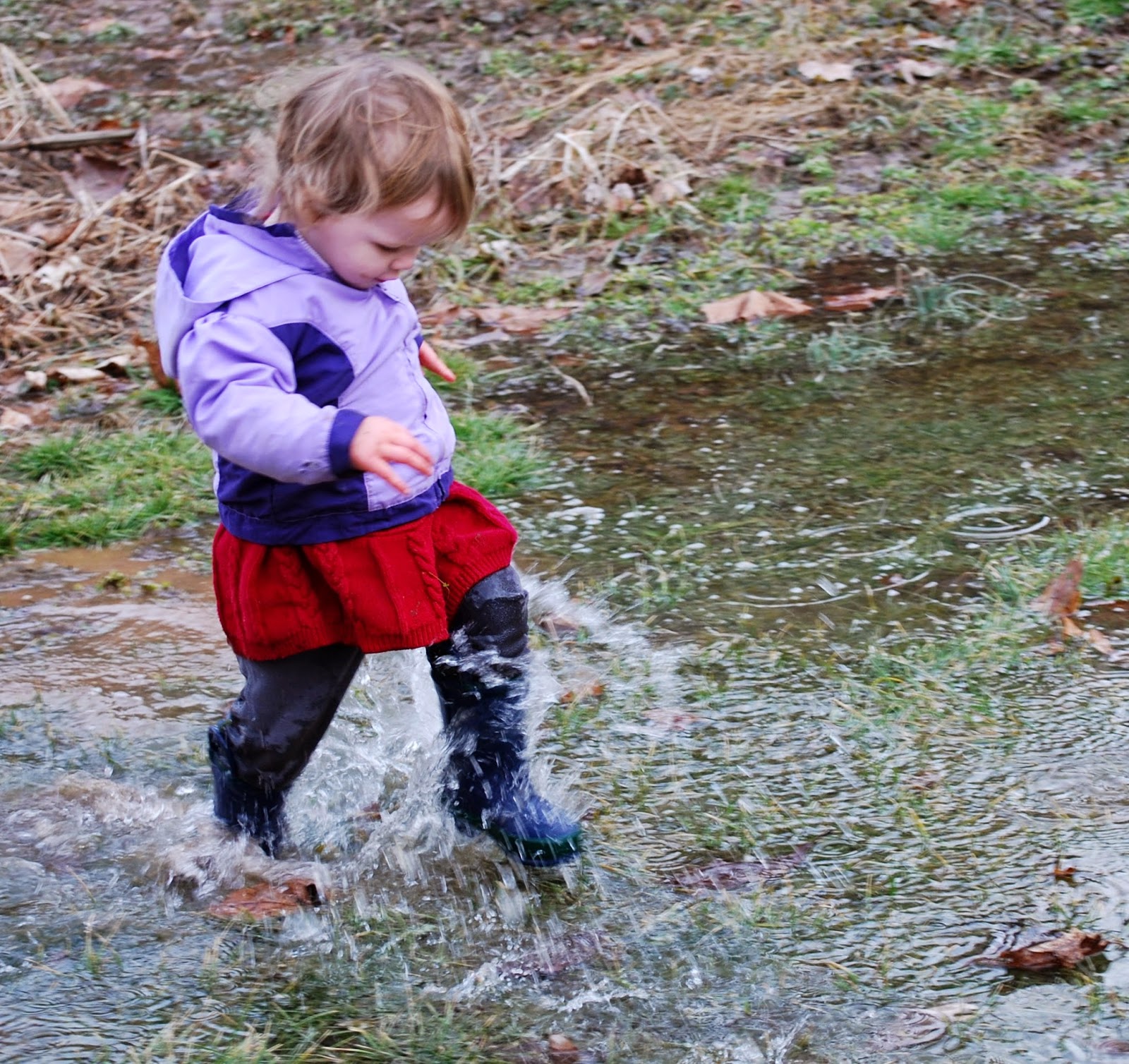
What can you do when personal glee intersects with public gloom? I've been wondering that today as I'm enjoying a marvelous time with my adorable granddaughter while my colleagues digest a proposal that, if adopted, will gut some departments very close to my heart. We're out here splashing in puddles and looking at eagles and throwing rocks in the creek while people I care about are wondering what they'll do if they suddenly find themselves up the creek without a paddle.
We're having fun! But everywhere I go, I see signs of distress and gloom. I ought to be commiserating with my colleagues, but instead I'm chasing after a perpetual-laughing machine (at a time when laughter is really unseemly).
Ah well, I'll have time for gloom tomorrow after the little jumping-bean goes back home. Meanwhile, we'll just pull the curtains shut and share our joy in private where we won't disturb the mournful.
Beyond attention
In Sancta, poet Andrew Grace asks us to consider the pileated woodpecker: "Its gun-hammer neck makes to crack its beak into shards, just to suss out one puce beetle hidden in a wrinkle of bark. It is willing to break itself for hunger."
What hunger drives the speaker of this poem into the woods? We don't know. We open the book to find him living in a small cabin with someone whose leaving completes the first half. The second, solitary section finds him coping with cold and silence, with the sound of garbage trucks climbing a hill and the drumming of pileated woodpeckers.
Grace builds brief blocks of prose poems into a book-length work in which the speaker takes to the woods in an attempt to rebuild a broken life. The poems are studded with fresh metaphors:
And the wind pushes another load of used light over the horizon.
A convergence of kayaks makes the lake cross-eyed.
My mouth is seamed as a scar, debarred and redeemed.But even as Grace excels at describing the natural world in new ways, he questions the sufficiency of such description:
Do you ever feel like description is a filibuster against emotion? Today is boredom and the scent of cedar. I used to chide myself for being satisfied. Now I watch the lake's mirror etc. and I sing etc., etc.More than anything, Sancta is a call to move beyond etc. and see:
Look, is all. The cabin. Look. The lake. Flies like quarter-carats of Hell festoon the curtain. Slipped fires take to the sky. Sweet pine strewn with nude opal birds at its base. O if only my attention led to something besides more attention.Sometimes the looking becomes painful as Grace "navigate[s] the radiant aftermath of loss," but the invitation to look remains irresistible. Sancta wonders whether there are "other places as knotted with light and shade" and then takes us into the shade to shed some light on the dark places. What hunger drives him there? The hunger inside all of us.
Thursday, March 12, 2015
In Just--mud

(not quite but almost)
spring when the world is mud-
luscious the little
rushed vacuum-man
rumbles whoosh and whirr
and dustydried mud comes
rushing up from rugs and
carpets and it's
spring
and my driveway is a mud-pit
(and don't even ask about my
shoes
and rugs
and floors)
in just--
(not quite but almost)
spring
(With apologies to e.e. cummings.)
Monday, March 09, 2015
Whitman, Illuminated


In "Song of Myself," Walt Whitman invites readers to follow along enrapt as he tramps his perpetual journey; in Whitman Illuminated: Song of Myself, Allen Crawford boldly reimagines the journey through color, image, and design in a book that fills the hand solidly but won't sit still.
You can't just sit and turn the page. Crawford's illustrations--or illuminations, as he calls them--are surrounded by Whitman's words, which snake sinuously about or march in sharp formation or float and bob like dandelion fluff through the air. A page might contain a half-dozen hand-lettered words or a hundred, and you may have to flip the book three or four different ways to follow the thread.
It's an infuriating book for anyone in a hurry, but Whitman Illuminated invites readers to lean and loaf at their ease, observing: a hand made of leaves, a head wrapped in barbed wire, a baby floating in space. Two snails mirror each other in a dance of passion; two hands play cat's cradle with fishing line dangling lures. Frogs, birds, bugs, hats, and faces of the many people whose lives Whitman subsumes--all appear in rich hues of midnight, grass, or brick.
Crawford's Foreword explains that he "tried to make the vigor of 'Song of Myself' tangible," to "liberate the words from their blocks of verse, and allow the lines to flow freely about the page, like a stream or a bustling city crowd." Crawford's expansive and detailed illustrations surge with life, pulsing with the procreant urge of the world and weaving word and image into a song of many selves. Reinterpreting such a sacred text requires a touch of hubris, but Crawford's work leads readers always back to Whitman's words by new, unexpected paths.

"At the close of 'Song of Myself,'" explains Crawford, "Whitman invites us to look for him under our boot-soles. Now that my work is done, it's my hope that you may also find a little of him under my pen."
(Find him here from Tin House Press--but be patient. I had to wait three months for my copy to arrive.)
Sunday, March 08, 2015
Spring is breaking out all over
A sure sign of a change in the weather: water flowing every which way on the interstate as the piles of plowed snow melt in the sun. On Friday morning I drove carefully on treacherous roads still covered with snow, but today snowmen all over Ohio are bowing to their fate.
Even the swastika snowman is melting. What kind of person erects an immense snowman right next to the highway, sticks a snow-coated traffic cone on top to mimic a Klan robe, and then forms a dark swastika right on its belly? The swastika didn't last more than a few hours before it got scraped off one morning last week, but now the entire creature is succumbing to the elements.
Meanwhile, my driveway seeks to transform itself into a mudpit before the snow is even half melted. Last week we were snowed in, but this week we could be mudded in. Time to call the gravel guy!
Spring is coming just in time for spring break. I've just turned in midterm grades so I can devote the next three days to writing the anthology essay, after which I'll start prepping next week's classes and do some work on my art history project. But what I really look forward to is putting away the long-johns, stashing my snow-boots in the closet, and getting out into the sun for some real walks. (Provided that I don't get stuck in the mud.)
If you don't hear from me by Friday, send in the Saint Bernards.
Thursday, March 05, 2015
From my window
 I stepped outside this morning just to get the camera out of the car, where I've been keeping it in hopes of eagles. However, yesterday's rain followed by falling temperatures followed by snow resulted in a car thoroughly frozen shut. Good thing I'm not going anywhere this morning!

Wednesday, March 04, 2015
All set for a snow day
Something apocalyptic this way comes, weather-wise: Rain! Floods! Ice! Snow! Warning warning warning! As if to confirm the dire predictions, on my drive home I saw flooded fields, a muddy landslip closing one lane of the highway, a mass of ice chunks piling up at the end of our creek, the creek covering our neighbor's bridge, and water edging ever closer to our road. Falling temperatures are supposed to turn all that water to ice and snow tonight, possibly closing roads and schools.
But I'm prepared. I've just finished putting a pot of potato soup to simmer on the stove and we have a fully stocked refrigerator when the soup runs out. Better yet, I brought home my college laptop computer, so I'm fully equipped to administer two midterm essay exams electronically even if I can't get to campus tomorrow. I have everything I need to get through the next couple of days, provided that the power doesn't go out.
(Couldn't happen again, right? So soon? I refuse to think about it.)
Tuesday, March 03, 2015
Lost among the zombies
One of the great benefits of attending an academic conference is the opportunity to make small talk with interesting people. You're standing in the coffee line, waiting for an elevator, or loafing between sessions and you just start chatting with someone in the same boat, and before you know it you're laughing or learning something or, at the very least, thanking your lucky stars that you're not in that person's predicament.
I fear, however, that these serendipities are coming to an end. I base this on my experience at a recent academic meeting where no one was interested in small talk, preferring to spend down time staring at tiny screens.
Now I'm the first to admit that I'll never win the Most Outgoing prize, but over the years I've developed some pretty reliable techniques for engaging in meaningless chatter with strangers. These skills, however, failed utterly at the meeting I attended over the weekend. In a daylong event, I managed to engage exactly one person in chit-chat; every other opportunity was rebuffed by devotees of tiny screens.
I realize that it's a waste of time to try to chat with people engrossed in their phones or tablets in public, but finding anyone not so occupied is a challenge. It's as if they're so fearful of venturing into public alone that they have to stay tethered to the nanny lest someone approach with poisoned lollipops.
I know I'm not the first to notice the impending death of small talk with strangers in public places, but this was the first time I felt utterly cut off from everyone around me simply because I was busy watching people instead of screens. People-watching was once a pretty interesting practice, but people attached to screens are boring. It's like being surrounded by zombies, except the brains being consumed are their own.
The cure is simple, of course: join the crowd devoted to avoiding engagement with the crowd. But I'm not quite ready to zombify myself. I hold out hope that somewhere out there in smartphoneland there exist a few other holdouts who still hold dear the art of conversation. If only I could figure out where they're hiding.
(Maybe there's an app for that?)
Friday, February 27, 2015
Name games
It's my own fault, of course: If I'd told the visiting poet how to spell my name, then I wouldn't have ended up with two wonderful books inscribed to "Beth."
Not that there's anything wrong with Beth. Some of my best friends are Beth! But until I officially change my name to Betherly, I am not Beth (or Bess or Betty or Barb or Maeve or any of the other names I've been called).
Only under
extreme duress
would I respond
to "Hello, Bess!"
To be called "Bet"
is not a thing
that makes my heart
begin to sing.
Both Betty Boop
and Betty White
can keep their names
Get my name right!
The Beths I've known
have been just fine.
But "Beth" (the name)
just isn't mine.
Your best bet, friend,
I do confess,
is not to call me
Beth or Bess
or Bet or Barb
or even Maeve.
I'll stick with Bev
right to the grave.
Thursday, February 26, 2015
Choose your adventure!
Hike in the Grand Canyon or look at Grand Canyon wallpaper.
Gaze at a Monet waterlily painting right up close or look at a reproduction on a postage stamp.
Hear your favorite song performed by your favorite artist or by a twelve-year-old doing karaoke.
Most of us would choose the adventure that brings us face-to-face with the real thing, which makes me wonder why so many students read online summaries of literature instead of encountering the actual text. Why read a prosaic, tepid, watered-down version instead of the work itself in all its glory?
I've ranted on this before both in and out of class, but I've never found an effective way to persuade students that they're cheating themselves out of amazing adventures. When asked why they prefer online summaries, they mention textbook costs or time management problems or other priorities, but what it comes down to is that online summaries are easier.
Right, but here's the thing: Looking at wallpaper is certainly easier than hiking in the Grand Canyon, but only a fool would claim that the experiences are equally valuable. Likewise great art: it's easier to get hold of a postage stamp, but how much is lost in the reproduction? The pale reflection of the thing simply cannot recreate the experience of the thing itself.
My students don't seem to feel any sense of loss when they avoid reading literature. After all, they're getting a quick and easy rundown of the important characters, plot elements, and themes in the book. What could they possibly be missing?
They're missing everything that distinguishes the real thing from its shadow: intensity of color, integrity of line, clarity of voice; the sweat that results from an uphill slog, the quickening that occurs when a sight touches the soul, the stirring that inspires creativity.
Why would anyone forego that kind of adventure in favor of a postage-stamp-sized experience? And what can I do to persuade them to stop?
Wednesday, February 25, 2015
Doing what works--works
Some unseen force in the textbook-writing industry decrees that every writing text must include some variation on this statement: You have to find the method that works for you. I immediately want to dial up Captain Obvious to report a cop-out, but then I recall that I gave that same advice to one of my own students just last week. It's true--you do have to find the method that works for you--but the problem arises in how we understand that word works.
Context matters. The method that enables E.L. James to write Fifty Shades of Gray will not necessarily serve the student attempting to write a research paper for a first-year composition class, and telling certain lazy students do what works for you sounds like permission to do nothing--or to plagiarize. (Which, lest we forget, helps students develop the time management skills that they need to succeed in the world of work.)
First-year writers in composition class need to find the method that works to demonstrate mastery of certain conventions of academic writing. A student comfortable with sub-par performance might smile and say "It works for me!" But it may not work to produce the desired grade.
Upper-level classes are different. With first-year writers, I tend to issue directives: you must put the parentheses here; you must properly integrate and punctuate quotations from sources; your thesis statement should follow one of these helpful models. Advanced writers get gentle nudges: try this clause at the beginning of the sentence and see how it changes the emphasis; consider more vivid verbs here and see how they impact meaning and rhythm; have you thought about switching these two points around? Give it a try and see what works. It's like the difference between giving a preschooler a coloring book (Color inside the lines!) and giving an older child a blank canvas and a bunch of paint.
Do what works for you works best for writers who know enough about writing to know what works best. In that way, it's like much writing advice: most useful for those who don't need it.
Tuesday, February 24, 2015
Frosty morning
Who can complain about the cold when it makes this much beauty?
(I can--but just for the moment, I won't.)


(I can--but just for the moment, I won't.)
Monday, February 23, 2015
Powerless to avoid cabin fever
Cabin fever? Don't get me started!
With schools closed and churches closed and every possible fun weekend activity postponed because of ice all over the roads, with the hubby stuck inside because there's no work in this weather, with appliances suddenly failing and pipes freezing and power outages and cold cold cold, there's just no escape.
I thought that going to work today would be a welcome break from the cabin fever--and it was, until the power went out all over campus and then came back on in certain places, not including the bathrooms in our building. No heat, no light, no bathrooms, no internet.
So I came home, where here I sit contemplating the birds at the feeders and the work on my laptop. On the way home I saw a pair of eagles, one diving and lifting a fish from one of the few spots where the river is not frozen solid. Do they have antifreeze in their feet or what? If I were an eagle I'll bet I wouldn't get cabin fever at all.
(But what about the fish-breath problem?)
Saturday, February 21, 2015
Lights-out links
Last night as I tossed and turned and tried to stay warm and stop worrying about whether the pipes would freeze, I kept asking myself, "What could be worse than suffering a power outage on the coldest night of the year?"
Lots of things could be worse. Like, for instance, suffering a power outage on the coldest night of the year without the benefit of a house and a bed and lots of warm blankets. At least we're not homeless! And the power came back on after five cold, dark hours! And the pipes didn't freeze! And even if I feel a little less than rested today, I know I'm better off than some people I could mention. Time to count my blessings:
I'm not currently "camping out in line with half the population of the United States in the dead of winter to register [my] outrage," so I don't have to worry about whether the Federal Department of Outrage will reject my attempts to document my ire. (Click here to read it in McSweeney's.)
I've never had to eat any of the cakes pictured here, which is a good thing because they make my head explode.
When one of my favorite academic blogs asks readers "How do raises work where you work?" I laugh bitterly and say, "Raises? What raises?" But: at least I don't work at Wal-Mart. Or the Federal Department of Outrage. Or the Harlan City (Kentucky) police department, which addressed the winter weather outrage by putting out an APB for Queen Elsa of Arendelle. Or our power company, which fielded calls from a large number of the 4000 local people who were without power and sent workers out in the dead of night when temperatures were in the single digits to try to persuade the hamsters to start running on those big wheels again.
Wait, now I know what could be worse than suffering a power outage on the coldest night of the year--being responsible for fixing it. Three cheers for those guys, whoever they are. I hope they're sitting someplace warm and enjoying a nice hot cup of something wonderful, which is exactly what I intend to do as soon as the temperature in my kitchen rises above 50. Until then, I'm staying under the covers.
Thursday, February 19, 2015
Music that mends the cracks
When composer Jake Runestad addressed an audience of mostly students last night, the first thing he pointed out was that he is not dead. The word composer, he said, might evoke in their minds an image of some long-dead European dude with wild hair and an unpronounceable name, but no: if Runestad is any indication, today's composers wear hip suits and use mousse and emphasize the joy of playing with music.
Runestad's talk, punctuated by glorious performances of some of his works by our college's concert choir, provided abundant evidence that the liberal arts continue to feed spirits even in our hectic information age. His creative process requires mastery of the technological tools that put notes on the page, but those notes spring from long stretches of time devoted to studying and internalizing texts. Most of the works performed last night were settings of poetic works by poets as different as Paul Laurence Dunbar and Wendell Berry--a setting of "The Peace of Wild Things" that made me want to lie down and die right now so the choir can sing it at my funeral.
Runestad draws on works of both established and lesser-known authors; "Dreams of the Fallen," his new work for orchestra, piano, and choir, sets to music poetry by Iraq war veteran Brian Turner. By far my favorite, though, is "We Can Mend the Sky," a choral work based on poetry written by young Somali immigrants to the U.S. (Click here to listen.) The piece opens on a dramatic note, with drums and shifting rhythms creating tension, but it then moves toward a solo expressing deep yearning for peace before developing into a rousing chorus proclaiming "If we come together, we can mend a crack in the sky" performed so joyfully that it made me believe.
The students, of course, had the most fun singing Runestad's popular "Nyon Nyon," a work composed entirely of gibberish and allowing accomplished singers to break out their amusing mouth-noises. Runestad explained that he wrote that piece as a college student because he just wanted to play around with words and sounds and music. His playfulness, of course, is grounded in a deep understanding of how music works, a willingness to delve into texts until they become a part of his psyche, and an ability to employ technological tools to disseminate the results.
I hope my students heard that message, and I hope they will pursue that highly informed and creative play. But more than that, I hope they will listen to the music and know that the arts are not any more dead than is Jake Runestad.
Tuesday, February 17, 2015
This weather is for the birds

I delayed leaving the house as long as I could this morning, hoping in vain to see a snowplow on my road. When I finally left I had to follow a single set of tire marks breaking through the snow, paying no attention to proper lanes but simply following what appeared to be the road. The state highway was more visible but still slippery, but the river--I wish I could tell you how beautiful my river looks on a cold morning when golden sunshine touches the icy silver water.
I swung around by the dam to see if any eagles were out but didn't see any and didn't get out to take photos because of the cold. I realize that others have it worse--at least traffic is still moving here! But getting out of the car when the temperature reads six below zero is not my idea of a good time.
 Yesterday a flock of cardinals frequented our bird feeders, with as many as a dozen at a time crowding the feeding station and more waiting on the limbs of the nearby maple tree. I suppose the snow has made their usual sources of food less available, and while I'm happy to see brightening up our winter landscape, I'm not going outside to join them. Why brave the cold when I can watch them comfortably from inside my nice warm house?
Now if only I could get my students to agree to have class at my house....
Monday, February 16, 2015
The allure of allusion
There's nothing like teaching a text for a umpteen-millionth time only to discover that you've been overlooking an important allusion--so important, in fact, that it's mentioned on online cheat sites. First I'm congratulating myself for noticing this interesting allusion and then I'm kicking myself for being the last person on the planet to have noticed it, or maybe I've noticed it before and forgotten it utterly. Such are the trials of the aging professor.
Not that my students would notice. Today in two classes I found myself urging students to spot interesting allusions and failing utterly, primarily because the students haven't read the works alluded to or they don't see how they're relevant.
"Who's read Moby Dick?" I ask, and how many hands shoot into the air?
None.
"Who's read Frankenstein?"
One student! Great!
"Who's read Cormac McCarthy? Walt Whitman? John chapter 12?"
We're clearly not getting anywhere with this discussion.
One of the things I love about teaching literature is the ability to make connections across broad stretches of time and space, to suddenly discover the Garden of Eden and the problem of pain springing up in the middle of a nineteenth-century short story, to unearth monsters or heroes in contemporary poetry and find their close relatives in The Odyssey. This is the experience I wish for all my students: to overhear longstanding conversations conducted across the centuries between authors as distant and different as Stephen Crane and Herman Melville, Langston Hughes and Walt Whitman, Andrew Grace and Homer.
And if they listen long and hard enough, maybe one day they'll be able to talk back.
Friday, February 13, 2015
An ice walk
 |
| She loves to play in water--even when it's frozen. |
I ought to be tackling that big pile of papers this afternoon and also prepping Monday's classes, doing some committee work, and outlining the next phase of my big writing project, but instead I'm taking Hopeful for a walk in the snow.
Not a long walk--it's too stinking cold and my walking shoes leak. But the forecast for this weekend calls for single-digit temperatures plus high winds and snow, which is perfect weather for staying inside with a big pile of papers to grade. Today, though, I decided to get out and stomp round in the snow while the sun is still shining.
Chickadees and juncos and a lone hairy woodpecker flock around the birdfeeders but the woods down by the creek remain silent and still. Ice forms unevenly on the creek, creating constellations of protruding rocks and channels edged by feathery fronds and swooping curves. Occasionally I hear a crack and a splash as another chunk of ice drops off into the water. I love to watch little air bubbles skittering beneath the thin ice, but I suspect that by Sunday the creek will be frozen solid again.
 |
| Islands in the stream. |
 |
| Chickadee-dee-dee! |
Wednesday, February 11, 2015
The little darlings identify another valuable life skill
I'm reading Cheating in College: Why Students Do It and What Educators Can Do about It (McCabe, Butterfield, and Trevino 2012) but I'm making slow progress because I keep getting hung up on this point that keeps coming up:
So what we have here is a bunch of students who see cheating as a valuable life skill. If that's true, then maybe we ought to start teaching more effective plagiarism skills. Cheating 101--the class that prepares students for a life of rationalization.
How will I ever finish the book when I can't stop banging my head against the wall?
Many students today simply do not consider cut-and-paste plagiarism from the Internet or written sources to be cheating, so when asked in a survey on 'cheating' whether they have engaged in this behavior, many simply say no--even if they have. As noted earlier in the chapter, in their open-ended comments, many explain that they answered this way because, when they engaged in one of these behaviors, it simply wasn't cheating. (58-59)And what reasons do students offer to explain why their cheating doesn't really qualify as cheating? They rationalize: "they didn't have enough time to do the assignment and had no choice; the assignment had little learning value or was unfair; or using the Internet in this was is effective time management--a skill that will serve them well in the real world when they graduate" (59-60).
So what we have here is a bunch of students who see cheating as a valuable life skill. If that's true, then maybe we ought to start teaching more effective plagiarism skills. Cheating 101--the class that prepares students for a life of rationalization.
How will I ever finish the book when I can't stop banging my head against the wall?
Tuesday, February 10, 2015
Clap along!
At a time when academe is awash with doom and gloom, it feels wrong to be so happy. And yet I am. Why?
My classes are going well, with a dearth of deadwood and lots of fun discussion of literature, and I'm even excited about reading the papers my students are producing (although I have to wonder what madness inspired me to require all of my classes to submit papers in the same week).
My committee work is challenging, but we're all working together well to achieve some very specific and important tasks that will have an impact on the campus for a long time to come.
My research projects are progressing nicely and sparking ideas for new avenues of research that will lead into some really exciting places.
And best of all, I'm getting lots of happy grandma time with a sweet little girl who loves to play with words.
So while I'm aware that the future looks gloomy for higher education as a whole as well as for my particular discipline, I can't help feeling happy and hopeful. (But I'd better not say it too loud lest anvils start falling from the sky.)
Sunday, February 08, 2015
F gets an A+
"Some fish for words from shore while others...like to go wading in up to their chins through a torrent of bone-chilling diamond, knife raised," writes Franz Wright in a prose poem called, simply, "Spell," although I don't know whether the title is intended as a command or an incantation. The poem appears in Wright's 2013 collection F, which the poet suggests refers both to his name and his "grade in life." However you spell it, F is a remarkable achievement.
Never one to fish for words from shore, Wright plunges deep into the river of life, raises his knife, and pulls from the torrent creatures both mundane and fantastic. The long poem "Entries of the Cell" assembles dreamlike fragments:
For a collection redolent of the scent of the graveyard, F remains warm with light and life. In "Crumpled-Up Note Blowing Away," the poet proclaims,
This tender sympathy for the human condition comes through most clearly in "Leave Me Hidden," which starts on a sardonic note of disgust for popular culture but soon moves into lyrical wonder over unexpected grace. Wandering into the woods and pressing his hands against a tree's "hugely magnified / fingerprint," the poet feels
Never one to fish for words from shore, Wright plunges deep into the river of life, raises his knife, and pulls from the torrent creatures both mundane and fantastic. The long poem "Entries of the Cell" assembles dreamlike fragments:
There are spots in the sea, depths where light ceases to penetrate, a painless, dreamless and shatterproof sleep holy to horrible workers: the ones who'll appear in our place after we've fallen storming the walls of the Kingdom.From these blue depths the poet draws monsters and demons, evokes fears of mortality and shame and meaninglessness, but embraces beauty within alienation:
This blue world.Into this strangeness Wright introduces his familiars: family, nature, words. The tender "Learning to Read" borrows a line from the poem "The Blessing" by Franz Wright's father James Wright, but F bends J's line to emphasize that breaking a fragile body does not always lead to blossoming. Anyone interested in the anxiety of influence might find further fodder in "Peach Tree" when F evokes the title of J's breakout poetry collection, The Branch Will Not Break, but F more directly addresses his family relationships in "Postcard 2," which includes a cryptic message from his famous father: "The blizzard I visit your city disguised as will never arrive and never be over."
Unattainable--stranger than dying,
by what, what unmerited blessing, were we allowed to come here and to see it, as in a dream, or with eyes of flesh, what difference?
Death row born and bred, and yet
This blue world,
my stranger...
For a collection redolent of the scent of the graveyard, F remains warm with light and life. In "Crumpled-Up Note Blowing Away," the poet proclaims,
But I've said all thatAnd yet the poem doesn't accept this end but moves on through two more stanzas, ending with the poet sitting at the train station awaiting death's move while the sun shines brightly on his back. Another poem, "The Composer," introduces a character who marries mortality with art: "Awareness of existing in a universe where death is real came to him in the form of music." The soul, says Wright, is "a stranger in this world," but it does not lack tools for making beauty.
I had to say.
In writing.
I've signed my name.
It's death's move.
This tender sympathy for the human condition comes through most clearly in "Leave Me Hidden," which starts on a sardonic note of disgust for popular culture but soon moves into lyrical wonder over unexpected grace. Wandering into the woods and pressing his hands against a tree's "hugely magnified / fingerprint," the poet feels
a heartbeat, vast, silentlyFor Franz Wright, motherworld and underworld remain eternally tangled, but reading his poems allows readers to plunge into the bone-chilling river of human existence and emerge with a new understanding of suffering linked with a mouth full of thank you.
booming there deep in
my hidden leaves, blessed
motherworld, personal
underworld, thank you
thank you.
Saturday, February 07, 2015
News from the rock face
 I paid a visit this morning to the cliff across from our house. From a distance the rock appears static and stable, but up close it tells a different story: tiny fissures deepen into fractures and chasms where water freezes and thaws and propels large chunks of rock down the slope.
 Recent rockfalls expose fresh surfaces glowing with subtle swirls of color, while older rock weathers gray and brown and eventually becomes colonized by lichens and liverwort and tiny climbing vines. In the spring I've seen phoebes making nests in the thick vegetation, and high above the cliff face stand tall trees offering habitat for squirrels, chipmunks, and many kinds of birds. At the highest point is a hawk's nest, currently vacant. Will the hawks return this spring? Will the hillside once again host a den of foxes?
Down below we watch the changing profile of our own Old Man of the Mountain, whose nose has become more chiseled over the years and his eyes more sunken. A new fissure makes him looks as if he's about to open his mouth and speak, but what would he say? Every time I see him, he reminds me that time, which turns the hardest rock to dust, creates beauty even through decay.

Thursday, February 05, 2015
No apologies for popularity
At a meeting the word popular insinuates itself into the discussion with a sneer, carrying baggage traceable to junior high school: we unpopular types may have denigrated the pretensions of the popular kids, but only because we secretly coveted their social successes.
When it comes to getting butts into classroom seats, the word popular is fraught with competing concerns. We hear rumors of classes that attract students by giving them what they want--good grades for little work--and we roll our eyes and reject the model. We don't want the kind of popularity that arises from a sacrifice of rigor.
But make no mistake: we definitely want butts in seats, because in the current academic climate, classes with low enrollments are in danger of cancellation. We want to be popular without being pushovers. What can make a rigorous class attractive to picky students?
Versatility. Students look at our many course offerings and wonder, "What can this course do for me?" A course required for a major may be essential to students within that major, but what if it can also fulfill a General Education requirement without loss of rigor? Or what if it can fulfill two General Education requirements plus serve as an elective in a minor? Teaching GE courses requires a little extra work to align the course with the campus assessment program, but if it gets butts in seats, it's worth it.
Variety. A few years ago a gifted English major told me she was switching to another program for several reasons, but partly because it seemed as if she was doing the same kinds of things over and over in her literature classes. Ouch. We all have our particular strengths as teachers, but that doesn't mean we shouldn't try to stretch beyond those strengths by relying on a variety of pedagogical methods, challenging students with different types of assignments, and taking risks in the classroom even if they threaten our carefully imposed order.
Vigor. I know it seems counterintuitive, but comments on student evaluations suggest that students want to engage actively with interesting ideas and activities. They don't want to passively absorb material that seems moribund; instead, they want to get up and get their hands dirty, toss ideas around the room and see what they can make of it. Creating a lively and vigorous class is messy work that may require professors to get comfortable with chaos, but it helps learning happen.
No learning happens in a class that gets cancelled, so I'm not ashamed to say that I'm devoted to making my classes popular--without sacrificing rigor or becoming a pushover. It's a lot of work--but also a lot more fun than having classes cancelled.
Wednesday, February 04, 2015
Drop and give me 50!
My writing students might sometimes think I'm a drill sergeant when I force them to write and write and keep on writing, but I rarely get a chance to apply these skills to my colleagues. In May, though, I'll crank up my drill-sergeant credentials and put some colleagues through their paces when our Faculty Publishing Group offers its first-ever Academic Writing Boot Camp.
The idea is simple: for three days, from 9 a.m. to 1 p.m., faculty members will gather to give their summer writing projects a kick-start. Each day's activities will include writing sprints intended to get the juices flowing, extended writing time to get massive amounts of words on the page, and feedback on portions of the writing project.
This is my first time leading an effort like this but I hope not the last. I've already planned some helpful activities but I need more. Here's where you can help: if you've ever been involved in a faculty writing workshop like this one, what was most helpful? What was least helpful? If you've never been involved in this kind of activity, what would attract you to the workshop? What kind of activities would most effectively support your writing efforts?
I welcome suggestions in the comments. That's right: I want you to drop and give me 50! (Words.)
Monday, February 02, 2015
Beyond making sense
This morning I was briefly tempted to give my American Lit Survey class a reading quiz consisting of one question: "Briefly summarize the plot of Gertrude Stein's Tender Buttons." It's an absurd question, of course, but it would very efficiently distinguish between those who had done the reading ("Plot? What plot?") and those who had not (a whole page of b.s.).
Instead I asked for the students' impressions of Stein's work, and their universal complaint was "It doesn't make sense."
"Okay," I said. "But what else besides sense can a literary work make?"
And that was the start of an interesting discussion.
I've never taught Stein before and I'm still not sure that teaching Stein in a 50-minute class lies within the realm of possibility, but I led my students through the part of Tender Buttons excerpted in the anthology and helped them to fumble toward understanding of the tenets of modernism. A few times they asked me to explicate specific lines and I had to admit that I didn't have a clue, something that would have frightened me earlier in my teaching career.
Back then I thought that the teacher was the person who had all the answers; these days, on the other hand, I'm content to be the person who has all the questions and helps guides students toward some of the answers. Sometimes we make sense. Other times, like today, we create a mind-blowing experience.
Sunday, February 01, 2015
Bloop, bloop goes the blog
Anyone who asks about my wonderful family weekend is likely to hear about snow angels and sushi and silly songs, but I probably won't mention the primary topic of conversation in my granddaughter's household right now: poop.
It's an important topic, especially when the little one is still mastering the intricacies of using the potty. I don't want to go into a lot of detail here lest anyone happens to be reading this over lunch, but let's just say this: poop happens, but not always in the right time and place. Fortunately, young parents trying to gently guide their toddlers have many resources on hand to help, and if there's a grandma handy, then she'll gladly do her part as well.
Which is why I spent a lot of time this weekend reading my granddaughter books about poop.
I won't attempt a full-scale review of these books because, frankly, I'm trying really hard to delete them from my memory. There's the board book in which a gender-neutral baby says "Bye-bye, diaper!" and hears a "Tinkle, tinkle, toot" before reaching my granddaughter's favorite page: "Undies!"
Then there's a book full of animal parents asking their offspring whether they've pooped, while young readers get the thrill of lifting little flaps to find things that are definitely not poop until, finally, they lift the right flap and say, "There's the poop!"
And I'm not going to even describe the action in a book euphoniously titled "Bloop, bloop goes the poop." Really, it's all there in the title.
I am delighted to be a part of my granddaughter's life and share this important developmental milestone with her, but nevertheless I'm looking forward to the day when we can put the poop books behind us and move on to more exciting topics. How will we get to know Pooh if we're stuck on poop?
Wednesday, January 28, 2015
From drafty to droopy to drowning, and more!
I'm holding in my hot little hands the first pile of student drafts of the semester! Before I even look at them, I know what I'll find:
The drafty draft: A paper so full of holes that the argument seems to have leaked out.
The droopy draft: Starts off strong but can't hold up the argument past the first page.
The drowning draft: The argument gasps for breath beneath a sea of not entirely relevant contextual information stretching all the way back to the dawn of time.
The non-draft draft: A thesis statement and a list of points, or just a page full of quotes that could be useful in an analytical essay.
The master of misdirection draft: Tosses pretty colored balls in the air to distract from the fact that it doesn't actually do what the assignment requires.
The changing horses in midstream draft: Lays out a clear road map but then--wait, what was I talking about?
The "Say It with Flowers" draft: Grabs obscure, flowery terms from the thesaurus without regard for whether the selected words are appropriate for the task.
The "Oops, I sent the wrong draft!" draft: Submitted by a student who thinks a professor will believe that he went to the effort to write two versions of the paper, only one of which is plagiarized.
The invisible draft: "I'm sure I submitted it. There must be something wrong with Moodle."
The "Carry on!" draft: Original work, well organized, nicely written, with just a few areas needing improvement.
I wish I had more of the final type, but alas, the odds are against it.
Subscribe to:
Posts (Atom)