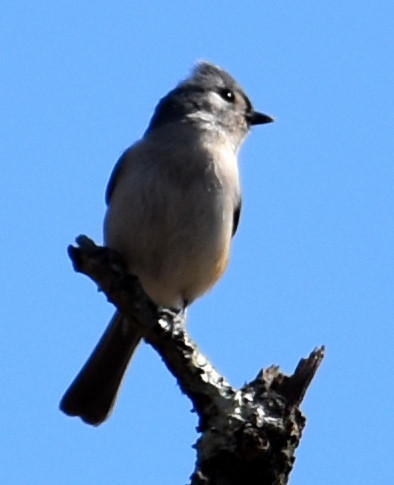
The sun is barely up and the house is quiet, but suddenly a clattering noise breaks the silence. I'm not startled, though, because I know this noise--I hear it at all hours of the day. It's that bird again, a female cardinal attacking the front window.
This has happened before. Years ago a cardinal spent the better part of the spring and summer attacking her own reflection in my car's mirror, eager to expel the interloping bird she saw in there. This one is different, though: she attacks just one particular spot on the front window, over and over again, at unpredictable moments all day long.
Why pick that one spot? When the light's right the entire window works like a mirror, but the bird restricts her attacks to an area about midway up one side pane. So my husband drew a rudimentary face on a piece of paper towel and taped it to that spot, thinking the bird would be spooked by the face. (Frankly, if I saw that disembodied face coming at me out of nowhere, I'd be spooked.) But no: not to be deterred, the bird now attacks the paper-towel face.
The bird perches on a pile of wood on the porch and then suddenly flings herself at the window, sometimes sending bits of feather flying. She leaves some smudges but doesn't harm the window, but I can't imagine that all that window-banging is doing her any good. She ought to be out tending a nest or laying eggs or whatever cardinals are supposed to be doing right now, not banging her head repeatedly against an unyielding window. What's her problem?
I could ask myself the same question. How often do I end up banging my head against an unyielding problem, attacking an illusion over and over again while I ought to be out getting stuff done? This week I've been annoyed with a colleague--never mind why--over a problem that isn't going to get any better regardless of how many times I bang my head against it, and yet there I go again. Flutter bang clatter! What a waste of time.
I need to remind myself of the cardinal rule of adulting: doing the same thing over and over and expecting different results is the definition of insanity. And so I walk away from the window, wave goodbye to that spooky fake face, and get on with more important tasks.
I only hope the cardinal can learn the same lesson.
Tuesday, April 02, 2019
Thursday, March 28, 2019
Worms gotta squirm, kites gotta fly
Sure signs of spring: we've been blowing bubbles and transplanting bulbs and getting ready for the youngest grandkid's first birthday party, and today, between a gray damp morning and a rainy evening, we found a perfect moment to fly the big red octopus kite. Gusty breezes blew it around in the sky and sometimes sent it dashing to the ground, while the kids ran and jumped and tried to catch it. The youngest was a little scared when the kite came too close, but a red-tailed hawk overhead did not seem at all alarmed.
Watching the kite and the bird and all that rambunctious energy soothed my soul and opened a door for joy. Worms gotta squirm and kites gotta fly and when the time is right, you can't stop spring from moving right in.
| Discovering snowdrops |
| Squirmy, wormy, goose. |
Tuesday, March 26, 2019
Muddling through the dullness
A whole week since I've posted! I must have been doing something pretty amazing to distract me from my favorite form of recreational writing, but I'd be hard pressed to explain what. I've been walking a little, writing a lot, complaining about the rainy gray weather. Walked in the cemetery and saw eastern bluebirds. Went to Columbus to see the musical Rent. Read Kate Atkinson's Transcription, a novel I'll now never be able to read again without knowing what's waiting at the end (but it's well worth reading so go ahead). I guess that's one of the hazards of being on sabbatical: most of my days are too dull to interest anyone other than myself.
But even while muddling through the dull middle of a sabbatical project I can find a few bright spots. I spent most of last week in Jackson, for instance, but when I came home Sunday afternoon I was delighted to find my daffodils and crocuses blooming and, even more surprisingly, two indoor plants producing spectacular blossoms: upstairs, a potted geranium that has kept blooming on and off all winter, and downstairs, a hibiscus plant left behind by a retired colleague who couldn't take it with her when she moved to Minnesota. It's kind of unusual to see hibiscus blossoms in the basement in the early spring chill, so that spot of color has been cheering me immensely.
Outside below the bird-feeders I see a towhee, filling the black-baked bird gap left behind by the absence of juncos. The resident woodsman left a pile of firewood on the porch which has served as an attractive playground for chipmunks--but I've seen and heard no mice or signs of mice in the house, hurrah. A female cardinal keeps trying to pick a fight with the bird she sees reflected in the picture window. The buckeyes and rhododendrons are budding out and the grass is greening up, and before you know it I'll be needing to get out the mower.
But first I'll need to sit down and write some more. Who wants to watch me write? Moments of drama are few and fairly subtle; today, for instance, I restored the bulk of a paragraph that I'd deleted in full last week. It just doesn't get any more exciting than this, folks. I can go on like this all day.
But even while muddling through the dull middle of a sabbatical project I can find a few bright spots. I spent most of last week in Jackson, for instance, but when I came home Sunday afternoon I was delighted to find my daffodils and crocuses blooming and, even more surprisingly, two indoor plants producing spectacular blossoms: upstairs, a potted geranium that has kept blooming on and off all winter, and downstairs, a hibiscus plant left behind by a retired colleague who couldn't take it with her when she moved to Minnesota. It's kind of unusual to see hibiscus blossoms in the basement in the early spring chill, so that spot of color has been cheering me immensely.
Outside below the bird-feeders I see a towhee, filling the black-baked bird gap left behind by the absence of juncos. The resident woodsman left a pile of firewood on the porch which has served as an attractive playground for chipmunks--but I've seen and heard no mice or signs of mice in the house, hurrah. A female cardinal keeps trying to pick a fight with the bird she sees reflected in the picture window. The buckeyes and rhododendrons are budding out and the grass is greening up, and before you know it I'll be needing to get out the mower.
But first I'll need to sit down and write some more. Who wants to watch me write? Moments of drama are few and fairly subtle; today, for instance, I restored the bulk of a paragraph that I'd deleted in full last week. It just doesn't get any more exciting than this, folks. I can go on like this all day.
Tuesday, March 19, 2019
The view from sabbatical
On a quick visit to campus yesterday I encountered a couple of English majors who ran up and gave me a big ol' hug. "We miss you!" they said, but I reminded them that they're in very good hands in my absence. It was good to chat with them because the main thing I miss during my sabbatical is spending time with students.
Granted, I don't miss all the grading, or the lame excuses or late-night e-mails asking questions that can easily be answered by reference to the syllabus--especially the e-mails that start off "Hey!" and eschew punctuation. Next week students will be registering for fall classes, and I'm eternally grateful for the colleague who is handling my two remaining advisees, because advising season always makes me a little bit crazy.
But I miss the students' energy, their occasionally brilliant responses to literature, their willingness to pour themselves onto the page for writing assignments. I miss hearing them discuss their reading and reach out to help each other when they struggle to understand. I miss the ones who stop by my office for no reason just to chat, and I even miss the high-maintenance ones who stop by for big reasons that require tissues and listening.
It's only one semester so I won't have to miss them for long, but I'm already eager to share with them some plans for next fall's classes. While they're keeping their eyes focused on the task right in front of them so they can get through this semester, I'm standing back and seeing the big picture, the exciting plans awaiting beyond spring and summer. And that's what I love about a sabbatical: released from the daily grind, I can take a longer view and make big changes, or small changes that will have a big impact over time.
Just wait and see, I want to tell them. You have no idea what delights are waiting just around the corner.
Granted, I don't miss all the grading, or the lame excuses or late-night e-mails asking questions that can easily be answered by reference to the syllabus--especially the e-mails that start off "Hey!" and eschew punctuation. Next week students will be registering for fall classes, and I'm eternally grateful for the colleague who is handling my two remaining advisees, because advising season always makes me a little bit crazy.
But I miss the students' energy, their occasionally brilliant responses to literature, their willingness to pour themselves onto the page for writing assignments. I miss hearing them discuss their reading and reach out to help each other when they struggle to understand. I miss the ones who stop by my office for no reason just to chat, and I even miss the high-maintenance ones who stop by for big reasons that require tissues and listening.
It's only one semester so I won't have to miss them for long, but I'm already eager to share with them some plans for next fall's classes. While they're keeping their eyes focused on the task right in front of them so they can get through this semester, I'm standing back and seeing the big picture, the exciting plans awaiting beyond spring and summer. And that's what I love about a sabbatical: released from the daily grind, I can take a longer view and make big changes, or small changes that will have a big impact over time.
Just wait and see, I want to tell them. You have no idea what delights are waiting just around the corner.
Saturday, March 16, 2019
Wandering Merwin's forest of poems
I woke to the news that W.S. Merwin was dead and I sat right down and cried. Never knew the man, of course, except through the documentary Even Though the Whole World is Burning. And his poetry. Poetry does not provide direct access to the poet, but I have often felt that Merwin's poetry knows me and knows me well.
I don't know which of his poems I love best, but this morning I reached for the ones that speak to deep parts of my soul. The documentary Even Though the Whole World is Burning takes its title from the last line of "Rain Light," a poem I have taught to bright fresh college students even though it assumes some familiarity with loss, opening with the mother comforting her son over her impending absence. Loss is evoked also in "For the Anniversary of My Death," in which the poet imagines a time when, he writes, "I will no longer / Find myself in life as in a strange garment / Surprised at the earth." Today many will return to that poem and hail its prescience--and in fact the Merwin Conservancy has posted the poem on its home page alongside the announcement of his death.
This morning I've been thinking about the Merwin Conservancy, the group formed to protect Merwin's legacy--not just his poems but the nature preserve that grew out of his love for a spot of ruined land on Maui, the former pineapple plantation he transformed into a verdant refuge for tropical trees, over 700 species, many rare or endangered, all of which he planted and watered by hand. Even Though the Whole World is Burning suggests that Merwin saw tending to trees and writing poems as two halves of the same work, so it's no surprise that he left behind so many trees in his poems. "Place" begins thus: "On the last day of the world / I would want to plant a tree," not for its fruit but so that it can stand and grow and enrich the natural world and live on long after the gardener is gone.
Also running through Merwin's forest of poetry is a memorable fox, the vixen that gave the title to one of his finest poems. The vixen is addressed as
I tried once to memorize "The Vixen" and enjoyed rolling those long, loose lines around in my mouth, but something interrupted, no doubt some mundane duty "more important than poetry," and I lost track, lost focus, lost the vixen in the woods. But I did succeed in memorizing another Merwin poem, "Thanks," which begins with a command to "Listen." But what will we hear? In this case, people beset by the demands of daily life, in despair over violence and injustice and death, who nevertheless feel the need to express gratitude:
I don't know which of his poems I love best, but this morning I reached for the ones that speak to deep parts of my soul. The documentary Even Though the Whole World is Burning takes its title from the last line of "Rain Light," a poem I have taught to bright fresh college students even though it assumes some familiarity with loss, opening with the mother comforting her son over her impending absence. Loss is evoked also in "For the Anniversary of My Death," in which the poet imagines a time when, he writes, "I will no longer / Find myself in life as in a strange garment / Surprised at the earth." Today many will return to that poem and hail its prescience--and in fact the Merwin Conservancy has posted the poem on its home page alongside the announcement of his death.
This morning I've been thinking about the Merwin Conservancy, the group formed to protect Merwin's legacy--not just his poems but the nature preserve that grew out of his love for a spot of ruined land on Maui, the former pineapple plantation he transformed into a verdant refuge for tropical trees, over 700 species, many rare or endangered, all of which he planted and watered by hand. Even Though the Whole World is Burning suggests that Merwin saw tending to trees and writing poems as two halves of the same work, so it's no surprise that he left behind so many trees in his poems. "Place" begins thus: "On the last day of the world / I would want to plant a tree," not for its fruit but so that it can stand and grow and enrich the natural world and live on long after the gardener is gone.
Also running through Merwin's forest of poetry is a memorable fox, the vixen that gave the title to one of his finest poems. The vixen is addressed as
Comet of stillness princess of what is overAnd the lines lope on in a mesmerizing rhythm that echoes the vixen's fluid movement until vixen and poem dissolve into "the silence after the animals."
high note held without trembling without voice without sound
aura of complete darkness keeper of the kept secrets
of the destroyed stories the escaped dreams the sentences
never caught with words warden of where the river went...
I tried once to memorize "The Vixen" and enjoyed rolling those long, loose lines around in my mouth, but something interrupted, no doubt some mundane duty "more important than poetry," and I lost track, lost focus, lost the vixen in the woods. But I did succeed in memorizing another Merwin poem, "Thanks," which begins with a command to "Listen." But what will we hear? In this case, people beset by the demands of daily life, in despair over violence and injustice and death, who nevertheless feel the need to express gratitude:
back from a series of hospitals back from a muggingThis morning when I heard news of the dead (even though I didn't know him) I wanted to say thank you. So here I sit, tears in my eyes, thinking about W.S. Merwin and wanting to plant a tree and recite a poem and chase a vixen but I can't find the words, but fortunately he's provided them:
after funerals we are saying thank you
after the news of the dead
whether or not we knew them we are saying thank you
with the words going out like cells of a brain
with the cities growing over us
we are saying thank you faster and faster
with nobody listening we are saying thank you
thank you we are saying and waving
dark though it is
Thursday, March 14, 2019
Heeding the call of the woods
Sudden sunshine and unseasonable warmth drove me into the woods this week, first at Luke Chute yesterday and then at Lake Katharine today. I've avoided venturing into the woods for fear that our very wet winter would leave trails muddy and dangerous, but this week there was no denying the call of the wild.
At Luke Chute the pollinator habitat appears at first to be bleak and barren, but look closely and you'll see tiny spots of color close to the ground, from bluets and mosses and colorful lichens. In the woods a hairy woodpecker hopped along a fallen tree while another moss-covered log sprouted bright red hairy stalks that shimmied in the breeze. A few stands of feathery Dutchman's breeches offered the promise of blossoms in the coming weeks.
Hiking Lake Katharine was a more demanding experience, giving my new hiking shoes a good workout. In a few spots the path was seriously muddy and showed clear signs of our wet, windy winter: downed trees and limbs tangled in the woods and lowlands were coated with mud and debris. The stillness was intense, punctuated occasionally by the calls of spring peepers and pileated woodpeckers and, once, a pair of ducks exploding into flight.
I wasn't in the woods more than 30 seconds before I saw my first eastern towhee of the season, and later I startled a pair of hawks that took off flying right overhead. I remembered my water bottle but left behind my hat and walking stick, both of which I really needed, but I did pretty well for the first real hike of the season. I have no doubt that spring will bring more wet, chilly weather, but when a day like today comes along, it would be a shame to ignore the call of the woods.
At Luke Chute the pollinator habitat appears at first to be bleak and barren, but look closely and you'll see tiny spots of color close to the ground, from bluets and mosses and colorful lichens. In the woods a hairy woodpecker hopped along a fallen tree while another moss-covered log sprouted bright red hairy stalks that shimmied in the breeze. A few stands of feathery Dutchman's breeches offered the promise of blossoms in the coming weeks.
Hiking Lake Katharine was a more demanding experience, giving my new hiking shoes a good workout. In a few spots the path was seriously muddy and showed clear signs of our wet, windy winter: downed trees and limbs tangled in the woods and lowlands were coated with mud and debris. The stillness was intense, punctuated occasionally by the calls of spring peepers and pileated woodpeckers and, once, a pair of ducks exploding into flight.
I wasn't in the woods more than 30 seconds before I saw my first eastern towhee of the season, and later I startled a pair of hawks that took off flying right overhead. I remembered my water bottle but left behind my hat and walking stick, both of which I really needed, but I did pretty well for the first real hike of the season. I have no doubt that spring will bring more wet, chilly weather, but when a day like today comes along, it would be a shame to ignore the call of the woods.
| Dutchman's breeches! No blossoms yet. |
| At Lake Katharine: Gateway to gorgeousness |
| Does this look like a snake's head to you? |
| Yep, that's mud. We're down in the floodplain. |
| Club moss! So cute. |
| Wind has done its work--and so have chainsaws. |
Wednesday, March 13, 2019
Wish granted, without fanfare
I was a little surprised to come home yesterday and discover that, in my absence, absolutely nothing horrible had happened. I didn't encounter any falling trees, failing appliances, or marauding mice. That's right: we've gone a whole blissful week without a single household disaster more serious than a broken coffee mug.
I did, however, receive the bill for last week's massive plumbing problem involving installation of a new water heater, which I calmly paid even though it was the kind of bill that not so long ago would have sent me into panic mode. That's right: I encountered a big ugly bill without a qualm. How can this be?
For so long--pretty much my entire life, if I'm honest--I've wished that someday I would reach the point where I wouldn't have to worry about money, but somehow I got there without even noticing. Feeling broke has been such a long-standing habit that it's hard to convince myself to let it go and live like a normal person.
It's awkward to talk about money, whether I have it or not. And I'm not claiming that I have money to burn or that I intend to give up my frugal habits, but I'm learning to enjoy how it feels to have a bit of a cushion in the bank account, to pay off some nasty old debts, to increase my annual contribution to my pension fund, and to be able to say yes to so many options that formerly would have been met with a resounding no. I bought new hiking shoes even though my old ones had not fallen totally to pieces! Donated more than the usual amount of money to a cause I care about! And paid a big ugly plumbing bill without tears! All of this would have been unthinkable just a few years ago.
I sometimes wish I could go back in time and tuck a few twenties into my past self's pocket. That time our car broke down while we were camping in North Carolina and had no cash or credit cards to cover the repair cost? I'd love to go back and relieve some of that anxiety. Or I'd go back to the little girl wearing her cousin's hand-me-downs and buy her some pants that fit, or to the young mom who found herself constantly saying no to her children's demands and give her the power to finally say yes.
But since that's not possible, I'm looking for ways to pay it forward--and not just by paying my plumbing bill promptly. I think of all the people who have helped us through rough times in the past, and I want to honor their contributions by doing some good in the world. What are some small but meaningful ways to make the world a better place? What's your most rewarding experience of paying it forward? If someone handed you $100 and told you to improve the lot of some struggling person(s), where would you put it? Tell me your stories! I can't think of a better way to celebrate finally figuring out that I don't have to live as if I'm perpetually broke.
I did, however, receive the bill for last week's massive plumbing problem involving installation of a new water heater, which I calmly paid even though it was the kind of bill that not so long ago would have sent me into panic mode. That's right: I encountered a big ugly bill without a qualm. How can this be?
For so long--pretty much my entire life, if I'm honest--I've wished that someday I would reach the point where I wouldn't have to worry about money, but somehow I got there without even noticing. Feeling broke has been such a long-standing habit that it's hard to convince myself to let it go and live like a normal person.
It's awkward to talk about money, whether I have it or not. And I'm not claiming that I have money to burn or that I intend to give up my frugal habits, but I'm learning to enjoy how it feels to have a bit of a cushion in the bank account, to pay off some nasty old debts, to increase my annual contribution to my pension fund, and to be able to say yes to so many options that formerly would have been met with a resounding no. I bought new hiking shoes even though my old ones had not fallen totally to pieces! Donated more than the usual amount of money to a cause I care about! And paid a big ugly plumbing bill without tears! All of this would have been unthinkable just a few years ago.
I sometimes wish I could go back in time and tuck a few twenties into my past self's pocket. That time our car broke down while we were camping in North Carolina and had no cash or credit cards to cover the repair cost? I'd love to go back and relieve some of that anxiety. Or I'd go back to the little girl wearing her cousin's hand-me-downs and buy her some pants that fit, or to the young mom who found herself constantly saying no to her children's demands and give her the power to finally say yes.
But since that's not possible, I'm looking for ways to pay it forward--and not just by paying my plumbing bill promptly. I think of all the people who have helped us through rough times in the past, and I want to honor their contributions by doing some good in the world. What are some small but meaningful ways to make the world a better place? What's your most rewarding experience of paying it forward? If someone handed you $100 and told you to improve the lot of some struggling person(s), where would you put it? Tell me your stories! I can't think of a better way to celebrate finally figuring out that I don't have to live as if I'm perpetually broke.
Sunday, March 10, 2019
Marie Curie & me
Would Marie Curie have known the word "loogie"?
Probably not. Merriam-Webster defines "loogie" as "a mass of saliva and phlegm hawked up from the throat" and first locates the word in print in a baseball article from 1967. Since Marie Curie was neither a baseball fan nor alive in 1967, the person who played the word "loogie" in a Words with Friends game this afternoon was probably not really Marie Curie.
Of course I knew from the first that I was playing against a bot, and not just because of her unusual word choice. Marie is just one of ten Women of History bots available for individual play this week, and I knew something was screwy about this challenge from the first because of the tag phrase that came up when I clicked Play: "I was the first woman, so far, to win two Noble Prizes. Think you got what it takes?"
I have a few problems with this statement.
1. "Noble Prizes"? Granted, "Nobel" is a proper noun and is therefore not playable in Words with Friends, but surely someone who works for that fine organization should know that the prizes are named for Alfred Nobel, not anybody Noble.
2. This Marie Curie bot claims to have been "the first woman, so far, to win two Noble Prizes," but what can "so far" possibly mean in this context? You think some other woman is going to suddenly waltz up and become the first woman to win two Nobel (not Noble) Prizes? Only if she invents a time machine!
3. "Think you got what it takes" is pretty informal English, not what you'd expect from a highly educated scientist whose writing tends toward the formal academic end of the spectrum.
For the record, I have indeed got what it takes--I creamed Marie Curie, despite her clever placement of "loogie" on a triple-word score. She's got pretty good aim for a dead person.
Probably not. Merriam-Webster defines "loogie" as "a mass of saliva and phlegm hawked up from the throat" and first locates the word in print in a baseball article from 1967. Since Marie Curie was neither a baseball fan nor alive in 1967, the person who played the word "loogie" in a Words with Friends game this afternoon was probably not really Marie Curie.
Of course I knew from the first that I was playing against a bot, and not just because of her unusual word choice. Marie is just one of ten Women of History bots available for individual play this week, and I knew something was screwy about this challenge from the first because of the tag phrase that came up when I clicked Play: "I was the first woman, so far, to win two Noble Prizes. Think you got what it takes?"
I have a few problems with this statement.
1. "Noble Prizes"? Granted, "Nobel" is a proper noun and is therefore not playable in Words with Friends, but surely someone who works for that fine organization should know that the prizes are named for Alfred Nobel, not anybody Noble.
2. This Marie Curie bot claims to have been "the first woman, so far, to win two Noble Prizes," but what can "so far" possibly mean in this context? You think some other woman is going to suddenly waltz up and become the first woman to win two Nobel (not Noble) Prizes? Only if she invents a time machine!
3. "Think you got what it takes" is pretty informal English, not what you'd expect from a highly educated scientist whose writing tends toward the formal academic end of the spectrum.
For the record, I have indeed got what it takes--I creamed Marie Curie, despite her clever placement of "loogie" on a triple-word score. She's got pretty good aim for a dead person.
Wednesday, March 06, 2019
But sadly, the Lorax doesn't go to those meetings
Once upon a time I used to make my living explaining the workings of local government to readers of a small-town newspaper, but apparently I've lost my knack. Lately I keep trying to explain to people why I'm so fired up about a recent (in)action by our county commissioners, but the whole situation defies comprehension. So I went to a public forum to gather further information about the topic, and while it felt good to see a room full of passionate people willing to work for positive change, I left the forum fearing that the situation is hopeless, because how do you get the average county commissioner to care about bees?
It's not just bees, of course; it's butterflies and birds and native plant species and green space and hiking trails and cliffs and caves and who knows what other natural features might be made available for study and recreation at a 262-acre piece of property that the Friends of the Lower Muskingum River would like to purchase in a rural area of Washington County, Ohio. The property has been on the market for several years with no potential buyers in sight, and it is already protected by a conservation easement so it can't be developed. It would be an ideal spot to transform into a conservation area and park, with a pollinator habitat and stream access and ponds and cliffs and trails.
Better yet, the state of Ohio has set aside money to assist with just this sort of purchase. The Clean Ohio Fund provides grants all over the state to preserve green spaces, but much of the money set aside for our region has gone undistributed because of a dearth of applications. If the Friends of the Lower Muskingum River successfully applied for a grant, these state dollars already set aside for conservation purposes would fund 75 percent of the cost of the property, and we'd be well on our way to preserving another valuable green space that would attract tourists, hikers, and families as well as birds, bees, and butterflies.
But (and you knew there was a "but") the application process requires the Friends of the Lower Muskingum to get a letter of support from the county commissioners. The commissioners would not have to commit money or time or anything tangible toward the project; all they would have to do is write a letter saying, essentially, "Go ahead and give some money to the Friends of the Lower Muskingum to buy this property--just don't ask us for anything else."
But they won't do it. Refused outright. When challenged, dug in and doubled down, for reasons that seem ridiculous: They think the property is overpriced. (But the grant process requires a full appraisal, which should resolve that issue.) They don't want to lose property tax revenue. (Around $2000 per year, which is nothing compared to the potential revenue streams produced by green tourism.) They want tax dollars to be spent for development, not conservation. (But this particular property cannot be developed, and the Clean Ohio funds have already been set aside for no other purpose but conservation.) And, in perhaps the most inane comment I've ever heard from a local government official, they think we already have enough green spaces--and besides, we can put pollinator habitats anywhere! (But we don't, and they won't.)
At the public forum I heard all kinds of interesting statistics about how green spaces improve property values, bring in tourist dollars, and create jobs, and I heard lots of great ideas for trying to persuade the county commissioners to support the grant, but I also heard any number of intelligent people repeating the same sad refrain: "They don't care"--about green spaces, conservation, the Green Ohio Fund, or bees, birds, and butterflies.
Despite all the positive energy in the room, the whole situation feels increasingly hopeless. I signed the petition (find the link here) and hoped that my signature would make a difference alongside all the others, but I fear that it's a futile effort.
Last week I was joking around with my grandson, who loves to play with rhyming words: "I am the Lorax," I told him, "I speak for the FLEAS." And he laughed and laughed, so I tried again: "I am the Lorax, I speak for the KNEES. I am the Lorax, I speak for the BEES. I am the Lorax, I speak for the TREES." My grandson thought that was pretty darned funny, but he's still open-minded enough to listen to the Lorax. The county commissioners, on the other hand, prefer to put their hands over their ears and listen to no one but themselves.
It's not just bees, of course; it's butterflies and birds and native plant species and green space and hiking trails and cliffs and caves and who knows what other natural features might be made available for study and recreation at a 262-acre piece of property that the Friends of the Lower Muskingum River would like to purchase in a rural area of Washington County, Ohio. The property has been on the market for several years with no potential buyers in sight, and it is already protected by a conservation easement so it can't be developed. It would be an ideal spot to transform into a conservation area and park, with a pollinator habitat and stream access and ponds and cliffs and trails.
Better yet, the state of Ohio has set aside money to assist with just this sort of purchase. The Clean Ohio Fund provides grants all over the state to preserve green spaces, but much of the money set aside for our region has gone undistributed because of a dearth of applications. If the Friends of the Lower Muskingum River successfully applied for a grant, these state dollars already set aside for conservation purposes would fund 75 percent of the cost of the property, and we'd be well on our way to preserving another valuable green space that would attract tourists, hikers, and families as well as birds, bees, and butterflies.
But (and you knew there was a "but") the application process requires the Friends of the Lower Muskingum to get a letter of support from the county commissioners. The commissioners would not have to commit money or time or anything tangible toward the project; all they would have to do is write a letter saying, essentially, "Go ahead and give some money to the Friends of the Lower Muskingum to buy this property--just don't ask us for anything else."
But they won't do it. Refused outright. When challenged, dug in and doubled down, for reasons that seem ridiculous: They think the property is overpriced. (But the grant process requires a full appraisal, which should resolve that issue.) They don't want to lose property tax revenue. (Around $2000 per year, which is nothing compared to the potential revenue streams produced by green tourism.) They want tax dollars to be spent for development, not conservation. (But this particular property cannot be developed, and the Clean Ohio funds have already been set aside for no other purpose but conservation.) And, in perhaps the most inane comment I've ever heard from a local government official, they think we already have enough green spaces--and besides, we can put pollinator habitats anywhere! (But we don't, and they won't.)
At the public forum I heard all kinds of interesting statistics about how green spaces improve property values, bring in tourist dollars, and create jobs, and I heard lots of great ideas for trying to persuade the county commissioners to support the grant, but I also heard any number of intelligent people repeating the same sad refrain: "They don't care"--about green spaces, conservation, the Green Ohio Fund, or bees, birds, and butterflies.
Despite all the positive energy in the room, the whole situation feels increasingly hopeless. I signed the petition (find the link here) and hoped that my signature would make a difference alongside all the others, but I fear that it's a futile effort.
Last week I was joking around with my grandson, who loves to play with rhyming words: "I am the Lorax," I told him, "I speak for the FLEAS." And he laughed and laughed, so I tried again: "I am the Lorax, I speak for the KNEES. I am the Lorax, I speak for the BEES. I am the Lorax, I speak for the TREES." My grandson thought that was pretty darned funny, but he's still open-minded enough to listen to the Lorax. The county commissioners, on the other hand, prefer to put their hands over their ears and listen to no one but themselves.
Tuesday, March 05, 2019
Round of applause, then rust in peace
I won't complain about our sudden urgent need to get a new water heater; after all, the old water heater lived here long before we moved in, and we've been here for 15 years now. The new water heater will be bigger, better, more efficient than the old one, and it presumably won't leak all over the furnace room, which is a plus. But in these days of planned obsolescence, how often do we get to celebrate the long lives of our appliances?
So I'd like to offer my long-suffering water heater a round of applause for serving faithfully without fanfare for so many years, providing hot water for untold numbers of showers, laundry loads, and dirty dishes. You've served me well, water heater! No go rust in peace.
And while we're at it, let's give a shout-out to the water heater's near neighbor, our ancient deep-freeze, which we bought (used) 35 years ago. Way to keep it cool, deep-freeze! You may be scratched, dented, and dull on the outside, but inside you've kept our meats and garden produce frozen solid without a complaint for more than three decades. Keep on freezing!
(Don't look now--the freezer's blushing. But the water heater has already left the building.)
So I'd like to offer my long-suffering water heater a round of applause for serving faithfully without fanfare for so many years, providing hot water for untold numbers of showers, laundry loads, and dirty dishes. You've served me well, water heater! No go rust in peace.
And while we're at it, let's give a shout-out to the water heater's near neighbor, our ancient deep-freeze, which we bought (used) 35 years ago. Way to keep it cool, deep-freeze! You may be scratched, dented, and dull on the outside, but inside you've kept our meats and garden produce frozen solid without a complaint for more than three decades. Keep on freezing!
(Don't look now--the freezer's blushing. But the water heater has already left the building.)
Monday, March 04, 2019
Sabbatical update: procedures, puzzles, and (peculiar) people
This morning a colleague told me, "You look like you're enjoying your sabbatical," and I replied, "Oh I am! This morning I spent three whole hours updating a spreadsheet!"
Okay, so not every moment of a sabbatical can be suffused with pure joy, but on the other hand, it's a pretty awesome spreadsheet--tracking information about submissions to the collection I'm editing on teaching comedy. In fact this is a pretty awesome project, appealing to my love of procedures, puzzles, and people, some of them delightfully peculiar.
Any endeavor that involves gathering submissions from scholars all over the world is going to require clear procedures for collecting and organizing submissions and communicating with authors. Fortunately, MLA provides helpful guidelines for bringing together edited collections, but I've had to impose some discipline on my inbox (to make sure submissions don't get buried) and my filing system (to make sure I don't lose track of essential information). As boring as it might sound, constructing a simple spreadsheet to track submissions was an important part of the process. And what a great spreadsheet! Seeing all those names and titles sorted on my spreadsheet keeps the chaos under control and gives me a delicious foretaste of the final product.
But before I get there, I'll have to try fitting all those puzzle pieces together in different ways to find what works best, creating a coherent and orderly progression through concepts while juxtaposing essays in productive ways. Some submissions want to cozy up side-by-side to reinforce similar concepts or methods, while others create friction that will spark further discussion across a wide spectrum of readers and scholars.
And what a fine group they are! Already I've (virtually) met scholars from many disciplines, hailing from all over the country and other parts of the world, proposing clever ideas that I want to adopt in my own teaching. I wish I could tell you about all the cool people with whom I'm corresponding, but I don't want to violate anybody's privacy. But let me tell you this: comedy people can be a lot of fun, even when they're discussing serious issues. Right now they're all just data points on a spreadsheet, but after I get all the puzzle pieces put together, this collection is going to rock.
Okay, so not every moment of a sabbatical can be suffused with pure joy, but on the other hand, it's a pretty awesome spreadsheet--tracking information about submissions to the collection I'm editing on teaching comedy. In fact this is a pretty awesome project, appealing to my love of procedures, puzzles, and people, some of them delightfully peculiar.
Any endeavor that involves gathering submissions from scholars all over the world is going to require clear procedures for collecting and organizing submissions and communicating with authors. Fortunately, MLA provides helpful guidelines for bringing together edited collections, but I've had to impose some discipline on my inbox (to make sure submissions don't get buried) and my filing system (to make sure I don't lose track of essential information). As boring as it might sound, constructing a simple spreadsheet to track submissions was an important part of the process. And what a great spreadsheet! Seeing all those names and titles sorted on my spreadsheet keeps the chaos under control and gives me a delicious foretaste of the final product.
But before I get there, I'll have to try fitting all those puzzle pieces together in different ways to find what works best, creating a coherent and orderly progression through concepts while juxtaposing essays in productive ways. Some submissions want to cozy up side-by-side to reinforce similar concepts or methods, while others create friction that will spark further discussion across a wide spectrum of readers and scholars.
And what a fine group they are! Already I've (virtually) met scholars from many disciplines, hailing from all over the country and other parts of the world, proposing clever ideas that I want to adopt in my own teaching. I wish I could tell you about all the cool people with whom I'm corresponding, but I don't want to violate anybody's privacy. But let me tell you this: comedy people can be a lot of fun, even when they're discussing serious issues. Right now they're all just data points on a spreadsheet, but after I get all the puzzle pieces put together, this collection is going to rock.
Thursday, February 28, 2019
February: out with a bang, not a whimper
Around here February seems to be going out with a bang--or a bunch of bangs, alternating with pops, shrieks, and fizzles. Why would anybody set off fireworks on a cold, dark February Thursday in the middle of nowhere?
Well, it's complicated. The story starts with a tractor that needs some serious maintenance, plus a son-in-law whose idea of a fun way to spend a day off is to fix things. He arrived here with our grandson in tow this afternoon, and then the men bundled up and went down to the garage to see if they could get the tractor going again. It was a three-person job, with the two-year-old patiently holding the flashlight while my husband and son-in-law fiddled with air filters and hydraulic lines and various murky fluids.
I went down to check on progress at one point and found that they'd gotten the tractor started (hurrah!) and moved it inside the garage, where my son-in-law was lying on the cold floor so he could reach some essential part under the tractor. In my view, anyone willing to lie on the floor of a damp garage on a cold February day deserves some kind of reward, which is why I had black beans simmering on the stove all afternoon and home-made guacamole in the fridge.
But in the course of moving things around to get the tractor into the garage, the men found another kind of reward: a cache of fireworks, probably dating from our daughter's wedding ten years ago. How long can cheap fireworks survive in a damp garage? There's only one way to find out, so after our grandson settled into bed, the men went down to the meadow to properly dispose of the fireworks in the most celebratory manner possible.
From the sounds of it, most of the fireworks retained their sizzle. I would go down and watch, but I don't want to leave my grandson alone. Besides, it's cold out there. Let the working men blow off some steam, because soon enough they'll be lying on the cold floor trying to make my world run a little more smoothly.
Well, it's complicated. The story starts with a tractor that needs some serious maintenance, plus a son-in-law whose idea of a fun way to spend a day off is to fix things. He arrived here with our grandson in tow this afternoon, and then the men bundled up and went down to the garage to see if they could get the tractor going again. It was a three-person job, with the two-year-old patiently holding the flashlight while my husband and son-in-law fiddled with air filters and hydraulic lines and various murky fluids.
I went down to check on progress at one point and found that they'd gotten the tractor started (hurrah!) and moved it inside the garage, where my son-in-law was lying on the cold floor so he could reach some essential part under the tractor. In my view, anyone willing to lie on the floor of a damp garage on a cold February day deserves some kind of reward, which is why I had black beans simmering on the stove all afternoon and home-made guacamole in the fridge.
But in the course of moving things around to get the tractor into the garage, the men found another kind of reward: a cache of fireworks, probably dating from our daughter's wedding ten years ago. How long can cheap fireworks survive in a damp garage? There's only one way to find out, so after our grandson settled into bed, the men went down to the meadow to properly dispose of the fireworks in the most celebratory manner possible.
From the sounds of it, most of the fireworks retained their sizzle. I would go down and watch, but I don't want to leave my grandson alone. Besides, it's cold out there. Let the working men blow off some steam, because soon enough they'll be lying on the cold floor trying to make my world run a little more smoothly.
Tuesday, February 26, 2019
Flashback to the movie "Mouse Hunt"
Good news! I finally found some old-style mousetraps that I can set without snapping my fingers--and boy, do we need 'em. Last night while I was reading in the living room, a mouse (or mice?) went skittering past the sofa and proceeded to play hide-and-seek around the houseplants on the hearth. I set four traps in the areas where mice are most active, firmly expecting to see some results by this morning. Here is my report:
The mousetrap behind the desk in the hall looks untouched.
The mousetrap along the wall right next to the sofa has been stripped of peanut butter and is surrounded by mouse droppings, but it did not snap. Ditto the mousetrap on the hearth.
The mousetrap under the stove has disappeared entirely. (How do they DO that?)
I'm beginning to suspect that the only way to get rid of the mice is to burn down the house. (Don't tempt me.)
Update: My son-in-law found a "mouse superhighway," a gap in the foundation where mice and snakes and anything else could get into the house, and he and my husband mixed up some cement and blocked it up. He also stapled steel wool and aluminum screening material over a bunch of holes inside the house, including the big hole behind the stove. We know of one more spot where mice could be squeezing in, but it will have to wait for another visit. Progress!
The mousetrap behind the desk in the hall looks untouched.
The mousetrap along the wall right next to the sofa has been stripped of peanut butter and is surrounded by mouse droppings, but it did not snap. Ditto the mousetrap on the hearth.
The mousetrap under the stove has disappeared entirely. (How do they DO that?)
I'm beginning to suspect that the only way to get rid of the mice is to burn down the house. (Don't tempt me.)
Update: My son-in-law found a "mouse superhighway," a gap in the foundation where mice and snakes and anything else could get into the house, and he and my husband mixed up some cement and blocked it up. He also stapled steel wool and aluminum screening material over a bunch of holes inside the house, including the big hole behind the stove. We know of one more spot where mice could be squeezing in, but it will have to wait for another visit. Progress!
Monday, February 25, 2019
Don't even talk to me about the joys of country life
In retrospect, driving under the tree blocking my road may not have been a brilliant idea. Granted, I had watched another car drive under the trunk of the tree without scraping on the dangling branches so I knew it could be done, but I didn't even consider what would happen if the tree shifted in the high winds and continued falling (crunch), and it didn't even occur to me that squeezing under a tree that had fallen on a power line was probably not the textbook way to Arrive Alive.
I had been driving around an obstacle course of fallen trees and limbs for more than an hour and I was eager to see whether anything big had fallen on my house, so I took a deep breath and drove under the dangling tree. On the wrong side of the road. On a blind curve. Under a tree that had fallen on a power line.
But I made it home unscathed and soon discovered that nothing big enough to do damage had fallen on my house, hurrah--but on the other hand, the power was out. Which means no heat and no well pump and therefore no water, no toilet-flushing, no lights, and did I mention no heat? Without power, my house is very quiet and very cold, but I had good flashlights and candles and plenty of blankets. Last night I lay in bed listening to the wind whipping through the trees and wondered what I would find outside in the morning, which came earlier than I'd expected: I woke around 5 needing a bathroom and more blankets.
The inside temperature fell to 54 overnight, which is not bad but also not particularly comfortable, and it was still very dark and did I mention no water? So I dressed quickly and drove a few miles up the highway to a McDonald's that had light, heat, and water. The tree I drove under yesterday had been removed, but two new trees had fallen to cover half of my road at that same blind curve. I don't know about you, but driving on the wrong side of the road on a blind curve isn't good for my blood pressure. (It didn't occur to me until much later that I'd left the house in such a hurry that I'd forgotten to take my blood-pressure pill.)
But here's the goods news: the storm didn't kill me and didn't hurt my house. The power company estimates that power will be restored by midnight tonight, although that estimate is subject to change based on unknown elements. The outage map shows a power outage affecting only 25 customers along my road, so I suspect that we won't be at the top of the priority list, especially with many more customers and businesses still lacking power in Marietta. But the campus has power (and heat, and light, and water), so I'll hang out there until things get back to normal, or as close to normal as it is possible to be when high winds are dropping trees all over the county.
I had been driving around an obstacle course of fallen trees and limbs for more than an hour and I was eager to see whether anything big had fallen on my house, so I took a deep breath and drove under the dangling tree. On the wrong side of the road. On a blind curve. Under a tree that had fallen on a power line.
But I made it home unscathed and soon discovered that nothing big enough to do damage had fallen on my house, hurrah--but on the other hand, the power was out. Which means no heat and no well pump and therefore no water, no toilet-flushing, no lights, and did I mention no heat? Without power, my house is very quiet and very cold, but I had good flashlights and candles and plenty of blankets. Last night I lay in bed listening to the wind whipping through the trees and wondered what I would find outside in the morning, which came earlier than I'd expected: I woke around 5 needing a bathroom and more blankets.
The inside temperature fell to 54 overnight, which is not bad but also not particularly comfortable, and it was still very dark and did I mention no water? So I dressed quickly and drove a few miles up the highway to a McDonald's that had light, heat, and water. The tree I drove under yesterday had been removed, but two new trees had fallen to cover half of my road at that same blind curve. I don't know about you, but driving on the wrong side of the road on a blind curve isn't good for my blood pressure. (It didn't occur to me until much later that I'd left the house in such a hurry that I'd forgotten to take my blood-pressure pill.)
But here's the goods news: the storm didn't kill me and didn't hurt my house. The power company estimates that power will be restored by midnight tonight, although that estimate is subject to change based on unknown elements. The outage map shows a power outage affecting only 25 customers along my road, so I suspect that we won't be at the top of the priority list, especially with many more customers and businesses still lacking power in Marietta. But the campus has power (and heat, and light, and water), so I'll hang out there until things get back to normal, or as close to normal as it is possible to be when high winds are dropping trees all over the county.
Thursday, February 21, 2019
Quick, run outside before the clouds come back!
After
days, weeks, maybe months of rain, sleet, snow, and fog, the sky
cleared and the sunshine lured me outside for a walk along my road,
still mushy from rain but more walkable than the waterlogged meadows and
woods, and even though my legs felt like tree stumps rooted in place
after days, weeks, months of sitting too much and exercising too little,
I walked up the big horrible hill, felt the sun on my face and the wind
in my hair, saw a red-tailed hawk and two turkey vultures (even though
it's a little early for their return from the south) and a kingfisher
and tufted titmouse and who knows what else, and I felt the gloom
lifting and blowing away like a wisp of cloud drifting off into a clear
blue sky.
Wednesday, February 20, 2019
I asked for customer service, not a life coach
So I'm talking to customer service at Frontier Communications again, trying to impress upon them the importance of having a functional landline in an area with no cell-phone coverage, and the customer service rep comes up with a novel solution to my problem: "Why don't you just move someplace that has cell-phone coverage?"
Well, that would certainly make life easier for Frontier, because they wouldn't have to repeatedly send technicians out to fix the phone lines--unless, of course, someone else moved into the house and expected that because there are phone lines connected to the house, there must be phone service. Which there is. Occasionally.
And it would make my life easier in one way, because I would, presumably, be able to rely on my cell phone for all my communication needs and I would therefore never again have to deal with customer service at Frontier. However, this solution would make life more difficult for me in many other ways because it would require selling my house, packing up everything I own, and moving. Not exactly a walk in the park.
I'm trying to imagine other service industries making similar suggestions:
As soon as they fix my phone.
Well, that would certainly make life easier for Frontier, because they wouldn't have to repeatedly send technicians out to fix the phone lines--unless, of course, someone else moved into the house and expected that because there are phone lines connected to the house, there must be phone service. Which there is. Occasionally.
And it would make my life easier in one way, because I would, presumably, be able to rely on my cell phone for all my communication needs and I would therefore never again have to deal with customer service at Frontier. However, this solution would make life more difficult for me in many other ways because it would require selling my house, packing up everything I own, and moving. Not exactly a walk in the park.
I'm trying to imagine other service industries making similar suggestions:
- Sure, ma'am, we could have someone come out and exterminate your pests, but wouldn't you be better off moving to a place where no mice live?
- Yes of course we could deliver your package to your house, but it would be easier for all of us if you would just move a little closer to the post office, preferably to a house with a less steep driveway.
- Are you sure you want those tires rotated? We're busy. Why don't you just start riding your bike everywhere?
- Cleaning your teeth is such a pain. Have you thought about pureeing everything in a blender so you won't have to chew?
As soon as they fix my phone.
Tuesday, February 19, 2019
Of traffic spikes, detours, and dead ends
I was sitting at my little house in the woods one evening last week when I noticed a steady stream of traffic wending its way down my road. Seeing two cars at a time on my stretch of country road is pretty unusual, but this caravan of cars and trucks continued all evening. I assumed that traffic was being re-routed from the state highway, and sure enough that was the case: a fatal car wreck had closed the highway and sent rush-hour traffic down a road so rural that our neighbor's dog can safely sleep on the pavement.
That's life in the slow lane: a sudden spike in traffic is a sign that something, somewhere is out of whack.
And that's life in the slow lane on this blog, too. Page visits are up and so are comments, but the vast majority of those page visits are from faceless bots and the vast majority of comments are quickly identified as spam and deleted. If I subtract the bot-driven spikes, readership is practically nothing, and comments have dried up.
Where did everyone go? I know many of my fellow academic bloggers have headed off to the Twitterverse, but I'm not going there for several good reasons, not the least being that I still have no cell reception at my house. I generally prefer the slow lane, but at the moment it feels a little too slow. And quiet. And lonely.
What's the answer? I wish I knew. I'm not one for courting controversy or making emotional appeals for attention, but at the same time I don't want to be the last one in the room who's unaware that the party is over.
So I'm sitting quietly and watching traffic and wondering what to do when the traffic finally stops. It's quiet over here. Anybody have a suggestion?
That's life in the slow lane: a sudden spike in traffic is a sign that something, somewhere is out of whack.
And that's life in the slow lane on this blog, too. Page visits are up and so are comments, but the vast majority of those page visits are from faceless bots and the vast majority of comments are quickly identified as spam and deleted. If I subtract the bot-driven spikes, readership is practically nothing, and comments have dried up.
Where did everyone go? I know many of my fellow academic bloggers have headed off to the Twitterverse, but I'm not going there for several good reasons, not the least being that I still have no cell reception at my house. I generally prefer the slow lane, but at the moment it feels a little too slow. And quiet. And lonely.
What's the answer? I wish I knew. I'm not one for courting controversy or making emotional appeals for attention, but at the same time I don't want to be the last one in the room who's unaware that the party is over.
So I'm sitting quietly and watching traffic and wondering what to do when the traffic finally stops. It's quiet over here. Anybody have a suggestion?
Thursday, February 14, 2019
Just feeding my addiction
When I served (briefly) as interim director of our campus Writing Center, I would sometimes arrive first thing in the morning and find that someone working in Center the night before had left a porn site open on one of the computers. Annoying--and very different from the guilty pleasures I indulged in during my own undergraduate service as a writing tutor. True confession time: If I found myself alone in the Writing Center, lacking a client or blessed with some unsupervised free time, I would secretly indulge my addiction to reading style guides.
Yes: I might have started with a taste of Strunk and White, but I soon moved on to the hard stuff--Fowler and Bernstein and the AP Stylebook and even (gasp!) the massive Chicago Manual of Style. I loved exploring lists of easily confused words, examples of dangling participles, and techniques for repairing faulty parallelism.
The taste has never left me; as evidence I offer my four-foot shelf crammed full of style guides, grammar grumblings, and weird word books: The Transitive Vampire. Bryson's Dictionary of Troublesome Words. Between You and Me: Confessions of a Comma Queen. So many more, and I love 'em all.
The newest addition to my collection is Dreyer's English: An Utterly Correct Guide to Clarity and Style by Benjamin Dreyer, a longtime copy editor and now a vice president and copy chief at Random House. But don't let that Utterly Correct subtitle fool you: Dreyer explains grammatical principles clearly, but he understand the language thoroughly enough to know when the rules need to be broken. He rejects those pettifogging rules that are "largely unhelpful, pointlessly constricting, feckless, and useless," explaining that his goal is to provide writers with a rational basis for the choices they make:
He covers the usual suspects--punctuation, numbers, dangling modifiers, frequently confused words--with brevity and verve and memorable images, like this one: "Think of colons as little trumpet blasts, attention-getting and ear-catching. Also loud. So don't use so many of them that you give your reader a headache."
Or this:
And then there are the footnotes, snarky little tidbits in small print well worth the squint, like this comment on a certain unnamed magazine's house style: "If you're going to have a house style, try not to have a house style visible from space."
(Hmm: Maybe I should shelve Dreyer's book next to Mary Norris's Between You and Me: Confessions of a Comma Queen, in which the former New Yorker copy editor explains that magazine's devotion to the diaeresis, which doesn't look right no matter how I spell it. Let Norris and Dreyer duke it out between themselves while I'm not looking.)
Sometimes my students complain about having to consult a style guide or wonder why they should care about semicolons or numerals or parallel structure, but they'll never know the joy of consulting competing style guides to track nuances of usage through multiple examples and footnotes. Style guides are my guilty pleasure, toolbox and toybox wrapped up together, and Dreyer's English will make a charming addition to my bookshelf. If I'm an addict, I'm also a pusher: go ahead, give it a taste. You won't be sorry.
Yes: I might have started with a taste of Strunk and White, but I soon moved on to the hard stuff--Fowler and Bernstein and the AP Stylebook and even (gasp!) the massive Chicago Manual of Style. I loved exploring lists of easily confused words, examples of dangling participles, and techniques for repairing faulty parallelism.
The taste has never left me; as evidence I offer my four-foot shelf crammed full of style guides, grammar grumblings, and weird word books: The Transitive Vampire. Bryson's Dictionary of Troublesome Words. Between You and Me: Confessions of a Comma Queen. So many more, and I love 'em all.
The newest addition to my collection is Dreyer's English: An Utterly Correct Guide to Clarity and Style by Benjamin Dreyer, a longtime copy editor and now a vice president and copy chief at Random House. But don't let that Utterly Correct subtitle fool you: Dreyer explains grammatical principles clearly, but he understand the language thoroughly enough to know when the rules need to be broken. He rejects those pettifogging rules that are "largely unhelpful, pointlessly constricting, feckless, and useless," explaining that his goal is to provide writers with a rational basis for the choices they make:
Quite a lot of what I do as a copy editor is to help writers avoid being carped at, fairly or--and this is the part that hurts--unfairly, by People Who Think They Know Better and Write Aggrieved Emails to Publishing Houses. Thus I tend to be a bit conservative about flouting rules that may be a bit dubious in their origin but, observed, ain't hurting nobody.See how he flouts your third-grade teacher's rule against "ain't" in a sentence about flouting rules? Dreyer's playfulness enlivens discussions about normally stodgy topics such as, for instance, ending a sentence with a preposition, which "isn't such a hot idea, mostly because a sentence should, when it can, aim for a powerful finale and not simply dribble off like an old man's unhappy micturition."
He covers the usual suspects--punctuation, numbers, dangling modifiers, frequently confused words--with brevity and verve and memorable images, like this one: "Think of colons as little trumpet blasts, attention-getting and ear-catching. Also loud. So don't use so many of them that you give your reader a headache."
Or this:
As a serial abuser of parentheses, I warn you against their overuse, particularly in the conveyance of elbow-nudging joshingness. One too many coy asides and you, in the person of your writing, will seem like a dandy in a Restoration comedy stepping to the footlights and curling his hand around his mouth to confidentially address the audience. One rather needs a beauty mark and a peruke to get away with that sort of thing.Also refreshing is Dreyer's appreciation of aesthetics, his attention to both how a sentence sounds and how it looks on the page. "I suppose it's an obvious point," he writes, "but if a style choice follows the rules but results in something that looks awful or makes no sense on the page, rethink it."
And then there are the footnotes, snarky little tidbits in small print well worth the squint, like this comment on a certain unnamed magazine's house style: "If you're going to have a house style, try not to have a house style visible from space."
(Hmm: Maybe I should shelve Dreyer's book next to Mary Norris's Between You and Me: Confessions of a Comma Queen, in which the former New Yorker copy editor explains that magazine's devotion to the diaeresis, which doesn't look right no matter how I spell it. Let Norris and Dreyer duke it out between themselves while I'm not looking.)
Sometimes my students complain about having to consult a style guide or wonder why they should care about semicolons or numerals or parallel structure, but they'll never know the joy of consulting competing style guides to track nuances of usage through multiple examples and footnotes. Style guides are my guilty pleasure, toolbox and toybox wrapped up together, and Dreyer's English will make a charming addition to my bookshelf. If I'm an addict, I'm also a pusher: go ahead, give it a taste. You won't be sorry.
Wednesday, February 13, 2019
Candle in the wind
Is it possible to be awakened by silence? I'm lying in bed in the wee hours when the silence suddenly feels frighteningly deeper and the darkness darker, and I realize that I hear absolutely nothing and see no trace of a glow from the phone or the alarm clock or anything.
The power is off. No light, no heat, no water, no fridge, and soon all the battery backups will fade and I'll have no contact with the outside world--because all our recent rain has drenched the phone lines with thick static.
I fumble through the dark house for the flashlight on top of the fridge, find some candles and light them, and then start checking out the situation: 4 a.m. and 30 degrees outside, with a light coating of snow on the ground. The sun will come up in a few hours and forecasts are calling for warming temps today, so it's unlikely that the pipes will freeze. Still, a few candles aren't going to keep the house from getting unbearably cold. Could I manage to light a fire in the fireplace? I would have to move a dozen unwieldy houseplants out of the way and haul in some wood and get it burning. There's the challenge. We all know that fire-starting is not my forte, and my husband is in Jackson until Thursday.
As I hunker under a blanket in the candlelight, I realize that the silence is not absolute: the wind outside is blustery, with sudden gusts rattling the windows and shaking the trees. I'm thankful for a sturdy roof and sufficient insulation--and a reliable car that can take me away to find warmth if the outage lasts. If I weren't home alone in the bleak midwinter, the candlelight could feel romantic, but as the wind gusts outside, those flickering flames provide a wan defense against the darkness.
And then just as I've settled in for the duration, the power flicks back on: the furnace comes to life, nightlights come on, and the microwave starts blinking 12:00. Relief! Back to normal--but I think I'll leave the candles burning a little longer while I sit here and listen to the howling wind.
The power is off. No light, no heat, no water, no fridge, and soon all the battery backups will fade and I'll have no contact with the outside world--because all our recent rain has drenched the phone lines with thick static.
I fumble through the dark house for the flashlight on top of the fridge, find some candles and light them, and then start checking out the situation: 4 a.m. and 30 degrees outside, with a light coating of snow on the ground. The sun will come up in a few hours and forecasts are calling for warming temps today, so it's unlikely that the pipes will freeze. Still, a few candles aren't going to keep the house from getting unbearably cold. Could I manage to light a fire in the fireplace? I would have to move a dozen unwieldy houseplants out of the way and haul in some wood and get it burning. There's the challenge. We all know that fire-starting is not my forte, and my husband is in Jackson until Thursday.
As I hunker under a blanket in the candlelight, I realize that the silence is not absolute: the wind outside is blustery, with sudden gusts rattling the windows and shaking the trees. I'm thankful for a sturdy roof and sufficient insulation--and a reliable car that can take me away to find warmth if the outage lasts. If I weren't home alone in the bleak midwinter, the candlelight could feel romantic, but as the wind gusts outside, those flickering flames provide a wan defense against the darkness.
And then just as I've settled in for the duration, the power flicks back on: the furnace comes to life, nightlights come on, and the microwave starts blinking 12:00. Relief! Back to normal--but I think I'll leave the candles burning a little longer while I sit here and listen to the howling wind.
Monday, February 11, 2019
What's on the menu? Copious notes.
When some friends took me to lunch at a restaurant called Copious Notes, I had to laugh. "Story of my life," I said--or at least it's the story of my sabbatical. Once a week I go to campus to drop off a pile of interlibrary loan books and pick up the next pile, and then I spend the rest of the week reading and taking copious notes, which will I will eventually have to massage into some sort of shape, publishable or lecturable.
To an outsider, this process must look pretty boring, and not at all like real work:
What have you been doing lately?
Copious notes.
How was your weekend?
Copious notes.
What's on the schedule tomorrow?
Copious notes.
Lunch at Copious Notes was fun and fabulous--Cajun shrimp and cheese grits accompanied by live jazz music, colorful art on the walls, and interesting company--but most days lately my life is much less flavorful, with copious notes for breakfast, lunch, and midnight snack. I would much prefer to eat at the restaurant called Copious Notes than to sit in my study space being consumed by copious notes, but I am propelled forward toward the time when I can put a fork in my sabbatical project and call it done, and the only way to get there is to keep piling up all these copious notes.
And when I'm done--what better way to celebrate than to go back for a real meal at Copious Notes?
To an outsider, this process must look pretty boring, and not at all like real work:
What have you been doing lately?
Copious notes.
How was your weekend?
Copious notes.
What's on the schedule tomorrow?
Copious notes.
Lunch at Copious Notes was fun and fabulous--Cajun shrimp and cheese grits accompanied by live jazz music, colorful art on the walls, and interesting company--but most days lately my life is much less flavorful, with copious notes for breakfast, lunch, and midnight snack. I would much prefer to eat at the restaurant called Copious Notes than to sit in my study space being consumed by copious notes, but I am propelled forward toward the time when I can put a fork in my sabbatical project and call it done, and the only way to get there is to keep piling up all these copious notes.
And when I'm done--what better way to celebrate than to go back for a real meal at Copious Notes?
Tuesday, February 05, 2019
Random bullets of happy happy joy joy
I feel as if I've been grinning from ear to ear for the past four days, but did any of that really happen if I haven't written about it? And I'm not talking about the Superbowl, either: I've just experienced an intensive outpouring of moments so joyful that they've made me (mostly) forget all the painful ways in which my body is betraying me and the world is falling apart. Here's a sampling:
- On Saturday I saw Hamilton in Columbus, thanks to the generosity of a friend with a spare ticket, and even though I now know all the ways in which the play is flawed and historically inaccurate, it was an absolute blast. I already knew Hamilton was an amazing feat of storytelling, but seeing all the parts come together on stage made it so much more magical--even if I did have to twist myself into a pretzel to see around the pumpkin-headed man in front of me.
- As I drove north to visit the grandkids, the polar vortex moved east to torture other souls, leaving behind beautiful snow and warming temperatures that tempted us out of the house over and over. Walking along an icy sidewalk, my grandson solicitously advised, "Be careful, Grandma! It's slippery!" (Or, as he says it, "swippewy.") He learned what happens when you jump on melting ice over a puddle deeper than your rain boots, but we all enjoyed warming up together afterward.
- "I love going to the dentist!" proclaimed my granddaughter, and I could see why: Puzzles! Bubbles! And two loose teeth! Later, my grandson showed how well he can brush his own teeth, and then he offered to help his baby sister with her tooth-brushing skills. When small children take such delight in dental hygiene, someone must be doing something right.
- And speaking of doing things right, my adorable daughter has many skills that are justly lauded: she can sing like an angel, bake cookies to die for, and express kindness in so many ways that I've lost count. But this morning I witnessed two talents that are seen too rarely: she can gobble like a turkey so convincingly that the wild turkeys stop in their tracks, and she can take photos with the eye of an artist. From a distance the wild turkeys looked dark and dull, but the camera reveals a lovely range of colors and textures on their feathers.
- I've been bothered by e-mail after e-mail regarding a particularly messy committee task, but yesterday I received the best news ever: tomorrow's meeting is cancelled. If that isn't enough to keep me grinning for another 24 hours, nothing will.
| I'm the king of the world! |
| Be very careful, Grandma. It's swippewy. |
| Such beautiful evening light. |
| Levitating! |
| Just hanging around. |
| Wanna make something of it? |
Subscribe to:
Posts (Atom)