I'm not going to refer to this as a thankless job any more, thanks to the first-year composition student who thanked me this morning for making him write so much and get lots of feedback on his writing. "It's made me feel more confident in my writing," he said.
I often hear the complaints, the whining from students who claim they've never had to write a paper so long!!! --Who think writing 1000 words each week is torture or wonder why they should have to read all those comments on their drafts.
But then I see the subtle improvements in style and organization, the mastery of skills that were previously pretty rusty, the improved fluidity in approaching writing prompts. I'm convinced that writing a lot and getting frequent feedback makes a significant improvement in their writing skills, but it's not every day that a student recognizes the improvement.
And when he does, all I can do is say thanks right back.
Thursday, November 17, 2016

Wednesday, November 16, 2016
On reading the room
A sea of blank looks accompanied by silence--how am I supposed to interpret that? Did you not understand? Were you even listening? Are you in there? Hello?
Then a wave a laughter fills the room. No problem interpreting laughter: You got it! You really got it!
Two students who always come to class together, sit together, leave together, suddenly start arriving separately and sitting on opposite sides of the room. Ooh, trouble in paradise? Better not draw attention to the rift--I wouldn't want anyone to run from the room in tears.
A student in the back eagerly nods and smiles--at some brilliant point I've just made or at something she sees on the smartphone cleverly hidden beneath the desk? I can't see enough to know. Call on her for comment? Absolutely--and this time she has something interesting to say about the topic at hand. Next time, who knows?
They keep me on my feet, these students, forcing me to constantly scan for meaning in their facial expressions and body language. Reading the room is one of those essential skills I never learned in grad school but had to develop through experience, always aware that as I'm trying to read my students, they're trying to read me as well. Sometimes we get it wrong without quite knowing why, but when we get it right, the class and I work together like an improvisation team, building a beautiful learning experience.
And when we get it wrong? Well, there's always next time.
Then a wave a laughter fills the room. No problem interpreting laughter: You got it! You really got it!
Two students who always come to class together, sit together, leave together, suddenly start arriving separately and sitting on opposite sides of the room. Ooh, trouble in paradise? Better not draw attention to the rift--I wouldn't want anyone to run from the room in tears.
A student in the back eagerly nods and smiles--at some brilliant point I've just made or at something she sees on the smartphone cleverly hidden beneath the desk? I can't see enough to know. Call on her for comment? Absolutely--and this time she has something interesting to say about the topic at hand. Next time, who knows?
They keep me on my feet, these students, forcing me to constantly scan for meaning in their facial expressions and body language. Reading the room is one of those essential skills I never learned in grad school but had to develop through experience, always aware that as I'm trying to read my students, they're trying to read me as well. Sometimes we get it wrong without quite knowing why, but when we get it right, the class and I work together like an improvisation team, building a beautiful learning experience.
And when we get it wrong? Well, there's always next time.
Tuesday, November 15, 2016
Perplexed, picky, and persnickety
I'm sitting in my office waiting for a student who promised to come in and explain how all those pages of text from online sources ended up in his paper word-for-word without any quotation marks or citations, but the student is late, which is a good thing because it gives me a brief writing break but a bad thing because--seriously, dude, you beg for an appointment at an awkward time to seek mercy after committing obvious plagiarism? You'd better show up.
So I'm annoyed--angry, even--at the amount of time I'll have to spend tracking down the sources of the plagiarized passages, meeting with the student, filing the appropriate paperwork with the Provost's office, and no doubt listening to appeal after appeal before this incident gets put to rest.
And I'm further annoyed at the way previous students' bad acts have inspired me to add new and persnickety requirements to assignment sheets until they become these immense lumbering agglomerations of prose longer than the assignment itself. A small example: in my first-year writing course, a library research assignment requires students to check a book out of our college library, summarize a chapter, evaluate its usefulness for their research, and write a proper citation. Students always question the most nit-picky detail of the assignment: no credit at all unless they show me the actual physical book.
That requirement arose in response to previous students who
So today I sit here waiting for a student whose actions may inspire yet another persnickety paragraph to be added to an assignment sheet, when I would really prefer to congratulate the 19 other students who did not plagiarize but instead wrote papers that fulfill the requirements of the assignment, often elegantly and persuasively. I'd like to tell my recalcitrant student, "Go and do likewise." But first the student would have to show up.
So I'm annoyed--angry, even--at the amount of time I'll have to spend tracking down the sources of the plagiarized passages, meeting with the student, filing the appropriate paperwork with the Provost's office, and no doubt listening to appeal after appeal before this incident gets put to rest.
And I'm further annoyed at the way previous students' bad acts have inspired me to add new and persnickety requirements to assignment sheets until they become these immense lumbering agglomerations of prose longer than the assignment itself. A small example: in my first-year writing course, a library research assignment requires students to check a book out of our college library, summarize a chapter, evaluate its usefulness for their research, and write a proper citation. Students always question the most nit-picky detail of the assignment: no credit at all unless they show me the actual physical book.
That requirement arose in response to previous students who
- wrote a summary of a chapter of a textbook from another class;
- grabbed some random book they found lying around the dorm on the day the assignment was due;
- delegated one member of the clique to check out a library book and write a summary that the rest of the group merely paraphrased;
- wrote a summary based on a book review in a magazine; or
- invented details about an imaginary book out of their clever little heads.
So today I sit here waiting for a student whose actions may inspire yet another persnickety paragraph to be added to an assignment sheet, when I would really prefer to congratulate the 19 other students who did not plagiarize but instead wrote papers that fulfill the requirements of the assignment, often elegantly and persuasively. I'd like to tell my recalcitrant student, "Go and do likewise." But first the student would have to show up.
Sunday, November 13, 2016
Simply being, with grandkids and birds
I'm sitting by the big picture window with my four-month-old grandson on my lap, his head turning as he scans the room for interesting stuff, but then he looks outside and locks his eyes--on what? Does he see the bluejays tussling for the best spot at the feeder, the finches flitting around the thistle, the first junco of the season hopping in the grass? Or is he puzzling over the colorful maple leaves shaking in the wind? Whatever he sees, it has his full attention.
Then along comes big sister: "Grandma, I want to watch birds with you!" Fortunately, there's room at the window for all of us and plenty of birds to go around. But she doesn't stay for long. She is very, very busy serving invisible soup to a menagerie of stuffed animals, and then she wants to color and build a marble tower and play her uncle's drums.
This is what I like about spending time with my grandkids: I don't have to be smart or creative or reasonable or even coherent; I just have to be here. Sometimes that's about all I can manage, but fortunately, it's enough.
Then along comes big sister: "Grandma, I want to watch birds with you!" Fortunately, there's room at the window for all of us and plenty of birds to go around. But she doesn't stay for long. She is very, very busy serving invisible soup to a menagerie of stuffed animals, and then she wants to color and build a marble tower and play her uncle's drums.
This is what I like about spending time with my grandkids: I don't have to be smart or creative or reasonable or even coherent; I just have to be here. Sometimes that's about all I can manage, but fortunately, it's enough.
 |
| Grampa enjoying his sweeties. |
Friday, November 11, 2016
Techless wonders
I thought my bag felt a little lighter than usual as I was walking toward my office this morning, and I soon realized why: no computer. Yes: I used my office laptop to take minutes at a meeting last evening and then took it home--and left it there. Oops.
Things I accomplished this morning without my computer:
So all day I've been playing it by ear, flying by the seat of my pants, and trusting that the world will continue turning despite the absence of my laptop computer. And if it doesn't, I'm counting on you to let me know. (But not by email.)
Things I accomplished this morning without my computer:
- filed a pile of miscellaneous paperwork in appropriate folders
- tossed a pile of old exams into the shredder
- put a pile of books back in their places on the shelves
- proofread a pile of legal papers from my dad, trying to locate all the places where my phone number was incorrect (but at least they were consistent!)
- wrote a letter (on paper! by hand!) to a former student, after searching through my desk drawer for a note card that said something other than "Thank you" or "In sympathy" (and now I wonder about that sympathy card: I clearly bought it intending to express sympathy, but to whom?)
- turned toward the place where my computer normally sits at least a dozen times intending to write an email, only to once again realize that it wasn't there
- read email
- write email
- blog
- read online news, blogs, or social media sites
- correct the error on a rubric that led to a student's receiving an incorrect grade
- locate my favorite version of Leonard Cohen's "Bird on a Wire" to post on Facebook
- write up the minutes from last night's Faculty Council meeting (which took two and a half hours despite a limited agenda and once again raises the question: why can't six PhDs figure out how to conduct faculty governance in under two and a half hours a week?)
- tap away at the computer keyboard while my first-year composition students practiced Thirteen Ways of Looking at a Paragraph
- check my online schedule to make sure I can leave campus early today to prepare for the grandkids' visit
So all day I've been playing it by ear, flying by the seat of my pants, and trusting that the world will continue turning despite the absence of my laptop computer. And if it doesn't, I'm counting on you to let me know. (But not by email.)
Thursday, November 10, 2016
Carrying on through the fog
Anyone want to talk about the weather? It's still out there, doing its daily thing. Hey, how about that fog this morning?
[Tap, tap--is this thing on?]
What about baseball? Sure, the season's over, but my guy Francisco Lindor got a gold glove! When will I be able to get a Lindor bobblehead to stand beside my Omar Vizquel? My team may have lost in the end, but there's always next season!
[Crickets.]
Let me tell you about my grandkids!
[Chirp, chirp.]
Okay, I've got nothing. Nothing to say about the election, and no words sufficient to comfort the student who fears for his family's safety at a time when anti-immigrant rhetoric has been blessed by the masses. I can't even listen to the radio without wanting to yell. I'm just trying to keep calm and carry on through the fog. (Even if I can't find the words to talk about it.)
[Tap, tap--is this thing on?]
What about baseball? Sure, the season's over, but my guy Francisco Lindor got a gold glove! When will I be able to get a Lindor bobblehead to stand beside my Omar Vizquel? My team may have lost in the end, but there's always next season!
[Crickets.]
Let me tell you about my grandkids!
[Chirp, chirp.]
Okay, I've got nothing. Nothing to say about the election, and no words sufficient to comfort the student who fears for his family's safety at a time when anti-immigrant rhetoric has been blessed by the masses. I can't even listen to the radio without wanting to yell. I'm just trying to keep calm and carry on through the fog. (Even if I can't find the words to talk about it.)
Tuesday, November 08, 2016
Existential Crisis 101
The student in front of me had two big problems: how to survive this semester and what to do with the whole rest of her life. I was able to help with the first problem but the second still needs work.
Yes: we've reached that time in the semester when everyone seems to be suffering severe existential crises. I keep having students tell me they don't know why they're here, with here meaning in this class, in college, away from their family during rough times, or stuck in deep holes they've dug for themselves. I never took a class on how to deal with distraught students, but I know how to listen, when to offer the Kleenex box, and when to call the Counseling Center for an immediate intervention.
I worry more about the students who don't know they need help, or who know they need help but can't take the first step toward getting it. What do you do with a failing student who insists that everything is just peachy-keen and who resists my every attempt to alert him to impending doom? I confess that I may have raised my voice. Just a little. Okay, more than a little. I'm not proud of myself, but the situation called for something extreme, and if cursing isn't an option, maybe a little extra volume might get the point across.
But now I'm sitting quietly and waiting, between appointments, for the next crisis, Kleenex box at the ready and Counseling Center on speed-dial, but some of these messes require sturdier tools.
Hand me a shovel, will you? It's time to start digging.
Monday, November 07, 2016
Hiking through history
If pressed, I could come up with a valid pedagogical reason for my class field trip yesterday, but mostly I just wanted to take my Honors students on a hike up the side of a hill on a beautiful fall afternoon.
The absence of cell-phone coverage at Mountwood Park was an asset--no Pokemons in those woods!--so they had no excuse not to listen when I asked them things: What's different about this tree? (The only tree blooming in November--witch hazel, source of pioneer medicines.) Why are we seeing a stone wall in the middle of dense woods? (Because this hasn't always been woods. Second-growth forest covering a former cow pasture.) Why are these ruins located at the top of a hill in the middle of nowhere? Why would anyone build a mansion way up here? (Because this hasn't always been the middle of nowhere; the ruins are evidence of the great wealth that flowed into the area during the first oil and gas boom in the late nineteenth century.)
My students recently finished reading Cold Mountain, in which Inman walks through autumn mountains much taller than this little foothill, moving silently to avoid capture by the Home Guard. As we hiked briskly over paths covered with dry leaves, we sounded like a herd of bison thundering past. "If we're Inman," I said, "We're dead."
But the cool fall air and strenuous uphill hike made us feel fully alive and invigorated, and that's as good a reason as any for a field trip. Maybe along the way we learned a little something about how to read layers of meaning on a landscape, but mostly we just enjoyed a nice autumn hike in the woods.
The absence of cell-phone coverage at Mountwood Park was an asset--no Pokemons in those woods!--so they had no excuse not to listen when I asked them things: What's different about this tree? (The only tree blooming in November--witch hazel, source of pioneer medicines.) Why are we seeing a stone wall in the middle of dense woods? (Because this hasn't always been woods. Second-growth forest covering a former cow pasture.) Why are these ruins located at the top of a hill in the middle of nowhere? Why would anyone build a mansion way up here? (Because this hasn't always been the middle of nowhere; the ruins are evidence of the great wealth that flowed into the area during the first oil and gas boom in the late nineteenth century.)
My students recently finished reading Cold Mountain, in which Inman walks through autumn mountains much taller than this little foothill, moving silently to avoid capture by the Home Guard. As we hiked briskly over paths covered with dry leaves, we sounded like a herd of bison thundering past. "If we're Inman," I said, "We're dead."
But the cool fall air and strenuous uphill hike made us feel fully alive and invigorated, and that's as good a reason as any for a field trip. Maybe along the way we learned a little something about how to read layers of meaning on a landscape, but mostly we just enjoyed a nice autumn hike in the woods.
Saturday, November 05, 2016
Running into the flames (and dragging my students behind me)
Putting a textbook on the syllabus without having first read it is risky, which is why I rarely do it. Next semester, though, I'm teaching Creative Nonfiction, a class in which it's important to get a taste of cutting-edge essays, so I went ahead and adopted The Best American Essays 2016 before the book was even in print. Now comes the moment of truth: I finally have the book in my hands and a few hours to kill. Will it work?
I knew I was taking a risk when I put the book on my syllabus, but in this case, it looks like the risk will pay off.
The writer has to be like the firefighter, whose job, while everyone else is fleeing the flames, is to run straight into them. Your material feels too hot, too shameful, to even think about? Therefore you must write about it.That's Jonathan Franzen in the Introduction, a rich and rewarding essay about the writing of essays. I normally wouldn't ask students to read the Introduction to an anthology, but in this case, it does exactly what I want from a reading assignment early in the semester. I haven't finished the book yet, but the essays I've read vary in style and substance but not in demonstrated willingness to take risks, to move beyond the stuffy constraints suggested by the very word essay.
I knew I was taking a risk when I put the book on my syllabus, but in this case, it looks like the risk will pay off.
Wednesday, November 02, 2016
Writing for a real audience
"Does anyone recognize this person?"
My first-year composition students looked at the stranger standing next to me in front of class, puzzled.
"Well, she's a woman," said a clever guy in the front row. Gold star! Then another asked, "Didn't she speak to us at Matriculation?"
Yes she did--because she's the Provost! Big round of applause for our chief academic officer!
Why was the provost visiting my composition class? Because I'd asked her to. I wanted my students to have a face-to-face encounter with the audience for their research papers.
Yes: my first-year students are doing something totally different for their research papers this fall. I'm taking advantage of the fact that the College is currently working on a major revision to our General Education curriculum; the assignment asks students to propose a change: "Your task in this essay is to write a formal memo directed to the Provost arguing that all Marietta College students should be required to complete a certain specific experience for reasons you will specify." And they have to support that argument with evidence from at least eight reputable sources.
I designed this unusual assignment because I was tired of the same old uninspired research essays on the same old tired topics. I want students to write about topics that touch them where they are, and I want them to direct their arguments at an audience they can visualize instead of some vague nameless "you." Finally, I want them to write as if their argument can make a difference.
So I asked the Provost to pay a short visit to my class, and even though I didn't know when she would visit, today turned out to be the perfect time. At the beginning of class students did some free-writing on two topics: If your proposal is approved, what will that look and feel like--what will improve? And if your proposal is rejected, what will that look and feel like--what will be lost? Then we talked about what types of evidence they will need to find to back up these claims.
When the Provost came in, she immediately put my students at their ease by asking about their topics and responding enthusiastically. The example I use in class and on handouts is "All students should be required to learn to juggle," but no one is researching that topic, tragically. Instead, they're proposing that students should be required to study abroad or take a personal finance class or attend fine arts events or learn about healthy eating choices or a host of other topics.
I asked the Provost what kind of evidence she would need to be persuaded by a student's proposal, and she reinforced exactly what we had been doing in class: show what will happen if your proposal is approved; show what we'll lose if it isn't; provide reasons, facts, data to support your claims. Which is exactly what we'd been talking about before she arrived in my class.
Serendipity in the classroom! I couldn't have worked better if we'd planned it that way.
So now my students will write their papers with a specific audience in mind, a person who has already shown enthusiasm about their ideas and has given them clear guidance about how to win her over. Will that make a difference? Give me a week and I'll let you know.
My first-year composition students looked at the stranger standing next to me in front of class, puzzled.
"Well, she's a woman," said a clever guy in the front row. Gold star! Then another asked, "Didn't she speak to us at Matriculation?"
Yes she did--because she's the Provost! Big round of applause for our chief academic officer!
Why was the provost visiting my composition class? Because I'd asked her to. I wanted my students to have a face-to-face encounter with the audience for their research papers.
Yes: my first-year students are doing something totally different for their research papers this fall. I'm taking advantage of the fact that the College is currently working on a major revision to our General Education curriculum; the assignment asks students to propose a change: "Your task in this essay is to write a formal memo directed to the Provost arguing that all Marietta College students should be required to complete a certain specific experience for reasons you will specify." And they have to support that argument with evidence from at least eight reputable sources.
I designed this unusual assignment because I was tired of the same old uninspired research essays on the same old tired topics. I want students to write about topics that touch them where they are, and I want them to direct their arguments at an audience they can visualize instead of some vague nameless "you." Finally, I want them to write as if their argument can make a difference.
So I asked the Provost to pay a short visit to my class, and even though I didn't know when she would visit, today turned out to be the perfect time. At the beginning of class students did some free-writing on two topics: If your proposal is approved, what will that look and feel like--what will improve? And if your proposal is rejected, what will that look and feel like--what will be lost? Then we talked about what types of evidence they will need to find to back up these claims.
When the Provost came in, she immediately put my students at their ease by asking about their topics and responding enthusiastically. The example I use in class and on handouts is "All students should be required to learn to juggle," but no one is researching that topic, tragically. Instead, they're proposing that students should be required to study abroad or take a personal finance class or attend fine arts events or learn about healthy eating choices or a host of other topics.
I asked the Provost what kind of evidence she would need to be persuaded by a student's proposal, and she reinforced exactly what we had been doing in class: show what will happen if your proposal is approved; show what we'll lose if it isn't; provide reasons, facts, data to support your claims. Which is exactly what we'd been talking about before she arrived in my class.
Serendipity in the classroom! I couldn't have worked better if we'd planned it that way.
So now my students will write their papers with a specific audience in mind, a person who has already shown enthusiasm about their ideas and has given them clear guidance about how to win her over. Will that make a difference? Give me a week and I'll let you know.
Tuesday, November 01, 2016
Professor Zombie
Okay, I'm back--mostly. All that driving in the pouring rain took a little something out of me, and then I had to face this big pile of papers that did not grade themselves while I was gone, not to mention the urgent need to stay up very late so as not to miss a single pitch of the World Series.
In other words, I'm a little out of it. Zombiesque, even, which is appropriate for Halloween week. I always tell my classes that I'm dressing for Halloween as the scariest thing I know--an English professor--but this year I dressed as an English professor whose brain cells have been scattered all along I-90.
So in lieu of something coherent to say, here are some random bits of flotsam that have washed up on the shores of my feeble brain:
Overheard at a meeting: "Understanding the assignment is the assignment."
Overheard at another meeting: "Since 51 percent of respondents are satisfied with the program, it's doing just fine." (Which is true as long as nobody notices the other 49 percent sitting over in the corner screaming in fury.)
In a related matter, saying "No one I know has that problem" does not count as evidence that the problem does not exist.
Nobody on campus is better at festive decorating and inventive costumes than the library staff. Nobody! You should have seen the duo dressed as Dunkin' Donuts, whose costumes involved basketball nets, basketballs, basketball jerseys, and giant plastic "donuts."
Speaking of libraries, Greta Van Susteren apparently thinks libraries are "vanity projects" that waste students' tuition dollars (link here). Her argument is based on the assumption that everyone can find everything they need to know on their smartphones. Who can spot the flaws in that argument? (Hint: start with the words "everyone" and "everything.")
Reading responses suggest that my comedy students simply don't "get" satire. "Where are the jokes?" they ask, as if jokes are the only form of comedy they recognize. So what do I do with that? Maybe I'll tell them about the stand-up comic I saw on television in Toronto last week, a guy in Toronto making fun of people from Alberta and Quebec. Comedy travels, but sometimes it loses something along the way.
Just like me. Would someone please point me toward my classroom so I can go up there and try to make some sense?
In other words, I'm a little out of it. Zombiesque, even, which is appropriate for Halloween week. I always tell my classes that I'm dressing for Halloween as the scariest thing I know--an English professor--but this year I dressed as an English professor whose brain cells have been scattered all along I-90.
So in lieu of something coherent to say, here are some random bits of flotsam that have washed up on the shores of my feeble brain:
Overheard at a meeting: "Understanding the assignment is the assignment."
Overheard at another meeting: "Since 51 percent of respondents are satisfied with the program, it's doing just fine." (Which is true as long as nobody notices the other 49 percent sitting over in the corner screaming in fury.)
In a related matter, saying "No one I know has that problem" does not count as evidence that the problem does not exist.
Nobody on campus is better at festive decorating and inventive costumes than the library staff. Nobody! You should have seen the duo dressed as Dunkin' Donuts, whose costumes involved basketball nets, basketballs, basketball jerseys, and giant plastic "donuts."
Speaking of libraries, Greta Van Susteren apparently thinks libraries are "vanity projects" that waste students' tuition dollars (link here). Her argument is based on the assumption that everyone can find everything they need to know on their smartphones. Who can spot the flaws in that argument? (Hint: start with the words "everyone" and "everything.")
Reading responses suggest that my comedy students simply don't "get" satire. "Where are the jokes?" they ask, as if jokes are the only form of comedy they recognize. So what do I do with that? Maybe I'll tell them about the stand-up comic I saw on television in Toronto last week, a guy in Toronto making fun of people from Alberta and Quebec. Comedy travels, but sometimes it loses something along the way.
Just like me. Would someone please point me toward my classroom so I can go up there and try to make some sense?
Saturday, October 29, 2016
But where are the academic superheroes?
The final conference sessions I attended today took place in a room where the acoustics were not just bad--they were actively hostile to communication. The room harshly amplified every minor paper-shuffle and transformed each spoken word into a blow to the skull from a ball-peen hammer. But there was no graceful way out, no way to push out my chair and walk away without sounding like a battalion of tanks crashing through the space. And so I stayed and listened, despite the fact that I could understand about every third word.
But that was the only dud session I attended at a very interesting interdisciplinary conference. Among other topics, I heard people talking knowledgeably about the Taft-Hartley Act, the Matewan massacre, the urge to locate "heroes" within family genealogies, the rise of vice tourism in New Orleans, and Russian nostalgia for Stalinism.
Of course I gave my paper too, a little quick and dirty foray into garbage theory, examining the way two novels attempt to transform the debris left behind by the Sept. 11, 2001, attacks into soothing narrative. Our panel was delayed when one presenter (not I!) had technical difficulties, but I tried to distract the antsy audience by suggesting that we present our papers via interpretive dance. Finally we got our show on the road and inspired some interesting discussion.
After my session, I took a deep breath and put my brain into neutral, so I probably wouldn't have been equipped to comprehend that final session even if the acoustics had not been so brutal. I endured, and afterward I took refuge on a bench near the waterfront, a spot that is evidently quite popular with creatures of the Pokemon species and their human followers. I sat quietly watching gulls swoop overhead and sailboats skim across the harbor, marvelled at the low-flying planes landing just across the way, and watched the Saturday night crowd milling about: A gray-haired woman dressed in sparkly ball gown and tiara; two English bulldogs peeking out of a trailer pulled behind a bicycle; a young couple both dressed like Spiderman, although the man's costume looked more like baggy Spidey pajamas.
Then I saw a German shepherd wearing a Superman costume and realized it was time to call it a night. When the superheroes start walking the streets, evil supervillains and their henchmen can't be far behind, so it's time for innocent bystanders to get off the streets before we turn into collateral damage.
Of course, I may have figured out the perfect weapon to deter evil villains: take 'em up to that horrible conference room and talk at 'em until they wilt.
But that was the only dud session I attended at a very interesting interdisciplinary conference. Among other topics, I heard people talking knowledgeably about the Taft-Hartley Act, the Matewan massacre, the urge to locate "heroes" within family genealogies, the rise of vice tourism in New Orleans, and Russian nostalgia for Stalinism.
Of course I gave my paper too, a little quick and dirty foray into garbage theory, examining the way two novels attempt to transform the debris left behind by the Sept. 11, 2001, attacks into soothing narrative. Our panel was delayed when one presenter (not I!) had technical difficulties, but I tried to distract the antsy audience by suggesting that we present our papers via interpretive dance. Finally we got our show on the road and inspired some interesting discussion.
After my session, I took a deep breath and put my brain into neutral, so I probably wouldn't have been equipped to comprehend that final session even if the acoustics had not been so brutal. I endured, and afterward I took refuge on a bench near the waterfront, a spot that is evidently quite popular with creatures of the Pokemon species and their human followers. I sat quietly watching gulls swoop overhead and sailboats skim across the harbor, marvelled at the low-flying planes landing just across the way, and watched the Saturday night crowd milling about: A gray-haired woman dressed in sparkly ball gown and tiara; two English bulldogs peeking out of a trailer pulled behind a bicycle; a young couple both dressed like Spiderman, although the man's costume looked more like baggy Spidey pajamas.
Then I saw a German shepherd wearing a Superman costume and realized it was time to call it a night. When the superheroes start walking the streets, evil supervillains and their henchmen can't be far behind, so it's time for innocent bystanders to get off the streets before we turn into collateral damage.
Of course, I may have figured out the perfect weapon to deter evil villains: take 'em up to that horrible conference room and talk at 'em until they wilt.
Thursday, October 27, 2016
On the road and out of the classroom
Things I won't be doing while I'm at a conference in Toronto this week:
Teaching my comedy class today (but a highly qualified senior English major will lead the discussion).
Teaching my two freshman writing classes tomorrow (but they're turning in papers and doing library research in my absence).
Teaching my novel class tomorrow (but they're participating in online discussion about White Noise).
Attending a two-hour committee meeting (hurrah!).
Attending the fall choir concert (boo, hiss! I love that concert).
Cleaning, cooking, grocery shopping.
Things I will be doing that I don't get to do in a normal week:
Enjoying my grandson's coos of delight as I feed him mashed papaya.
Watching my granddaughter jump up and down on a bed with the intensity of someone who believes her bed-jumping skills will save the world.
Watching the Cleveland Indians play World Series games--on television!
Driving two hours yesterday, five today, and seven on Sunday, through weather that promises to be wet and cool (but not quite snowy), with a Garmin loaded with maps that stop at the Canadian border. (Good thing I know how to read a road atlas!)
Seeing Toronto! (If I can find it.)
And oh yeah, attending a conference and giving a paper. (Not something I do every day.)
Teaching my comedy class today (but a highly qualified senior English major will lead the discussion).
Teaching my two freshman writing classes tomorrow (but they're turning in papers and doing library research in my absence).
Teaching my novel class tomorrow (but they're participating in online discussion about White Noise).
Attending a two-hour committee meeting (hurrah!).
Attending the fall choir concert (boo, hiss! I love that concert).
Cleaning, cooking, grocery shopping.
Things I will be doing that I don't get to do in a normal week:
Enjoying my grandson's coos of delight as I feed him mashed papaya.
Watching my granddaughter jump up and down on a bed with the intensity of someone who believes her bed-jumping skills will save the world.
Watching the Cleveland Indians play World Series games--on television!
Driving two hours yesterday, five today, and seven on Sunday, through weather that promises to be wet and cool (but not quite snowy), with a Garmin loaded with maps that stop at the Canadian border. (Good thing I know how to read a road atlas!)
Seeing Toronto! (If I can find it.)
And oh yeah, attending a conference and giving a paper. (Not something I do every day.)
Wednesday, October 26, 2016
A little untruth in service of learning
I don't generally lie to students--and I didn't really lie to them this morning, technically. Okay, I may have allowed them to believe an untruth, but I did it in the service of a noble cause: banishing horrible opening lines.
We've all seen them: papers on interesting topics that start with uninteresting lines, like "Poetry means different things to different people" or "Since the dawn of time, people have wondered about abortion" or "In today's society, many people believe different things about different topics."
Blech.
When I get a pile of papers that start off that way, I copy and paste a bunch of opening lines from the papers to a handout and then ask students to choose which line would make them most likely to keep reading the paper. They gravitate toward one or two good lines, which gives us a chance to talk about what makes them good: vivid language, specific details, a compelling idea that arouses curiosity, and so on. And then I tell them to go and do likewise, and some of them do.
But this week one pile of papers had a problem: I found a bunch of vague, boring, meaningless opening lines--and nothing else. Not a single wonderful sentence.
So I wrote my own. In fact, I wrote three opening lines, trying to keep them within the stylistic and vocabulary range of a first-year college student, and then I sprinkled my three pretty good sentences among the mass of mediocrity on the handout.
When I asked the class which opening lines would keep them reading, of course they chose mine. And after we'd discussed what made these lines work, I said, "If you wrote one of these sentences, you should feel really proud of yourself."
Well, they should. If they wrote them. Which they didn't.
I'm sure I've violated some important pedagogical principle, but how evil am I, really? I could have told them I wrote the sentences, but then they would think, "Well of course I can't write like a Ph.D.!" My goal was to persuade them that they are capable of writing compelling opening lines like the ones I wrote, and if that requires withholding a little information, I'll do it.
Will it work? I'll let you know when the revisions come it.
We've all seen them: papers on interesting topics that start with uninteresting lines, like "Poetry means different things to different people" or "Since the dawn of time, people have wondered about abortion" or "In today's society, many people believe different things about different topics."
Blech.
When I get a pile of papers that start off that way, I copy and paste a bunch of opening lines from the papers to a handout and then ask students to choose which line would make them most likely to keep reading the paper. They gravitate toward one or two good lines, which gives us a chance to talk about what makes them good: vivid language, specific details, a compelling idea that arouses curiosity, and so on. And then I tell them to go and do likewise, and some of them do.
But this week one pile of papers had a problem: I found a bunch of vague, boring, meaningless opening lines--and nothing else. Not a single wonderful sentence.
So I wrote my own. In fact, I wrote three opening lines, trying to keep them within the stylistic and vocabulary range of a first-year college student, and then I sprinkled my three pretty good sentences among the mass of mediocrity on the handout.
When I asked the class which opening lines would keep them reading, of course they chose mine. And after we'd discussed what made these lines work, I said, "If you wrote one of these sentences, you should feel really proud of yourself."
Well, they should. If they wrote them. Which they didn't.
I'm sure I've violated some important pedagogical principle, but how evil am I, really? I could have told them I wrote the sentences, but then they would think, "Well of course I can't write like a Ph.D.!" My goal was to persuade them that they are capable of writing compelling opening lines like the ones I wrote, and if that requires withholding a little information, I'll do it.
Will it work? I'll let you know when the revisions come it.
Monday, October 24, 2016
A deluge of drafts
In some ways the Extremely Brief but Powerful Storm last Thursday was a gift. Sure, it knocked down a few trees, smashed some cars, rolled over a mobile home with its elderly resident inside (but she walked away unscathed), and caused a power outage on campus that prevented two of my first-year classes from finishing their drafts (due last Friday), but on the other hand, it also forced me to postpone the deadline for those drafts until Monday, leaving my weekend totally free of grading.
I baked pumpkin cookies, stuffed some squashes, read a totally frivolous book, went for a long walk in the gorgeous weather, polished up my conference paper for next weekend, got caught up on my napping, and did not for one moment wish I had a pile of first-year drafts to read.
Of course I knew I would have to pay a price for this freedom--starting today. Those drafts that didn't come in last Friday will slide into the online dropbox this morning, and the only way I can make my week work is to read and respond to all of them today and tomorrow. Wednesday is too late because that's when I leave for my conference, and the revised papers are due Friday while I'm gone.
So this is it: today I will teach three classes and, in the evening, host a two-hour film showing, but in between all that I will read and respond to 34 first-year drafts. Thirty-four. That Extremely Brief but Powerful Storm took only 20 minutes to do all the damage, but my 34 first-year drafts will lay siege to my brain for hours and hours, and by the time that storm is over, my brain will be battered and bashed to bits. Is there any hope of walking away unscathed?
I baked pumpkin cookies, stuffed some squashes, read a totally frivolous book, went for a long walk in the gorgeous weather, polished up my conference paper for next weekend, got caught up on my napping, and did not for one moment wish I had a pile of first-year drafts to read.
Of course I knew I would have to pay a price for this freedom--starting today. Those drafts that didn't come in last Friday will slide into the online dropbox this morning, and the only way I can make my week work is to read and respond to all of them today and tomorrow. Wednesday is too late because that's when I leave for my conference, and the revised papers are due Friday while I'm gone.
So this is it: today I will teach three classes and, in the evening, host a two-hour film showing, but in between all that I will read and respond to 34 first-year drafts. Thirty-four. That Extremely Brief but Powerful Storm took only 20 minutes to do all the damage, but my 34 first-year drafts will lay siege to my brain for hours and hours, and by the time that storm is over, my brain will be battered and bashed to bits. Is there any hope of walking away unscathed?
Sunday, October 23, 2016
Autumn Spectrum
 Fire-red leaves on the burning bush, barn-red on the oaks.
Pokeweed-stem red. Rusty-dusty-aspen-leaf red.
Red-edged maple leaves fading to orange.
Oak orange, sycamore orange, very berry orange.
Orange fluttering from the treetops--a leaf?
No--a butterfly flapping orange-speckled wings.
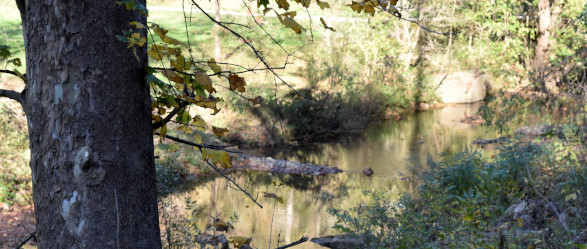
Paw-paw leaves, yellow beacons glowing in the dark wood.
Sunset reflecting yellowly on water, grasses waving yellow tips
at tiny butterflies (orange-yellow, butter yellow, yellow-green).
Leaf green, gall green, stem green, grass green.
Tall green grasses wave red-tinted grains in the wind
As deep green chicory stems hold that few blossoms (blue).
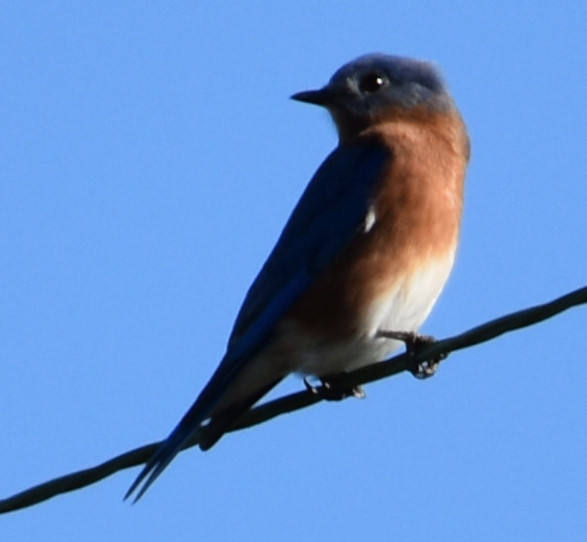
Blue sky filled with hawk; eastern bluebirds on a wire,
gray-blue wings above a rusty orange breast.
(Tail of the hawk circling overhead? Red!)
Indigo stains the sky in declining light,
the edge of night.
Violet asters
on the roadside
fading
toward
white.




Saturday, October 22, 2016
Catch-22 and degrees of evil
Yesterday when my American Novel class discussed the final section of Catch-22, a clever student wanted to know who is more evil, Aarfy or Milo.
What a great question. That's the kind of question that reminds me why I love my job, because where else can intelligent adults conduct a rational discussion of degrees of evil without tearing out each other's throats?
We batted the question around for a while before another student chimed in thus: "Aarfy is micro-evil, but Milo is macro-evil."
Lightbulbs go off over heads all over class. It's a satisfying answer, as far as it goes: Aarfy, whose most memorable line is "I only raped her once," is personally responsible for an inexcusable act of evil, while Milo operates the syndicate that makes possible multiple acts of evil, a machine blithely grinding up human sacrifices while Milo stands with clean hands in the background denying responsibility. In fact, Milo's insistence that he is only doing his job and following orders echoes the defense commonly used by Nazi war criminals.
But then why is Milo so much more likable than Aarfy? Milo is certainly responsible for more pain and suffering than Aarfy is, but somehow he remains a compelling character. Charming, even. A charismatic leader whose ability to make a profit allows him to get away with all kinds of corrupt schemes. Milo is the embodiment of Catch-22: he has the right to do anything we can't stop him from doing. So does this make macro-evil more forgivable than micro-evil? Or does it suggest that macro-evil feeds on its ability to charm the rest of us into submission?
And then let's think about Aarfy: after he rapes a woman and pushes her out the window to her death, why doesn't he get arrested? Is it simply because he exists within the system created by Milo? Aarfy is a small but necessary cog in Milo's machine, which suggests that even an single act of micro-evil is dependent upon the existence of a larger system of macro-evil that turns a blind eye to individual peccadilloes.
In other words, it's complicated. There's enough evil oozing through the book to taint just about everyone to some degree. Which is why in the end the only way out is to jump.
What a great question. That's the kind of question that reminds me why I love my job, because where else can intelligent adults conduct a rational discussion of degrees of evil without tearing out each other's throats?
We batted the question around for a while before another student chimed in thus: "Aarfy is micro-evil, but Milo is macro-evil."
Lightbulbs go off over heads all over class. It's a satisfying answer, as far as it goes: Aarfy, whose most memorable line is "I only raped her once," is personally responsible for an inexcusable act of evil, while Milo operates the syndicate that makes possible multiple acts of evil, a machine blithely grinding up human sacrifices while Milo stands with clean hands in the background denying responsibility. In fact, Milo's insistence that he is only doing his job and following orders echoes the defense commonly used by Nazi war criminals.
But then why is Milo so much more likable than Aarfy? Milo is certainly responsible for more pain and suffering than Aarfy is, but somehow he remains a compelling character. Charming, even. A charismatic leader whose ability to make a profit allows him to get away with all kinds of corrupt schemes. Milo is the embodiment of Catch-22: he has the right to do anything we can't stop him from doing. So does this make macro-evil more forgivable than micro-evil? Or does it suggest that macro-evil feeds on its ability to charm the rest of us into submission?
And then let's think about Aarfy: after he rapes a woman and pushes her out the window to her death, why doesn't he get arrested? Is it simply because he exists within the system created by Milo? Aarfy is a small but necessary cog in Milo's machine, which suggests that even an single act of micro-evil is dependent upon the existence of a larger system of macro-evil that turns a blind eye to individual peccadilloes.
In other words, it's complicated. There's enough evil oozing through the book to taint just about everyone to some degree. Which is why in the end the only way out is to jump.
Thursday, October 20, 2016
My menopausal building
A colleague in my building--a woman about my age--fans herself and says, "I think I'm having a hot flash."
"No," I reply, "This entire building is having a hot flash."
This time of year it's impossible to know how to dress for work. Sure, it's fall and we've had enough cool weather to inspire the HVAC gods to turn on the heat, but a sudden heat wave this week has rendered that heat redundant. Our HVAC system is as old as the building, which is as old as I am, so it's certainly old enough to suffer from hot flashes and it's not nimble enough to allow quick changes from heat to cool and back again. With cooler weather on the way soon, no one is interested in shifting the whole system over to air conditioning.
So we're hot. My students fan themselves with notebooks and I open the window to make the classroom more bearable, but then we're assaulted by traffic noise. Close the windows so we can hear each other and no one can breathe.
We find ways to cope--fan in the office, cold water bottle held against hot forehead, summer clothes in October. Yesterday I taught in a short-sleeved shirt, summer skirt (white after Labor Day!), and sandals, but I still had sweat pouring into my eyeballs in class.
When the heat gets unbearable, I go to the library, a newer building with a more flexible HVAC system. They have to maintain constant temperature and humidity over there to protect the books, so the library is the one reliably cool place on an overheated campus.
I realize that this problem is temporary, that next week or next month I'll be griping about my cold office and the glacial desk and my Arctic classrooms, but will that knowledge stop me from complaining about today's heat? No it will not.
Nice thing about the weather: it always gives us something to complain about.
"No," I reply, "This entire building is having a hot flash."
This time of year it's impossible to know how to dress for work. Sure, it's fall and we've had enough cool weather to inspire the HVAC gods to turn on the heat, but a sudden heat wave this week has rendered that heat redundant. Our HVAC system is as old as the building, which is as old as I am, so it's certainly old enough to suffer from hot flashes and it's not nimble enough to allow quick changes from heat to cool and back again. With cooler weather on the way soon, no one is interested in shifting the whole system over to air conditioning.
So we're hot. My students fan themselves with notebooks and I open the window to make the classroom more bearable, but then we're assaulted by traffic noise. Close the windows so we can hear each other and no one can breathe.
We find ways to cope--fan in the office, cold water bottle held against hot forehead, summer clothes in October. Yesterday I taught in a short-sleeved shirt, summer skirt (white after Labor Day!), and sandals, but I still had sweat pouring into my eyeballs in class.
When the heat gets unbearable, I go to the library, a newer building with a more flexible HVAC system. They have to maintain constant temperature and humidity over there to protect the books, so the library is the one reliably cool place on an overheated campus.
I realize that this problem is temporary, that next week or next month I'll be griping about my cold office and the glacial desk and my Arctic classrooms, but will that knowledge stop me from complaining about today's heat? No it will not.
Nice thing about the weather: it always gives us something to complain about.
Wednesday, October 19, 2016
Comedy in class: risks and rewards
I was about 30 seconds into a lecture in my Comedy class when the students started to titter and look around questioningly. A guy in the back row reared up in his chair and said, "Whaa----?"
"Is there a problem?" I asked.
Giggles and awkward looks and then some brave soul said, "Your glasses."
"What's wrong with my glasses?"
Silence.
"Tell me," I told them, "Where is it written that a professor is forbidden from teaching a class while wearing fake glasses, plastic nose, and a bushy moustache?"
Silence.
"So why can't I wear these glasses while teaching?"
That's when the reasons poured out: the fake glasses are distracting, unprofessional, silly, undignified, or just plain wrong.
And you know what? They were right, even if they didn't know why. We spent some time talking about how comedy can subvert conventions, starting with a discussion of social norms and where they come from: What's the proper procedure for entering an elevator? What would happen if you stood facing the other passengers instead of facing the door? Where are those rules written down? If they're not written down, how did you learn that it's not acceptable to sit on the floor of the elevator and fart loudly at the other passengers?
Then we did some group work: You've just won the championship game and it's time for the big press conference. What are you allowed to say? What are you not allowed to say? Other groups had to consider the conventions of writing an obituary or presenting a wedding toast. The norms are clear, as are the results of violating them: the sports champ who denigrates the other team will be vilified in the press; the obituary that includes gory details about mode of death will result in a flood of complaints; the bridesmaid so drunk she falls face-first into the wedding cake will suddenly find herself friendless.
Unless they're really, really funny, and then they'll go viral online and inspire memes. Because let's face it: violating social norms can be really funny, but it's the kind of comedy that skirts the edge of disaster.
Comedy always carries risks and rewards. The risk of wearing fake glasses, nose, and moustache in class is that I might end up with little bits of moustache fluff stuck in my mouth, but the reward is far greater: engaging students in a discussion that might otherwise have left them cold. Worth the effort? I would say so, if I could just get this moustache fluff out of my teeth.
"Is there a problem?" I asked.
Giggles and awkward looks and then some brave soul said, "Your glasses."
"What's wrong with my glasses?"
Silence.
"Tell me," I told them, "Where is it written that a professor is forbidden from teaching a class while wearing fake glasses, plastic nose, and a bushy moustache?"
Silence.
"So why can't I wear these glasses while teaching?"
That's when the reasons poured out: the fake glasses are distracting, unprofessional, silly, undignified, or just plain wrong.
And you know what? They were right, even if they didn't know why. We spent some time talking about how comedy can subvert conventions, starting with a discussion of social norms and where they come from: What's the proper procedure for entering an elevator? What would happen if you stood facing the other passengers instead of facing the door? Where are those rules written down? If they're not written down, how did you learn that it's not acceptable to sit on the floor of the elevator and fart loudly at the other passengers?
Then we did some group work: You've just won the championship game and it's time for the big press conference. What are you allowed to say? What are you not allowed to say? Other groups had to consider the conventions of writing an obituary or presenting a wedding toast. The norms are clear, as are the results of violating them: the sports champ who denigrates the other team will be vilified in the press; the obituary that includes gory details about mode of death will result in a flood of complaints; the bridesmaid so drunk she falls face-first into the wedding cake will suddenly find herself friendless.
Unless they're really, really funny, and then they'll go viral online and inspire memes. Because let's face it: violating social norms can be really funny, but it's the kind of comedy that skirts the edge of disaster.
Comedy always carries risks and rewards. The risk of wearing fake glasses, nose, and moustache in class is that I might end up with little bits of moustache fluff stuck in my mouth, but the reward is far greater: engaging students in a discussion that might otherwise have left them cold. Worth the effort? I would say so, if I could just get this moustache fluff out of my teeth.
Tuesday, October 18, 2016
Stuck in the middle of an annoying memory
It can happen anytime, anywhere, while I'm pushing a cart through the grocery store, flipping through radio channels, sitting in the dentist's waiting room, just doing whatever I'm doing when I catch a snippet of Stealers Wheel singing "Stuck in the Middle with You" and suddenly I'm transported back in time--not to 1972, when the song was all over the pop charts, but to 1984, when I'm wedged into the back seat of a compact car sound asleep until someone turns on the radio and that song comes blaring out and startles me awake. Clowns to the left of me, jokers to the right, here I am--stuck in the middle of a perplexing memory I may never shake.
It's dark out, after midnight, and I don't really want to be awake but it's hard to find a comfortable sleeping position while sharing a very small car with three other full-sized college students. I look out the window and figure that we're zipping through downtown Atlanta on our all-night trip from our college in Kentucky to our hometown in Florida, where we're planning to attend a friend's wedding. It's a warm spring night and the car is too wimpy to carry the four of us and our luggage at highway speed with the air conditioning running, so the whole car smells like sweat and crumpled burger wrappers and anger.
The anger is mine, and so is the car. Driving my friends to Florida for a weekend wedding had not been my idea, and in fact I had resisted the plan for good reasons: you can't comfortably fit four large people and all their luggage in a Mazda GLC for a 17-hour trip, and besides, it's a wimp of a car carrying way too many miles and it sometimes shuts off entirely in a heavy rain. (The distributor cap keeps cracking. No one knows why.)
And then there are reasons I don't want to admit out loud: I don't want to be responsible for getting my friends to this wedding on time, especially given my car's track record; I know that spreading the driving duties out among four people will keep the burden off my back, but frankly, I've seen these people drive. I don't want to be responsible for transporting my friends, and I don't want them to be responsible for my car.
And so I had resisted and refused and insisted that we find another travel plan, but no other plan had presented itself. Over time, they wore me down. And so I found myself bundled into the backseat of a very small car and tearing down the interstate toward Florida. Stuck in the middle with--who?
These were my friends, remember. I'd known them a long time, maybe too long, so I should have been prepared for their idiosyncrasies, but somehow taking a road trip in close quarters multiplies the weirdness. I remember laughing a lot, enjoying the adventure, but at some point I started getting really annoyed--because they kept making fun of my car.
It's underpowered, they said. Well, duh. That little four-cylinder rotary engine couldn't putter its way out of a paper bag under the best of conditions, but pile it with people and luggage, turn the air conditioning on full blast, and then try to drive it straight up a Tennessee mountain at highway speed and you'll soon be wondering whether you ought to toss out some ballast or get out and push.
So the complaints start soon after we set out and they Just. Don't. Stop. I try to turn the constant griping into a joke, shake it off, deflect, resist, ignore, but they keep it coming, comment after comment about what a loser of a car I drive. I remind them that I'd resisted taking my car on the trip, remind them that they'd begged me to take my car, remind them that riding in a wimpy car is a lot better than walking to Florida, but they keep sniping, mile after annoying mile. It's a 17-hour trip and I spend at least 16 of those hours wishing my dear friends would just for heaven's sake shut up about how much they hate my car.
Decades later, I can still feel that anger. I don't recall one single moment of the wedding, although I'm sure it was a joyful event, and I don't even recall the name of the fourth person who made that trip with us, but all these years later I can vividly experience the sudden shock of waking up in the back of a small car that smells like sweat and feel the anger bloom once again.
If I could travel back in time and talk to that angry person suffering a rude awakening in that backseat, here's what I would say: You won't be stuck here forever. Someday you'll look back at this moment and laugh--but you'll also wish you could recall more of this trip than the anger. So pay attention. Look to your left. Who is that clown? Look to the front. Why did you let those jokers in here? Someday you'll want to remember.
But instead of remembering my friends, I remember their complaints, and I remember my anger, and I remember the car, but most of all I remember the song that holds the power to bring it all back. Clowns to the left of me, jokers to the right, here I am--stuck in the middle with you.
It's dark out, after midnight, and I don't really want to be awake but it's hard to find a comfortable sleeping position while sharing a very small car with three other full-sized college students. I look out the window and figure that we're zipping through downtown Atlanta on our all-night trip from our college in Kentucky to our hometown in Florida, where we're planning to attend a friend's wedding. It's a warm spring night and the car is too wimpy to carry the four of us and our luggage at highway speed with the air conditioning running, so the whole car smells like sweat and crumpled burger wrappers and anger.
The anger is mine, and so is the car. Driving my friends to Florida for a weekend wedding had not been my idea, and in fact I had resisted the plan for good reasons: you can't comfortably fit four large people and all their luggage in a Mazda GLC for a 17-hour trip, and besides, it's a wimp of a car carrying way too many miles and it sometimes shuts off entirely in a heavy rain. (The distributor cap keeps cracking. No one knows why.)
And then there are reasons I don't want to admit out loud: I don't want to be responsible for getting my friends to this wedding on time, especially given my car's track record; I know that spreading the driving duties out among four people will keep the burden off my back, but frankly, I've seen these people drive. I don't want to be responsible for transporting my friends, and I don't want them to be responsible for my car.
And so I had resisted and refused and insisted that we find another travel plan, but no other plan had presented itself. Over time, they wore me down. And so I found myself bundled into the backseat of a very small car and tearing down the interstate toward Florida. Stuck in the middle with--who?
These were my friends, remember. I'd known them a long time, maybe too long, so I should have been prepared for their idiosyncrasies, but somehow taking a road trip in close quarters multiplies the weirdness. I remember laughing a lot, enjoying the adventure, but at some point I started getting really annoyed--because they kept making fun of my car.
It's underpowered, they said. Well, duh. That little four-cylinder rotary engine couldn't putter its way out of a paper bag under the best of conditions, but pile it with people and luggage, turn the air conditioning on full blast, and then try to drive it straight up a Tennessee mountain at highway speed and you'll soon be wondering whether you ought to toss out some ballast or get out and push.
So the complaints start soon after we set out and they Just. Don't. Stop. I try to turn the constant griping into a joke, shake it off, deflect, resist, ignore, but they keep it coming, comment after comment about what a loser of a car I drive. I remind them that I'd resisted taking my car on the trip, remind them that they'd begged me to take my car, remind them that riding in a wimpy car is a lot better than walking to Florida, but they keep sniping, mile after annoying mile. It's a 17-hour trip and I spend at least 16 of those hours wishing my dear friends would just for heaven's sake shut up about how much they hate my car.
Decades later, I can still feel that anger. I don't recall one single moment of the wedding, although I'm sure it was a joyful event, and I don't even recall the name of the fourth person who made that trip with us, but all these years later I can vividly experience the sudden shock of waking up in the back of a small car that smells like sweat and feel the anger bloom once again.
If I could travel back in time and talk to that angry person suffering a rude awakening in that backseat, here's what I would say: You won't be stuck here forever. Someday you'll look back at this moment and laugh--but you'll also wish you could recall more of this trip than the anger. So pay attention. Look to your left. Who is that clown? Look to the front. Why did you let those jokers in here? Someday you'll want to remember.
But instead of remembering my friends, I remember their complaints, and I remember my anger, and I remember the car, but most of all I remember the song that holds the power to bring it all back. Clowns to the left of me, jokers to the right, here I am--stuck in the middle with you.
Monday, October 17, 2016
Sometimes you just have to drop back and punt
I was having trouble getting my honors students to discuss Cold Mountain--or even open the book in class--so I stopped what I was doing and made them read.
Out loud. To each other.
"Pick a passage you consider particularly beautiful," I told them, and they all got really quiet and started thumbing through their books. It took a while before a student got brave enough to break the ice and start reading, but soon the room was humming with Charles Frazier's golden prose.
When they were done, I directed them to the scene in the "naught and grief" chapter where Stobrod and Pangle play fiddle and banjo for the brutal Teague and his henchmen, performing for their lives so passionately that they inspire one of the henchmen to call out, "Good God, these is holy men. Their mind turns on matters kept secret from the likes of you and me." But this plea for the sacredness of beauty falls on deaf ears as Teague gives his men the order to shoot the players in cold blood.
I let that sink in a minute, and then I asked, "What is beauty for?"
We chewed on that question a bit and then moved on to others: Why can't Teague allow music to survive within his private war? What is the function of music, art, and literature in times of suffering? Is it morally questionable to create beauty out of violence and suffering? Why are we reading a novel about the Civil War when we could get the information more efficiently from a documentary or a history text?
"Because education isn't just about conveying information" is the correct answer. It took a little while, but we got there. I may not have converted the skeptics in the group, the ones who wonder how fiction could have any bearing on their all-important career paths, but at least for a few moments I made them roll some beautiful sentences around in their mouths and think about the power of literature to connect us to "matters kept secret from the likes of you and me."
Out loud. To each other.
"Pick a passage you consider particularly beautiful," I told them, and they all got really quiet and started thumbing through their books. It took a while before a student got brave enough to break the ice and start reading, but soon the room was humming with Charles Frazier's golden prose.
When they were done, I directed them to the scene in the "naught and grief" chapter where Stobrod and Pangle play fiddle and banjo for the brutal Teague and his henchmen, performing for their lives so passionately that they inspire one of the henchmen to call out, "Good God, these is holy men. Their mind turns on matters kept secret from the likes of you and me." But this plea for the sacredness of beauty falls on deaf ears as Teague gives his men the order to shoot the players in cold blood.
I let that sink in a minute, and then I asked, "What is beauty for?"
We chewed on that question a bit and then moved on to others: Why can't Teague allow music to survive within his private war? What is the function of music, art, and literature in times of suffering? Is it morally questionable to create beauty out of violence and suffering? Why are we reading a novel about the Civil War when we could get the information more efficiently from a documentary or a history text?
"Because education isn't just about conveying information" is the correct answer. It took a little while, but we got there. I may not have converted the skeptics in the group, the ones who wonder how fiction could have any bearing on their all-important career paths, but at least for a few moments I made them roll some beautiful sentences around in their mouths and think about the power of literature to connect us to "matters kept secret from the likes of you and me."
Friday, October 14, 2016
The week that won't end
After multiple classes in which students actively resisted speaking, thinking, learning, or even making eye contact,
and after 24 hours spent fighting some sort of energy-eating virus that danced jigs all over my digestive system,
and after wobbling my weary way through the pomp and circumstance of the inauguration of our new college president,
and after grading a pile of papers and prepping for a mess of classes,
and after an emotional phone call with a family member struggling to keep his head above water (both literally and figuratively),
I'm ready to turn my back on this long crazy week and go home.
But first I have to take pictures at a departmental shindig. Which means I need to do what a fellow faculty marshal commanded this morning when I complained about not feeling quite up to leading the procession at inauguration: "You'll just have to suck it up and get the job done."
So I'll once again paste the big plastic smile on my face, mingle with the assembled poohbahs, snap a few shots, nibble some cheese and crackers, and resist the urge to curl up and snooze on the comfy sofa.
Time to put on the Happy Teacher Face! But I'll keep my eyes on the prize: an early exit and a long soothing drive home.
and after 24 hours spent fighting some sort of energy-eating virus that danced jigs all over my digestive system,
and after wobbling my weary way through the pomp and circumstance of the inauguration of our new college president,
and after grading a pile of papers and prepping for a mess of classes,
and after an emotional phone call with a family member struggling to keep his head above water (both literally and figuratively),
I'm ready to turn my back on this long crazy week and go home.
But first I have to take pictures at a departmental shindig. Which means I need to do what a fellow faculty marshal commanded this morning when I complained about not feeling quite up to leading the procession at inauguration: "You'll just have to suck it up and get the job done."
So I'll once again paste the big plastic smile on my face, mingle with the assembled poohbahs, snap a few shots, nibble some cheese and crackers, and resist the urge to curl up and snooze on the comfy sofa.
Time to put on the Happy Teacher Face! But I'll keep my eyes on the prize: an early exit and a long soothing drive home.
Thursday, October 13, 2016
Celebrating the non-belongers
Every year when Nobel Prize season swings around, I wonder whether Salman Rushdie will finally get the credit he deserves or whether the Swedish Academy will stick with a safer choice like Philip Roth or Margaret Atwood. So you can imagine my confusion this morning when I heard the winner's name on the radio:
Bob Dylan?
I keep trying to come up with something interesting to say about that choice but I find myself absolutely speechless. So instead, I'm taking refuge in The Ground Beneath Her Feet, Salman Rushdie's retelling of the myth of Orpheus and Eurydice, a novel that follows a pair of rock stars to the heights of glory and the depths of despair. "The only ones who see the whole picture are the ones who step outside the frame," writes Rushdie, so let's step outside the frame for a moment and consider what Rushdie says about outsiders:
And maybe that explains the invention of Bob Dylan as a Nobel laureate.
Bob Dylan?
I keep trying to come up with something interesting to say about that choice but I find myself absolutely speechless. So instead, I'm taking refuge in The Ground Beneath Her Feet, Salman Rushdie's retelling of the myth of Orpheus and Eurydice, a novel that follows a pair of rock stars to the heights of glory and the depths of despair. "The only ones who see the whole picture are the ones who step outside the frame," writes Rushdie, so let's step outside the frame for a moment and consider what Rushdie says about outsiders:
For a long while I have believed...that in every generation there are a few souls, call them lucky or cursed, who are simply born not belonging, who come into the world semi-detached, if you like, without strong affiliation to family or location or nation or race; that there may even be millions, billions of such souls, as many non-belongers as belongers, perhaps; that, in sum, the phenomenon may be as “natural” a manifestation of human nature as its opposite, but one that has been mostly frustrated, throughout human history, by lack of opportunity.
And not only by that: for those who value stability, who fear transience, uncertainly, change, have erected a powerful system of stigmas and taboos against rootlessness, that disruptive, anti-social force, so that we mostly conform, we pretend to be motivated by loyalties and solidarities we do not really feel, we hide our secret identities beneath the false skins of those identities which bear the belongers’ seal of approval.
But the truth leaks out in our dreams; alone in our beds (because we are all alone at night, even if we do not sleep by ourselves), we soar, we fly, we flee. And in the waking dreams our societies permit, in our myths, our arts, our songs, we celebrate the non-belongers, the different ones, the outlaws, the freaks.
What we forbid ourselves we pay good money to watch, in a playhouse or a movie theater, or to read about between the secret covers of a book. Our libraries, our palaces of entertainment tell the truth. The tramp, the assassin, the rebel, the thief, the mutant, the outcast, the delinquent, the devil, the sinner, the traveler, the gangster, the runner, the mask: if we did not recognize in them our least-fulfilled needs, we would not invent them over and over again, in every place, in every language, in every time.
And maybe that explains the invention of Bob Dylan as a Nobel laureate.
Wednesday, October 12, 2016
After all the excitement, back to boring
 You know you've had a great fall break when getting back to classes feels restful. I did not drive hundreds of miles down the Interstate to a hurricane-ravaged area over my long weekend but I did drive dozens of miles to hike up and down hills and get lost in a corn maze and enjoy some brisk fall air. My joints may be complaining today, but my grandkids enjoyed their first visit to Hocking Hills and that's worth the pain.
When my husband and I go hiking at Hocking Hills, we generally take a six-mile loop from Old Man's Cave to Cedar Falls and back, a strenuous hike with lots of climbing up and down steep slopes. That's not a route for small children, so this time we took shorter hikes to three different kinds of caves. Baby E slept most of the way, but Little E was doing her delightful Tigger act, hopping and bouncing and running up the pathways. The fun thing about hiking with a three-year-old is that she's totally fearless, but that's also the scary thing. At first she feared finding bears in the caves, but then she wasn't afraid of anything--not cliffs or climbing rocks or huge ledges of sandstone dangling over her head.
Some other hikers were out on Monday but we often had the trails to ourselves, winding back into hollows that grew darker and damper as we neared the caves. A few trees have started turning brilliant shades of orange and yellow, but mostly we moved through a dense green space where moss and ferns softened the sharp edges of the cliffs.
"Look! A beach!" said Little E, digging into the deep sand below Ash Cave. It's impossible to capture the grandeur of this huge sandstone ledge within the borders of a photograph, but that doesn't stop me from trying. It's the kind of place that defies description and representation--the only way to see it is to be there.
Wish I could be there now. On the other hand, today's classes will require no rock-climbing or muscle strains or unexpected schedule changes. As much as I enjoyed a strenuous break, what my body and mind need right now is a totally boring and uneventful day--starting with an 8 a.m. class focusing on library research. Let's see how dull a day can be!


Saturday, October 08, 2016
That's why they call it Fall Break
 My son sits on the edge of the bed in his former bedroom reading a story to his three-year-old niece, and I know it's going well because I can hear the giggles. My four-month-old grandson is sound asleep after a nice long walk in the crisp fall air, and my daughter and son-in-law have gone out for a little alone time without the kids in tow. My husband is enjoying a second cup of coffee and I'm thinking I just might get up and fix another pot of tea.
This wasn't how I'd planned to spend my fall break, but it'll do. Hurricane Matthew interfered with our planned road trip south for a visit with the extended family, so we stayed home and the grandkids came to us. In the living room a herd of stuffed animals gathers around plastic feed troughs, predators and prey sitting shoulder to shoulder without any fear, while a baby doll wears my binoculars around her neck. Grampa made raisin bread, perfect for a peanut-butter-and-jelly sandwich, which little E eats through a process of deconstruction: jelly first, peanut butter second, bread last.
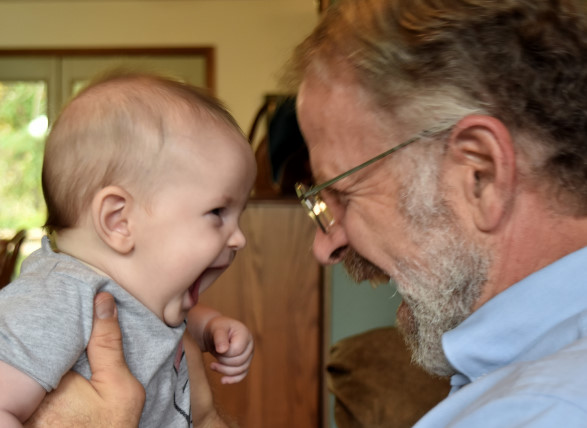 Last night the young folks taught me how to play Exploding Kittens and this morning we all went out for a walk through the woods, although some of us also did more running and hopping than walking. We saw the neighbor's goats and burros gambolling and a pileated woodpecker making the wood chips fly at the top of a dead tree. Leaves are starting to turn, mostly yellow now with touches of red. If the wind keeps up steadily we'll try the new kite this afternoon, but first it's time for young people to take their naps.
Maybe old people too. Only one set of papers to grade before Wednesday--no reason I can't close my eyes in the middle of the day and take advantage of the break. I just need to find someone to read me a story...

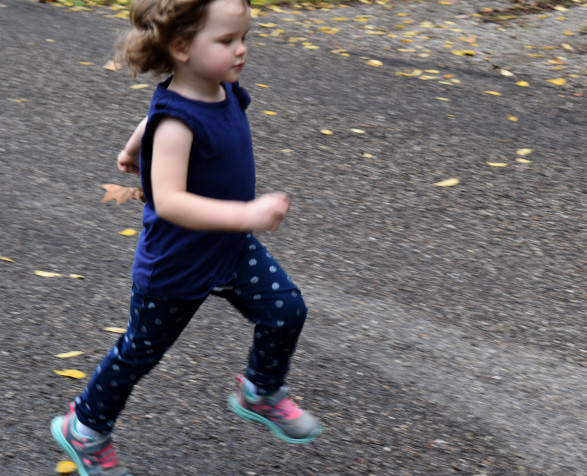
Thursday, October 06, 2016
Quick fixes and elusive keys
The first fix of the day started with a noisy desk at the front of one of my classroom, a desk suffering so badly from loose bolts that it wobbles like crazy and lets out this annoying metallic SPROING whenever anyone gives it an accidental bump. And every time that happens, I jump.
Way back in August I notified the building coordinator of the problem and she promptly submitted a work order to the Physical Plant, but they're woefully understaffed right now and a desk that wobbles and makes an obnoxious noise is not very high on their priority list, so it was still making that noise this morning in my first-year writing class, where I was doing an exercise requiring students to write thesis statements in response to four sample midterm essay questions, mark the ones they liked most and least, and then show them to me for feedback.
And every single time one of those students came up to the front of the class to show me a thesis statement, the desk went SPROING.
And I jumped.
After about 20 minutes of this, a helpful student sitting up front said, "Do you want me to fix that? All I need is a set of keys." So while I sat there conferring with one student, another one crawled under the desk with a set of keys, worked some hocus-pocus on the bolts, and emerged triumphant. I tried to wobble the desk but it didn't make a move. It was solid, immobile, silent--fixed.
If only every problem would submit to such an easy fix.
* * * *
On the way home I stopped at my local pharmacy to pick up a prescription and stood in line for a while before I noticed that the line wasn't going anywhere. Finally, an announcement: the computers were down so they couldn't process any credit card payments. I asked whether I could just hand over four dollars in cash and walk away with my prescription, but no: apparently it's necessary to confirm my identity electronically, because God forbid that some impostor should walk off with my precious blood-pressure pills and sell them on the street corner. Before you know it, we'd have people all over town walking around with low blood pressure, and then what would happen?
The Powers That Be invited the crowd of impatient people to wait until computer service was restored, which could be 10 minutes or 10 hours. I considered my options: stunningly gorgeous fall day outside, crowd of cranky sick people inside, and no handy student popping up with the key to fix the problem. Which would be better for my blood pressure: a long wait at the pharmacy for some drugs or a long walk in the woods with my dog?
So I went home. Another easy fix, even if it's only temporary.
* * * *
On my way up the big horrible hill near our house I saw a mouse, a tiny one, sitting in the middle of the road, a location not conducive to long life in the mouse world. I asked it what it was doing there without its mama, but it only turned its head away instead of scurrying off--odd behavior for a mouse. It clearly needed help, but what could I do?
Oh, I suppose I could pick it up, nestle it gently in my baseball cap, carry it home, feed it with an eye-dropper, and nurture it carefully back to health, but then what? Let it loose to run around in my house until its neck gets snapped in a mousetrap? We struggle every winter to keep mice out of our house so I'm not sure it would make much sense to bring one in, no matter how sad and pathetic it appeared.
The mouse looked stuck, but it won't stay stuck long. A snake or a hawk or a pickup truck will soon put it out of its misery, but I'm still haunted by that tiny distressed creature unable to get out of the way on the road. Where's the fix for that?
* * * *
Home from my walk, I found a message on my answering machine, the latest in a number of messages dealing with my extended family's plan to travel from various states to my brother's house in North Carolina this weekend, a plan that is running smack into the uncertain trajectory of Hurricane Matthew. Should we stay or should we go? Too many different opinions, too many conflicting priorities, and everything hinges upon predicting the path of an uncooperative hurricane.
But that kind of problem is way outside my pay grade, so I gave it up as a lost cause and went to soak out my tensions in a hot bath. It's no quick fix and it won't solve the problem, but I refuse to lose any sleep over my inability to control the weather. So unless someone suddenly pops up with the key to a quick fix, I'm going to bed.
Way back in August I notified the building coordinator of the problem and she promptly submitted a work order to the Physical Plant, but they're woefully understaffed right now and a desk that wobbles and makes an obnoxious noise is not very high on their priority list, so it was still making that noise this morning in my first-year writing class, where I was doing an exercise requiring students to write thesis statements in response to four sample midterm essay questions, mark the ones they liked most and least, and then show them to me for feedback.
And every single time one of those students came up to the front of the class to show me a thesis statement, the desk went SPROING.
And I jumped.
After about 20 minutes of this, a helpful student sitting up front said, "Do you want me to fix that? All I need is a set of keys." So while I sat there conferring with one student, another one crawled under the desk with a set of keys, worked some hocus-pocus on the bolts, and emerged triumphant. I tried to wobble the desk but it didn't make a move. It was solid, immobile, silent--fixed.
If only every problem would submit to such an easy fix.
* * * *
On the way home I stopped at my local pharmacy to pick up a prescription and stood in line for a while before I noticed that the line wasn't going anywhere. Finally, an announcement: the computers were down so they couldn't process any credit card payments. I asked whether I could just hand over four dollars in cash and walk away with my prescription, but no: apparently it's necessary to confirm my identity electronically, because God forbid that some impostor should walk off with my precious blood-pressure pills and sell them on the street corner. Before you know it, we'd have people all over town walking around with low blood pressure, and then what would happen?
The Powers That Be invited the crowd of impatient people to wait until computer service was restored, which could be 10 minutes or 10 hours. I considered my options: stunningly gorgeous fall day outside, crowd of cranky sick people inside, and no handy student popping up with the key to fix the problem. Which would be better for my blood pressure: a long wait at the pharmacy for some drugs or a long walk in the woods with my dog?
So I went home. Another easy fix, even if it's only temporary.
* * * *
On my way up the big horrible hill near our house I saw a mouse, a tiny one, sitting in the middle of the road, a location not conducive to long life in the mouse world. I asked it what it was doing there without its mama, but it only turned its head away instead of scurrying off--odd behavior for a mouse. It clearly needed help, but what could I do?
Oh, I suppose I could pick it up, nestle it gently in my baseball cap, carry it home, feed it with an eye-dropper, and nurture it carefully back to health, but then what? Let it loose to run around in my house until its neck gets snapped in a mousetrap? We struggle every winter to keep mice out of our house so I'm not sure it would make much sense to bring one in, no matter how sad and pathetic it appeared.
The mouse looked stuck, but it won't stay stuck long. A snake or a hawk or a pickup truck will soon put it out of its misery, but I'm still haunted by that tiny distressed creature unable to get out of the way on the road. Where's the fix for that?
* * * *
Home from my walk, I found a message on my answering machine, the latest in a number of messages dealing with my extended family's plan to travel from various states to my brother's house in North Carolina this weekend, a plan that is running smack into the uncertain trajectory of Hurricane Matthew. Should we stay or should we go? Too many different opinions, too many conflicting priorities, and everything hinges upon predicting the path of an uncooperative hurricane.
But that kind of problem is way outside my pay grade, so I gave it up as a lost cause and went to soak out my tensions in a hot bath. It's no quick fix and it won't solve the problem, but I refuse to lose any sleep over my inability to control the weather. So unless someone suddenly pops up with the key to a quick fix, I'm going to bed.
Wednesday, October 05, 2016
Hollow men, hollow words, and the walking wounded on the syllabus
Thanks to a harmonic convergence of syllabi, I'm currently teaching Cold Mountain in one class while teaching Catch-22 in another, bobbling back and forth between Charles Frazier's elegant but gruesome portrayal of the horrors of the Civil War and Joseph Heller's comic evisceration of mindless bureaucracy set during World War II (but written in the Cold War era). Some days I don't know whether to laugh or cry.
Different as they are in tone, the two novels share more characteristics than you might think. Both include hollow men--in fact, T.S. Eliot's name makes a brief appearance in Catch-22, which also features a wounded soldier totally encased in bandages, a man reduced to a hollow shell. In Cold Mountain, Inman fears that the brutalities of war have reamed him out:
In addition to hollow men, both novels deal with hollow words. Frazier offers a bloody reality check to the jingoistic rhetoric of characters like Mrs. McKennet, who "found the fighting glorious and tragic and heroic. Noble beyond all her powers of expression," and on the Quixotic dreams of Solomon Veasey, whose belief in his ability to pursue impossible dreams endangers everyone he encounters and cannot survive the realities of war.
While Frazier subtly undermines empty rhetoric, Heller attacks language directly, starting in the opening chapter when Yossarian, tasked with censoring enlisted men's letters home, assuages his boredom by declaring war first on modifiers then on articles then on meaning itself. Catch-22 could serve as a manual of logical fallacies, repeatedly featuring messages that devolve into tautology and circular reasoning, such as when Colonel Cargill says, "You're all American officers. The officers of no other army in the world can make that statement," or when General Dreedle declares that "[s]hooting skeet eight hours a month was excellent training for them. It trained them to shoot skeet."
The premier example of the self-consuming circularity of language, however, occurs in Doc Daneeka's explanation of the greatest catch of all, catch-22: "Anyone who wants to get out of combat duty isn't really crazy." In other words, "Orr would be crazy to fly more missions and sane if he didn't, but if he was sane he had to fly them. If he flew them he was crazy and didn't have to; but if he didn't want to he was sane and had to." Here as elsewhere, circular language ties characters up in knots, offering no way out except an escape from rationality.
I laugh every day while preparing to teach Catch-22, but it's a bitter laugh teetering on the edge of despair. I sometimes laugh at Cold Mountain too--at Veasey's ridiculous vision of himself as a Texas cattle baron, for example, or at Ruby's remarkable creation story involving a woman being raped by a great blue heron--but those brief comic moments offer rare contrast to the elegiac tone of the novel, its scenes of bodies being disassembled in the most cruel and vicious ways.
But I love both novels beyond reason. I don't love war or despair or meaninglessness or brutality, but I love the way these novels push readers to the edge of the abyss and make us peer down at the depths to which humanity can fall--but the novels don't leave us dangling over the abyss. Instead, they build a bridge to the other side.
Different as they are in tone, the two novels share more characteristics than you might think. Both include hollow men--in fact, T.S. Eliot's name makes a brief appearance in Catch-22, which also features a wounded soldier totally encased in bandages, a man reduced to a hollow shell. In Cold Mountain, Inman fears that the brutalities of war have reamed him out:
[H]is spirit, it seemed, had been about burned out of him but he was yet walking. Feeling empty, however, as the core of a big black-gum tree....It seemed a poor swap to find that the only way one might keep from fearing death was to act numb and set apart as if dead already, with nothing much left of yourself but a hut of bones.Yossarian feels similarly reamed out after the death of Snowden, an event that sends him into the world naked and defenseless--literally. His nakedness sets him apart from the human community just as Inman fears his inner emptiness dooms him to eternal exile.
In addition to hollow men, both novels deal with hollow words. Frazier offers a bloody reality check to the jingoistic rhetoric of characters like Mrs. McKennet, who "found the fighting glorious and tragic and heroic. Noble beyond all her powers of expression," and on the Quixotic dreams of Solomon Veasey, whose belief in his ability to pursue impossible dreams endangers everyone he encounters and cannot survive the realities of war.
While Frazier subtly undermines empty rhetoric, Heller attacks language directly, starting in the opening chapter when Yossarian, tasked with censoring enlisted men's letters home, assuages his boredom by declaring war first on modifiers then on articles then on meaning itself. Catch-22 could serve as a manual of logical fallacies, repeatedly featuring messages that devolve into tautology and circular reasoning, such as when Colonel Cargill says, "You're all American officers. The officers of no other army in the world can make that statement," or when General Dreedle declares that "[s]hooting skeet eight hours a month was excellent training for them. It trained them to shoot skeet."
The premier example of the self-consuming circularity of language, however, occurs in Doc Daneeka's explanation of the greatest catch of all, catch-22: "Anyone who wants to get out of combat duty isn't really crazy." In other words, "Orr would be crazy to fly more missions and sane if he didn't, but if he was sane he had to fly them. If he flew them he was crazy and didn't have to; but if he didn't want to he was sane and had to." Here as elsewhere, circular language ties characters up in knots, offering no way out except an escape from rationality.
I laugh every day while preparing to teach Catch-22, but it's a bitter laugh teetering on the edge of despair. I sometimes laugh at Cold Mountain too--at Veasey's ridiculous vision of himself as a Texas cattle baron, for example, or at Ruby's remarkable creation story involving a woman being raped by a great blue heron--but those brief comic moments offer rare contrast to the elegiac tone of the novel, its scenes of bodies being disassembled in the most cruel and vicious ways.
But I love both novels beyond reason. I don't love war or despair or meaninglessness or brutality, but I love the way these novels push readers to the edge of the abyss and make us peer down at the depths to which humanity can fall--but the novels don't leave us dangling over the abyss. Instead, they build a bridge to the other side.
Monday, October 03, 2016
Midsemester mysteries
It took me a while to track down the source of the cinnamon scent suffusing my office--at first I thought it was residual aroma from the spiced chai I usually drink. But then the scent followed me home and invaded my living room, and finally I found it: a student has been turning in her reading responses on scented paper. Cinnamon plus vanilla plus a hint of butter--Snickerdoodles!
Is the smell of Snickerdoodles supposed to put me in a good mood so I'll go easy on the grade? Or am I more likely to grade harshly because the aroma makes me hungry without satisfying that hunger? Someone should do a research study to find me some answers.
And while you're at it, why not work on the Case of the Absent Onslaught? Over the weekend I sent out a host of e-mails returning students' papers with grades attached, and I'm fairly certain some of those students will be disappointed with their grades so I steeled myself for an onslaught of desperate e-mails. Now here I sit 24 hours later entirely onslaught-free. Do they not care about their grades or do they simply never read their college e-mail?
Inquiring minds want to know! (But if I take the time to figure it out, I'll never get the next pile of papers graded.)
Is the smell of Snickerdoodles supposed to put me in a good mood so I'll go easy on the grade? Or am I more likely to grade harshly because the aroma makes me hungry without satisfying that hunger? Someone should do a research study to find me some answers.
And while you're at it, why not work on the Case of the Absent Onslaught? Over the weekend I sent out a host of e-mails returning students' papers with grades attached, and I'm fairly certain some of those students will be disappointed with their grades so I steeled myself for an onslaught of desperate e-mails. Now here I sit 24 hours later entirely onslaught-free. Do they not care about their grades or do they simply never read their college e-mail?
Inquiring minds want to know! (But if I take the time to figure it out, I'll never get the next pile of papers graded.)
Subscribe to:
Posts (Atom)