Sunday, October 23, 2016

Autumn Spectrum

Fire-red leaves on the burning bush, barn-red on the oaks.
Pokeweed-stem red. Rusty-dusty-aspen-leaf red.
Red-edged maple leaves fading to orange.

Oak orange, sycamore orange, very berry orange.
Orange fluttering from the treetops--a leaf?
No--a butterfly flapping orange-speckled wings.

Paw-paw leaves, yellow beacons glowing in the dark wood.
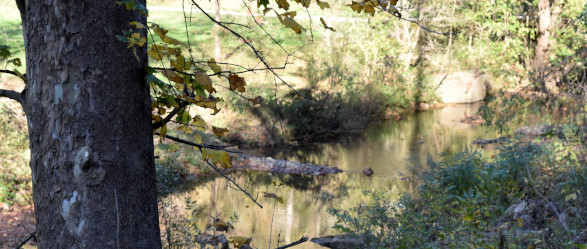
Sunset reflecting yellowly on water, grasses waving yellow tips
at tiny butterflies (orange-yellow, butter yellow, yellow-green).


Leaf green, gall green, stem green, grass green.
Tall green grasses wave red-tinted grains in the wind

As deep green chicory stems hold that few blossoms (blue). 


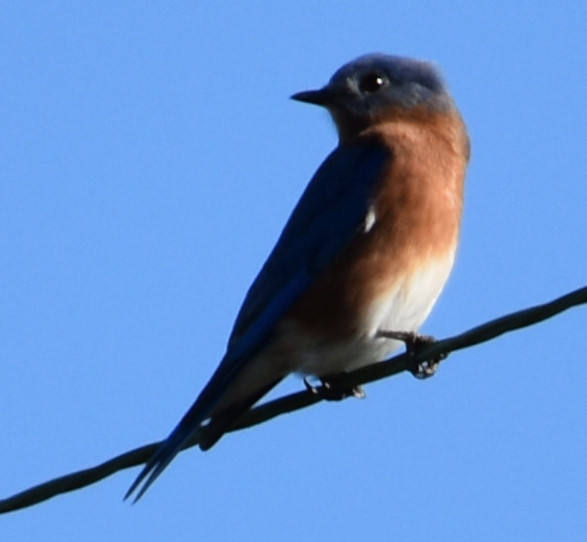
Blue sky filled with hawk; eastern bluebirds on a wire,
gray-blue wings above a rusty orange breast.
(Tail of the hawk circling overhead? Red!)

Indigo stains the sky in declining light,
the edge of night.

Violet asters
on the roadside
fading
toward
white.


Saturday, October 22, 2016

Catch-22 and degrees of evil

Yesterday when my American Novel class discussed the final section of Catch-22, a clever student wanted to know who is more evil, Aarfy or Milo. 

What a great question. That's the kind of question that reminds me why I love my job, because where else can intelligent adults conduct a rational discussion of degrees of evil without tearing out each other's throats?

We batted the question around for a while before another student chimed in thus: "Aarfy is micro-evil, but Milo is macro-evil."

Lightbulbs go off over heads all over class. It's a satisfying answer, as far as it goes: Aarfy, whose most memorable line is "I only raped her once," is personally responsible for an inexcusable act of evil, while Milo operates the syndicate that makes possible multiple acts of evil, a machine blithely grinding up human sacrifices while Milo stands with clean hands in the background denying responsibility. In fact, Milo's insistence that he is only doing his job and following orders echoes the defense commonly used by Nazi war criminals.

But then why is Milo so much more likable than Aarfy? Milo is certainly responsible for more pain and suffering than Aarfy is, but somehow he remains a compelling character. Charming, even. A charismatic leader whose ability to make a profit allows him to get away with all kinds of corrupt schemes. Milo is the embodiment of Catch-22: he has the right to do anything we can't stop him from doing. So does this make macro-evil more forgivable than micro-evil? Or does it suggest that macro-evil feeds on its ability to charm the rest of us into submission?

And then let's think about Aarfy: after he rapes a woman and pushes her out the window to her death, why doesn't he get arrested? Is it simply because he exists within the system created by Milo? Aarfy is a small but necessary cog in Milo's machine, which suggests that even an single act of micro-evil is dependent upon the existence of a larger system of macro-evil that turns a blind eye to individual peccadilloes.

In other words, it's complicated. There's enough evil oozing through the book to taint just about everyone to some degree. Which is why in the end the only way out is to jump.    


Thursday, October 20, 2016

My menopausal building

A colleague in my building--a woman about my age--fans herself and says, "I think I'm having a hot flash."

"No," I reply, "This entire building is having a hot flash."

This time of year it's impossible to know how to dress for work. Sure, it's fall and we've had enough cool weather to inspire the HVAC gods to turn on the heat, but a sudden heat wave this week has rendered that heat redundant. Our HVAC system is as old as the building, which is as old as I am, so it's certainly old enough to suffer from hot flashes and it's not nimble enough to allow quick changes from heat to cool and back again. With cooler weather on the way soon, no one is interested in shifting the whole system over to air conditioning. 

So we're hot. My students fan themselves with notebooks and I open the window to make the classroom more bearable, but then we're assaulted by traffic noise. Close the windows so we can hear each other and no one can breathe. 

We find ways to cope--fan in the office, cold water bottle held against hot forehead, summer clothes in October.  Yesterday I taught in a short-sleeved shirt, summer skirt (white after Labor Day!), and sandals, but I still had sweat pouring into my eyeballs in class.

When the heat gets unbearable, I go to the library, a newer building with a more flexible HVAC system. They have to maintain constant temperature and humidity over there to protect the books, so the library is the one reliably cool place on an overheated campus.

I realize that this problem is temporary, that next week or next month I'll be griping about my cold office and the glacial desk and my Arctic classrooms, but will that knowledge stop me from complaining about today's heat? No it will not.

Nice thing about the weather: it always gives us something to complain about.

Wednesday, October 19, 2016

Comedy in class: risks and rewards

I was about 30 seconds into a lecture in my Comedy class when the students started to titter and look around questioningly. A guy in the back row reared up in his chair and said, "Whaa----?"

"Is there a problem?" I asked.

Giggles and awkward looks and then some brave soul said, "Your glasses."

"What's wrong with my glasses?"

Silence.

"Tell me," I told them, "Where is it written that a professor is forbidden from teaching a class while wearing fake glasses, plastic nose, and a bushy moustache?"

Silence.

"So why can't I wear these glasses while teaching?"

That's when the reasons poured out: the fake glasses are distracting, unprofessional, silly, undignified, or just plain wrong.

And you know what? They were right, even if they didn't know why. We spent some time talking about how comedy can subvert conventions, starting with a discussion of social norms and where they come from: What's the proper procedure for entering an elevator? What would happen if you stood facing the other passengers instead of facing the door? Where are those rules written down? If they're not written down, how did you learn that it's not acceptable to sit on the floor of the elevator and fart loudly at the other passengers?

Then we did some group work: You've just won the championship game and it's time for the big press conference. What are you allowed to say? What are you not allowed to say? Other groups had to consider the conventions of writing an obituary or presenting a wedding toast. The norms are clear, as are the results of violating them: the sports champ who denigrates the other team will be vilified in the press; the obituary that includes gory details about mode of death will result in a flood of complaints; the bridesmaid so drunk she falls face-first into the wedding cake will suddenly find herself friendless.

Unless they're really, really funny, and then they'll go viral online and inspire memes. Because let's face it: violating social norms can be really funny, but it's the kind of comedy that skirts the edge of disaster. 

Comedy always carries risks and rewards. The risk of wearing fake glasses, nose, and moustache in class is that I might end up with little bits of moustache fluff stuck in my mouth, but the reward is far greater: engaging students in a discussion that might otherwise have left them cold. Worth the effort? I would say so, if I could just get this moustache fluff out of my teeth.

Tuesday, October 18, 2016

Stuck in the middle of an annoying memory

It can happen anytime, anywhere, while I'm pushing a cart through the grocery store, flipping through radio channels, sitting in the dentist's waiting room, just doing whatever I'm doing when I catch a snippet of Stealers Wheel singing "Stuck in the Middle with You" and suddenly I'm transported back in time--not to 1972, when the song was all over the pop charts, but to 1984, when I'm wedged into the back seat of a compact car sound asleep until someone turns on the radio and that song comes blaring out and startles me awake. Clowns to the left of me, jokers to the right, here I am--stuck in the middle of a perplexing memory I may never shake.
 
It's dark out, after midnight, and I don't really want to be awake but it's hard to find a comfortable sleeping position while sharing a very small car with three other full-sized college students. I look out the window and figure that we're zipping through downtown Atlanta on our all-night trip from our college in Kentucky to our hometown in Florida, where we're planning to attend a friend's wedding. It's a warm spring night and the car is too wimpy to carry the four of us and our luggage at highway speed with the air conditioning running, so the whole car smells like sweat and crumpled burger wrappers and anger.

The anger is mine, and so is the car. Driving my friends to Florida for a weekend wedding had not been my idea, and in fact I had resisted the plan for good reasons: you can't comfortably fit four large people and all their luggage in a Mazda GLC for a 17-hour trip, and besides, it's a wimp of a car carrying way too many miles and it sometimes shuts off entirely in a heavy rain. (The distributor cap keeps cracking. No one knows why.) 

And then there are reasons I don't want to admit out loud: I don't want to be responsible for getting my friends to this wedding on time, especially given my car's track record; I know that spreading the driving duties out among four people will keep the burden off my back, but frankly, I've seen these people drive. I don't want to be responsible for transporting my friends, and I don't want them to be responsible for my car.

And so I had resisted and refused and insisted that we find another travel plan, but no other plan had presented itself. Over time, they wore me down. And so I found myself bundled into the backseat of a very small car and tearing down the interstate toward Florida. Stuck in the middle with--who?

These were my friends, remember. I'd known them a long time, maybe too long, so I should have been prepared for their idiosyncrasies, but somehow taking a road trip in close quarters multiplies the weirdness. I remember laughing a lot, enjoying the adventure, but at some point I started getting really annoyed--because they kept making fun of my car.

It's underpowered, they said. Well, duh. That little four-cylinder rotary engine couldn't putter its way out of a paper bag under the best of conditions, but pile it with people and luggage, turn the air conditioning on full blast, and then try to drive it straight up a Tennessee mountain at highway speed and you'll soon be wondering whether you ought to toss out some ballast or get out and push.

So the complaints start soon after we set out and they Just. Don't. Stop. I try to turn the constant griping into a joke, shake it off, deflect, resist, ignore, but they keep it coming, comment after comment about what a loser of a car I drive. I remind them that I'd resisted taking my car on the trip, remind them that they'd begged me to take my car, remind them that riding in a wimpy car is a lot better than walking to Florida, but they keep sniping, mile after annoying mile. It's a 17-hour trip and I spend at least 16 of those hours wishing my dear friends would just for heaven's sake shut up about how much they hate my car.

Decades later, I can still feel that anger. I don't recall one single moment of the wedding, although I'm sure it was a joyful event, and I don't even recall the name of the fourth person who made that trip with us, but all these years later I can vividly experience the sudden shock of waking up in the back of a small car that smells like sweat and feel the anger bloom once again.

If I could travel back in time and talk to that angry person suffering a rude awakening in that backseat, here's what I would say: You won't be stuck here forever. Someday you'll look back at this moment and laugh--but you'll also wish you could recall more of this trip than the anger. So pay attention. Look to your left. Who is that clown? Look to the front. Why did you let those jokers in here? Someday you'll want to remember.

But instead of remembering my friends, I remember their complaints, and I remember my anger, and I remember the car, but most of all I remember the song that holds the power to bring it all back. Clowns to the left of me, jokers to the right, here I am--stuck in the middle with you.


Monday, October 17, 2016

Sometimes you just have to drop back and punt

I was having trouble getting my honors students to discuss Cold Mountain--or even open the book in class--so I stopped what I was doing and made them read. 

Out loud. To each other.

"Pick a passage you consider particularly beautiful," I told them, and they all got really quiet and started thumbing through their books. It took a while before a student got brave enough to break the ice and start reading, but soon the room was humming with Charles Frazier's golden prose.

When they were done, I directed them to the scene in the "naught and grief" chapter where Stobrod and Pangle play fiddle and banjo for the brutal Teague and his henchmen, performing for their lives so passionately that they inspire one of the henchmen to call out, "Good God, these is holy men. Their mind turns on matters kept secret from the likes of you and me." But this plea for the sacredness of beauty falls on deaf ears as Teague gives his men the order to shoot the players in cold blood.

I let that sink in a minute, and then I asked, "What is beauty for?"

We chewed on that question a bit and then moved on to others: Why can't Teague allow music to survive within his private war? What is the function of music, art, and literature in times of suffering? Is it morally questionable to create beauty out of violence and suffering?  Why are we reading a novel about the Civil War when we could get the information more efficiently from a documentary or a history text?

"Because education isn't just about conveying information" is the correct answer. It took a little while, but we got there. I may not have converted the skeptics in the group, the ones who wonder how fiction could have any bearing on their all-important career paths, but at least for a few moments I made them roll some beautiful sentences around in their mouths and think about the power of literature to connect us to "matters kept secret from the likes of you and me."


Friday, October 14, 2016

The week that won't end

After multiple classes in which students actively resisted speaking, thinking, learning, or even making eye contact,

and after 24 hours spent fighting some sort of energy-eating virus that danced jigs all over my digestive system,

and after wobbling my weary way through the pomp and circumstance of the inauguration of our new college president,

and after grading a pile of papers and prepping for a mess of classes,

and after an emotional phone call with a family member struggling to keep his head above water (both literally and figuratively),

I'm ready to turn my back on this long crazy week and go home.

But first I have to take pictures at a departmental shindig. Which means I need to do what a fellow faculty marshal commanded this morning when I complained about not feeling quite up to leading the procession at inauguration: "You'll just have to suck it up and get the job done."

So I'll once again paste the big plastic smile on my face, mingle with the assembled poohbahs, snap a few shots, nibble some cheese and crackers, and resist the urge to curl up and snooze on the comfy sofa. 

Time to put on the Happy Teacher Face! But I'll keep my eyes on the prize: an early exit and a long soothing drive home.    

Thursday, October 13, 2016

Celebrating the non-belongers

Every year when Nobel Prize season swings around, I wonder whether Salman Rushdie will finally get the credit he deserves or whether the Swedish Academy will stick with a safer choice like Philip Roth or Margaret Atwood. So you can imagine my confusion this morning when I heard the winner's name on the radio:

Bob Dylan?

I keep trying to come up with something interesting to say about that choice but I find myself absolutely speechless. So instead, I'm taking refuge in The Ground Beneath Her Feet, Salman Rushdie's retelling of the myth of Orpheus and Eurydice, a novel that follows a pair of rock stars to the heights of glory and the depths of despair. "The only ones who see the whole picture are the ones who step outside the frame," writes Rushdie, so let's step outside the frame for a moment and consider what Rushdie says about outsiders:

For a long while I have believed...that in every generation there are a few souls, call them lucky or cursed, who are simply born not belonging, who come into the world semi-detached, if you like, without strong affiliation to family or location or nation or race; that there may even be millions, billions of such souls, as many non-belongers as belongers, perhaps; that, in sum, the phenomenon may be as “natural” a manifestation of human nature as its opposite, but one that has been mostly frustrated, throughout human history, by lack of opportunity.

And not only by that: for those who value stability, who fear transience, uncertainly, change, have erected a powerful system of stigmas and taboos against rootlessness, that disruptive, anti-social force, so that we mostly conform, we pretend to be motivated by loyalties and solidarities we do not really feel, we hide our secret identities beneath the false skins of those identities which bear the belongers’ seal of approval.

But the truth leaks out in our dreams; alone in our beds (because we are all alone at night, even if we do not sleep by ourselves), we soar, we fly, we flee. And in the waking dreams our societies permit, in our myths, our arts, our songs, we celebrate the non-belongers, the different ones, the outlaws, the freaks.


What we forbid ourselves we pay good money to watch, in a playhouse or a movie theater, or to read about between the secret covers of a book. Our libraries, our palaces of entertainment tell the truth. The tramp, the assassin, the rebel, the thief, the mutant, the outcast, the delinquent, the devil, the sinner, the traveler, the gangster, the runner, the mask: if we did not recognize in them our least-fulfilled needs, we would not invent them over and over again, in every place, in every language, in every time.

And maybe that explains the invention of Bob Dylan as a Nobel laureate.

Wednesday, October 12, 2016

After all the excitement, back to boring

You know you've had a great fall break when getting back to classes feels restful. I did not drive hundreds of miles down the Interstate to a hurricane-ravaged area over my long weekend but I did drive dozens of miles to hike up and down hills and get lost in a corn maze and enjoy some brisk fall air.  My joints may be complaining today, but my grandkids enjoyed their first visit to Hocking Hills and that's worth the pain.

When my husband and I go hiking at Hocking Hills, we generally take a six-mile loop from Old Man's Cave to Cedar Falls and back, a strenuous hike with lots of climbing up and down steep slopes. That's not a route for small children, so this time we took shorter hikes to three different kinds of caves. Baby E slept most of the way, but Little E was doing her delightful Tigger act, hopping and bouncing and running up the pathways. The fun thing about hiking with a three-year-old is that she's totally fearless, but that's also the scary thing. At first she feared finding bears in the caves, but then she wasn't afraid of anything--not cliffs or climbing rocks or huge ledges of sandstone dangling over her head. 

Some other hikers were out on Monday but we often had the trails to ourselves, winding back into hollows that grew darker and damper as we neared the caves. A few trees have started turning brilliant shades of orange and yellow, but mostly we moved through a dense green space where moss and ferns softened the sharp edges of the cliffs.

"Look! A beach!" said Little E, digging into the deep sand below Ash Cave. It's impossible to capture the grandeur of this huge sandstone ledge within the borders of a photograph, but that doesn't stop me from trying. It's the kind of place that defies description and representation--the only way to see it is to be there.

Wish I could be there now. On the other hand, today's classes will require no rock-climbing or muscle strains or unexpected schedule changes. As much as I enjoyed a strenuous break, what my body and mind need right now is a totally boring and uneventful day--starting with an 8 a.m. class focusing on library research. Let's see how dull a day can be! 


Saturday, October 08, 2016

That's why they call it Fall Break

My son sits on the edge of the bed in his former bedroom reading a story to his three-year-old niece, and I know it's going well because I can hear the giggles. My four-month-old grandson is sound asleep after a nice long walk in the crisp fall air, and my daughter and son-in-law have gone out for a little alone time without the kids in tow. My husband is enjoying a second cup of coffee and I'm thinking I just might get up and fix another pot of tea.
 
This wasn't how I'd planned to spend my fall break, but it'll do. Hurricane Matthew interfered with our planned road trip south for a visit with the extended family, so we stayed home and the grandkids came to us. In the living room a herd of stuffed animals gathers around plastic feed troughs, predators and prey sitting shoulder to shoulder without any fear, while a baby doll wears my binoculars around her neck. Grampa made raisin bread, perfect for a peanut-butter-and-jelly sandwich, which little E eats through a process of deconstruction: jelly first, peanut butter second, bread last.

Last night the young folks taught me how to play Exploding Kittens and this morning we all went out for a walk through the woods, although some of us also did more running and hopping than walking. We saw the neighbor's goats and burros gambolling and a pileated woodpecker making the wood chips fly at the top of a dead tree. Leaves are starting to turn, mostly yellow now with touches of red. If the wind keeps up steadily we'll try the new kite this afternoon, but first it's time for young people to take their naps.

Maybe old people too. Only one set of papers to grade before Wednesday--no reason I can't close my eyes in the middle of the day and take advantage of the break. I just need to find someone to read me a story...


Thursday, October 06, 2016

Quick fixes and elusive keys

The first fix of the day started with a noisy desk at the front of one of my classroom, a desk suffering so badly from loose bolts that it wobbles like crazy and lets out this annoying metallic SPROING whenever anyone gives it an accidental bump. And every time that happens, I jump.

Way back in August I notified the building coordinator of the problem and she promptly submitted a work order to the Physical Plant, but they're woefully understaffed right now and a desk that wobbles and makes an obnoxious noise is not very high on their priority list, so it was still making that noise this morning in my first-year writing class, where I was doing an exercise requiring students to write thesis statements in response to four sample midterm essay questions, mark the ones they liked most and least, and then show them to me for feedback. 

And every single time one of those students came up to the front of the class to show me a thesis statement, the desk went SPROING.

And I jumped.

After about 20 minutes of this, a helpful student sitting up front said, "Do you want me to fix that? All I need is a set of keys." So while I sat there conferring with one student, another one crawled under the desk with a set of keys, worked some hocus-pocus on the bolts, and emerged triumphant. I tried to wobble the desk but it didn't make a move. It was solid, immobile, silent--fixed.

If only every problem would submit to such an easy fix.

* * * *
 
On the way home I stopped at my local pharmacy to pick up a prescription and stood in line for a while before I noticed that the line wasn't going anywhere. Finally, an announcement: the computers were down so they couldn't process any credit card payments. I asked whether I could just hand over four dollars in cash and walk away with my prescription, but no: apparently it's necessary to confirm my identity electronically, because God forbid that some impostor should walk off with my precious blood-pressure pills and sell them on the street corner. Before you know it, we'd have people all over town walking around with low blood pressure, and then what would happen? 

The Powers That Be invited the crowd of impatient people to wait until computer service was restored, which could be 10 minutes or 10 hours. I considered my options: stunningly gorgeous fall day outside, crowd of cranky sick people inside, and no handy student popping up with the key to fix the problem. Which would be better for my blood pressure: a long wait at the pharmacy for some drugs or a long walk in the woods with my dog?

So I went home. Another easy fix, even if it's only temporary.

* * * * 
On my way up the big horrible hill near our house I saw a mouse, a tiny one, sitting in the middle of the road, a location not conducive to long life in the mouse world. I asked it what it was doing there without its mama, but it only turned its head away instead of scurrying off--odd behavior for a mouse. It clearly needed help, but what could I do? 

Oh, I suppose I could pick it up, nestle it gently in my baseball cap, carry it home, feed it with an eye-dropper, and nurture it carefully back to health, but then what? Let it loose to run around in my house until its neck gets snapped in a mousetrap? We struggle every winter to keep mice out of our house so I'm not sure it would make much sense to bring one in, no matter how sad and pathetic it appeared.

The mouse looked stuck, but it won't stay stuck long. A snake or a hawk or a pickup truck will soon put it out of its misery, but I'm still haunted by that tiny distressed creature unable to get out of the way on the road. Where's the fix for that?

* * * *
Home from my walk, I found a message on my answering machine, the latest in a number of messages dealing with my extended family's plan to travel from various states to my brother's house in North Carolina this weekend, a plan that is running smack into the uncertain trajectory of Hurricane Matthew. Should we stay or should we go? Too many different opinions, too many conflicting priorities, and everything hinges upon predicting the path of an uncooperative hurricane.

But that kind of problem is way outside my pay grade, so I gave it up as a lost cause and went to soak out my tensions in a hot bath. It's no quick fix and it won't solve the problem, but I refuse to lose any sleep over my inability to control the weather. So unless someone suddenly pops up with the key to a quick fix, I'm going to bed.     

Wednesday, October 05, 2016

Hollow men, hollow words, and the walking wounded on the syllabus

Thanks to a harmonic convergence of syllabi, I'm currently teaching Cold Mountain in one class while teaching Catch-22 in another, bobbling back and forth between Charles Frazier's elegant but gruesome portrayal of the horrors of the Civil War and Joseph Heller's comic evisceration of mindless bureaucracy set during World War II (but written in the Cold War era). Some days I don't know whether to laugh or cry.

Different as they are in tone, the two novels share more characteristics than you might think. Both include hollow men--in fact, T.S. Eliot's name makes a brief appearance in Catch-22, which also features a wounded soldier totally encased in bandages, a man reduced to a hollow shell. In Cold Mountain, Inman fears that the brutalities of war have reamed him out: 
[H]is spirit, it seemed, had been about burned out of him but he was yet walking. Feeling empty, however, as the core of a big black-gum tree....It seemed a poor swap to find that the only way one might keep from fearing death was to act numb and set apart as if dead already, with nothing much left of yourself but a hut of bones.
Yossarian feels similarly reamed out after the death of Snowden, an event that sends him into the world naked and defenseless--literally. His nakedness sets him apart from the human community just as Inman fears his inner emptiness dooms him to eternal exile.

In addition to hollow men, both novels deal with hollow words. Frazier offers a bloody reality check to the jingoistic rhetoric of characters like Mrs. McKennet, who "found the fighting glorious and tragic and heroic. Noble beyond all her powers of expression," and on the Quixotic dreams of Solomon Veasey, whose belief in his ability to pursue impossible dreams endangers everyone he encounters and cannot survive the realities of war.

While Frazier subtly undermines empty rhetoric, Heller attacks language directly, starting in the opening chapter when Yossarian, tasked with censoring enlisted men's letters home, assuages his boredom by declaring war first on modifiers then on articles then on meaning itself. Catch-22 could serve as a manual of logical fallacies, repeatedly featuring messages that devolve into tautology and circular reasoning, such as when Colonel Cargill says, "You're all American officers. The officers of no other army in the world can make that statement,"  or when General Dreedle declares that "[s]hooting skeet eight hours a month was excellent training for them. It trained them to shoot skeet."

The premier example of the self-consuming circularity of language, however, occurs in Doc Daneeka's explanation of the greatest catch of all, catch-22: "Anyone who wants to get out of combat duty isn't really crazy." In other words, "Orr would be crazy to fly more missions and sane if he didn't, but if he was sane he had to fly them. If he flew them he was crazy and didn't have to; but if he didn't want to he was sane and had to." Here as elsewhere, circular language ties characters up in knots, offering no way out except an escape from rationality.

I laugh every day while preparing to teach Catch-22, but it's a bitter laugh teetering on the edge of despair. I sometimes laugh at Cold Mountain too--at Veasey's ridiculous vision of himself as a Texas cattle baron, for example, or at Ruby's remarkable creation story involving a woman being raped by a great blue heron--but those brief comic moments offer rare contrast to the elegiac tone of the novel, its scenes of bodies being disassembled in the most cruel and vicious ways.

But I love both novels beyond reason. I don't love war or despair or meaninglessness or brutality, but I love the way these novels push readers to the edge of the abyss and make us peer down at the depths to which humanity can fall--but the novels don't leave us dangling over the abyss. Instead, they build a bridge to the other side.    

Monday, October 03, 2016

Midsemester mysteries

It took me a while to track down the source of the cinnamon scent suffusing my office--at first I thought it was residual aroma from the spiced chai I usually drink. But then the scent followed me home and invaded my living room, and finally I found it: a student has been turning in her reading responses on scented paper. Cinnamon plus vanilla plus a hint of butter--Snickerdoodles! 

Is the smell of Snickerdoodles supposed to put me in a good mood so I'll go easy on the grade? Or am I more likely to grade harshly because the aroma makes me hungry without satisfying that hunger? Someone should do a research study to find me some answers.

And while you're at it, why not work on the Case of the Absent Onslaught? Over the weekend I sent out a host of e-mails returning students' papers with grades attached, and I'm fairly certain some of those students will be disappointed with their grades so I steeled myself for an onslaught of desperate e-mails. Now here I sit 24 hours later entirely onslaught-free. Do they not care about their grades or do they simply never read their college e-mail?

Inquiring minds want to know! (But if I take the time to figure it out, I'll never get the next pile of papers graded.)

Friday, September 30, 2016

Too tired to write (so why am I writing?)

I could blame the thunder that made me sit straight up in bed and yell out "What just blew up?!" or I could blame the difficulty of settling back down to sleep after I'd determined that nothing had blown up or I could blame the nightmares about lizards and ants invading my bed or I could blame the Tana French murder mystery novel that wouldn't let go of my hands until close to midnight, but wherever I place the blame, the result is the same: I'm tired.

Not the kind of soul-crushing tiredness that accompanies those massive stacks of papers or the dizzying exhaustion after traveling long distances but the kind of tired that makes me tell my honors students, "Trust me: you don't want me grading those papers today. When my eyeballs start drifting shut, everything looks like an F."

I'm tired enough to put my head down on my desk and take a quick nap before class, even though my desk is about as warm and soft as an Antarctic ice floe.

I'm tired enough to cancel class if I were the type to cancel class, but I'm that annoying professor who kept teaching through chemotherapy, so I didn't cancel this morning's classes but instead powered through them.

But don't come looking for me in my office this afternoon. I intend to keep my eyes open just long enough to drive home, and after that--forget about it.

Wednesday, September 28, 2016

Gaping holes in the new MLA Handbook

This morning I heard a hated phrase coming out of my mouth in class: "Because I said so." I don't want my students to carry me around throughout their lives to serve as the ultimate arbiter of where to place a comma or whether to italicize foreign words and phrases; far better for them to know how to use the MLA guide to look up answers to such questions.

Except the MLA guide--excuse me, the MLA Handbook, 8th edition--no longer covers these topics.

The new MLA has nothing whatever to say about the Oxford comma, the correct use of apostrophes, or how to format foreign words in a document, and if you want to know about margins, fonts, titles, and so on, you have to go to their online style center.

Now I like the new MLA style center (style.mla.org), and I appreciate the philosophy behind changes to MLA citation style even though it produces citations that look less like a sleek black tuxedo and more like the baggy old pants you wear to work in the garden. But what I lack is the ability to say "Because MLA says so" about certain topics.

So this morning when a student asked about the Oxford comma, we had to talk about context. "Intelligent people can disagree about comma placement," I told them, "so know your audience." Writing for publication? Look at the publication's house style sheet. Writing for a class? Ask the professor. Writing for my class? Put in the comma. Please. It pains me when it's missing.

Need to cite an authority? In the absence of a definitive statement in the MLA Handbook, just do it--because I said so.

Monday, September 26, 2016

Nothing I can do but hold the flashlight

I'm standing in the dark holding a flashlight for my son while he installs a new starter in his car. Bats are zipping past overhead but I hear no mosquitoes--too cool and dry. Feels like autumn finally arriving, a slight cooling and dampness in the air, and from the garden a whiff of decay. 

Holding a flashlight for my son is not how I'd planned to spend my evening, but after an exhausting 11-hour day on campus, I had nothing else important to do. Holding a flashlight is a mindless task--just aim it where his hands are working, shift to the socket set then over to the manual then back to the engine where he's trying to get the new air filter tucked in correctly then moving on to the battery.

Stars start coming out overhead, a nice treat after all those dark clouds looming all afternoon. We had hoped for rain since the creek has shrunk to  disconnected puddles, but the clouds moved on without releasing more than a few scattered drops. The dark surrounds us like a curtain except where the flashlight illuminates a little bit of engine.

"Over this way a little," he says, and I oblige. He's having trouble getting the battery bracket screwed down tight, too many shadows obscuring the essential bits. A few more shifts of the flashlight, a few turns of the screws, and everything is in place for a test--and the car starts right up on the first crank.

A job well done, we tell each other. He did the hard part and he has the greasy hands to show for it; I just stood there in the dark aiming the beam where it would be most helpful. But still I feel I have a stake in the purring of the engine, as if I've played an essential role in my son's movement into the future. When he was young I carried him and then I drove him around, but now I'm happy just to stand silently by and aim a beam of light where his hands need to work. 

Saturday, September 24, 2016

Nutshell: a ridiculous plot that really works


Imagine Elsinore as a bouncy castle and Hamlet tumbling and squirming against its deep red squishy walls--but then it's not Hamlet but some kind of travesty, good only for a few cheap laughs. 

Imagine Hamlet as a baby--but at that stage he has no father's murder to avenge, no self-awareness or ability to act independently.

Imagine Hamlet as an unborn child in his mother's womb, unwittingly overhearing his mother and uncle plot to murder his unsuspecting father--but what baby possesses the language and knowledge of the world to understand murder or exact revenge?

It's a ridiculous conceit, implausible except as farce. What kind of fool would try to turn such a bizarre plot into serious fiction?

Ian McEwen is that kind of fool, and the remarkable thing is this: it works. Nutshell is a gleaming little gem of a novel, fast-paced and suspenseful and sparkling with insight about flawed humanity.

The novel demands an instant suspension of disbelief but offers rewards in clever and elegant writing, McEwen's most poetic prose. Our narrator, the unborn and unnamed child, insists that he is not a blank slate but "a slippery, porous slate no schoolroom or cottage roof could find use for, a slate that writes upon itself as it grows by the day and becomes less blank. I count myself an innocent, but it seems I'm party to a plot."

The plot is hatched by Trudy and Claude, just one of many echoes of Hamlet, the play never mentioned but frequently evoked, starting with the epigraph that provides the novel's title: "Oh God, I could be bounded in a nutshell and count myself a king of infinite space--were it not that I have bad dreams."

Our narrator recalls his first moment of awareness within the womb, the first fleeting idea that solidified within his developing brain: "[M]y idea was To be. or if not that, its grammatical variant, is. This was my aboriginal notion and here's the crux--is. Just that." But will he ever have a chance to be, an unwanted child destined to be sacrificed as part of the impending plot?

And what a plot! If an unborn child is the only witness to murder, how can he bring justice on the perpetrators? He has only contempt for clueless Claude, "Whose repeated remarks are a witless, thrustless dribble, whose impoverished sentences die like motherless chicks, cheaply fading....As a man he's a piece of work, a self-constructed device, a tool for hard deception." But his mother, too, has blood on her hands, causing our narrator to struggle to balance his hatred for her acts with his love for her person. "I wear my mother like a tight-fitting cap," he says, but he cannot remove that cap without removing his only source of comfort and nourishment.


It's a clever fetus that knows its own father and no fetus is cleverer than McEwen's narrator, but despite his cleverness, putting his plan into action poses challenges. "Between the conception of a deed and its acting out lies a tangle of hideous contingencies," he says, and those contingencies keep the suspense at a maximum until the end.

And what an end. Nutshell is a tiny book, readable in an afternoon, with a closing passage so satisfying I wanted to start over and read it again right away just so I could land on that moment one more time. Despite its macabre machinations, it's a joyful little book, abounding with energy and insight. Just don't try to explain the plot to anyone. Hamlet as an unborn child? Ridiculous.

Thursday, September 22, 2016

There's more to life than happy endings (and magic pixie dust)

There comes a point in every semester when a student wants to know why everything we read is so depressing, but usually it doesn't arrive quite this early.

I heard it most last spring in the postcolonial class: That movie we watched was such a downer. That story about the violence following Partition was so disturbing. Why do these poems have to be so serious?

And now I'm hearing the same complaints in my first-year seminar: Why are you making me read about disturbing history and injustice? Why can't something happy happen in these stories? Why so serious?

I never know what to say to these complaints. First, I challenge anyone to find a syllabus on which absolutely every reading can be characterized as depressing, even if we could agree on what that means, exactly. Life is difficult and injustice rampant so it shouldn't be surprising that our literature reflects those difficulties and shines a light on injustice, but even the readings students label depressing offer moments of transcendence or hope.

But really they're looking for happy endings. I think about the last time I saw a film in a movie theater; I first had to sit through twenty minutes of previews of films in which some unthinkable evil threatens to destroy everything we hold dear, but then along comes the latest superhero or superpower or magic spell to vanquish the evildoers, restore hope, and maybe even bring together the star-crossed lovers. In the end order is restored and everything gets neatly tied up, except for the occasional loose end left dangling until the sequel.

I don't know about your life, but my life doesn't work that way. I have no superheroes to call on, no magic to deploy; many of the strands of my life's plot resist clear resolution. Happiness pops up here and there but can't be beckoned at will, while deep meaning and comfort creep in during times of suffering and grief.

That's the kind of reality our current readings reflect, readings I find deeply moving and transcendently beautiful. If you're expecting some deus ex machina to swoop in and sprinkle magic pixie dust around to create a sparkly happy ending, then these readings are bound to disappoint--but depressing? I'm not feeling it. How can anyone be blue while surrounded by such beauty?
 

Wednesday, September 21, 2016

Into thin air

Because I've been teaching The Sound and the Fury and thus immersing myself and my students in that cacophony of amazing/annoying/irresistible voices--

And because I've been reading draft after freshman draft tackling similar topics with varying degrees of grace, elegance, and precision--

And because I've been sharing with my honors students Anne Lamott's excellent advice about silencing those squeaky-wheel voices in our heads that stand in the way of getting words down on the page--

And because we've reached the point in the semester when absolutely everyone wants a piece of me at every moment of the day, sometimes on opposite ends of campus at the same time--

I decided to turn off the radio in my car and drive home surrounded by silence, nothing but engine noise to disrupt my thoughts for 22 straight minutes.

It was great.

I'm not Faulkner so I won't try to recreate my stream of consciousness during that drive, but I know my thoughts returned again and again to the solo my daughter sang in church on Sunday about the balm in Gilead that makes the wounded whole, the wonder of seeing my little girl all grown up and spreading comfort through song, and I thought of those marvelous tree images in the last three books of Homer's Odyssey--the immovable bride-bed firmly rooted in place; the fruit trees given to the child as a promise of future production; the oar planted in the earth like a tree to mark the end of the hero's journey--and somehow that took me back to Faulkner and Dilsey's conviction that she has seen the beginning and the end, her search for a moment of thrumming quiet in that chaotic household, and her barely perceptible humming, one of the few intrusions of music into the text--

And I don't know what else I thought but I stopped thinking entirely when I turned onto my road and the red-tailed hawk swooped down and preceded my car up the hill through the woods and then it swooped upward and disappeared, taking all those voices into thin air.

And now I'm ready to enjoy my evening.


Tuesday, September 20, 2016

Rebooting a tried-and-true method

A student sits in front of me, draft in hand, adrift in the process of revision. "I get what you're saying," he says, "But how do I fix it?"

It's a question I'm hearing a lot these days as I'm requiring all of my first-year writing students to meet with me outside of class to talk about their drafts. I've moved away from requiring conferences in the past few years, primarily because I can provide much more detailed feedback on papers by inserting comments electronically. However, I can't guarantee that students read those comments, and neither can I be certain that they understand them.

So for this first major paper of the semester, I sent them comments and then set up required conferences, but I warned them first: "Don't come and see me without looking at my comments and those of your classmates. This is your chance to ask me questions, and it's my chance to ask you what progress you're making on revision."

So far, it's working. Every student has brought in specific questions, some of them easy to answer (what do you mean by "hanging indent"?) and others more challenging. The most common problem on this assignment is a tendency to grab quotes from the readings and drop them into the essay and then move on without providing any context or commentary, and I've had several students tell me, "I don't know how to do that." But that awareness gives us a good place to start, and by the time we're through, maybe the student has a better idea of how to proceed.

But here's the thing: no one asks those questions in class. Further, students rarely ask this kind of question via e-mail--perhaps because they postpone looking at my revision suggestions until just before the deadline for submitting the revised essay, and they know better than to frantically e-mail me at 3 a.m. the day the paper is due. (Well, most of them know better.)

So while they're learning a lesson about how to add depth to their writing, I'm learning a lesson about the value of one-on-one instruction. I will still send them comments electronically (because no one can read my handwriting!), but after this week, maybe they'll see the value in seeking assistance--and maybe I'll keep making conferences a part of our writing process. 

Saturday, September 17, 2016

Dispatches from SillyNameLand

I swear I didn't know it was loaded!
So I was introducing a class to The Sound and the Fury and a student didn't know how to interpret Damuddy.

"That's how the Compson kids say grandmother," I said.

"Huh," she said. "That's dumb."

Well yeah, but what name for grandmother doesn't sound dumb? I'm acquainted with a handful of intelligent and highly accomplished professional women who regularly have to answer to Mamaw, Meemaw, Mimi, and Nana.

And that's not all. The American Grandparents' Association suggests that some of us want to be called Mumsy or Momette, Neema or Soosa or Womba, Doodu or Moogy or PittyPat, Pebbles or Twinkles or Uddermudder. With those options, I'm happy to answer to plain old Grandma.

But whatever you call her, don't ever ask Grandma to hold your squirt gun unless you're itching to get wet.   

Wednesday, September 14, 2016

That Webster--always trying to butt in!

Suppose you're stuck in an elevator (or a dentist's waiting room, or a train station, or wherever) with a group of strangers and you think a little conversation would make the experience more pleasant, so you pipe up with what you hope is a brilliant opening line: "According to Webster's dictionary...."

I've already stopped listening. You might catch my attention with an erudite reference to etymology from the Oxford English Dictionary, but that's not what (some of) my students do: someone somewhere has told them that it's a great idea to start an essay with "According to Webster's dictionary," which makes me want to lie down. 

It wouldn't be so bad if they were defining terms I don't already know or illuminating some little-known origin of a word, but no: students who start with dictionary definitions almost always define common words that any reasonable person ought to know, offering no new insight. I have read papers opening with the dictionary definition of house and poetry and, today, science.

Imagine that you're on a blind date with the person of your dreams and you feel the need to quote the dictionary definition of the word house. That's fine if the person of your dreams is learning English and has requested your assistance understanding connotations of words; otherwise, you're about to go home alone.

I know what house means! Every conceivable audience for the paper knows what house means! If the dictionary definition doesn't tell me something new and unexpected about the meaning of house, what's the point?

I know what the point is: filling space on the page. But here's the thing: text that merely fills space without adding to a reader's understanding of the topic is not fulfilling the primary purpose of the paper and is therefore unlikely to rise to the top of the grading scale. So whoever is telling students that it's a great idea to start with "According to Webster's dictionary" needs to just stop right now. 

And if you don't know what stop means--well, you know where to look. 

Tuesday, September 13, 2016

Interdisciplinarity for the win!

When we were divvying up the duties in our first-year seminar, my team-teaching partner and I decided to subvert expectations: the literature professor would lead discussion in the Natural Sciences part of the curriculum and the physics professor would lead discussion in the Arts and Humanities section, and we would take turns on Social Sciences where we're both out of our elements. We hoped to model methods of engagement with texts outside our fields, which requires us to develop teaching methods to help students engage with texts outside their comfort zones.

Last Thursday my team-teaching partner and I conferred after a difficult class and puzzled over how to get students to open their mouths during class discussions. "Something has to change," he said--and you know what? Something did.

This morning my team-teaching partner brought in a technique he uses all the time in physics classes--clickers. We were discussing a short story I've taught many times before without clickers, but he showed how clickers linked with the right kinds of questions and appropriate follow-up can ease students into pretty interesting discussion of literature. 

And then he had them write a bit, using a technique I'd introduced during the first week of class. And then he did some cold-calling to get students to respond, and when they still had trouble responding, he restated the question in a more compelling way. And then he tied it all up together in a way that felt inspiring.

We think about team-teaching as aimed at improving our students' learning experience, but from where I sit, it's bound to improve our teaching experiences as well. I see my colleague use a technique that has never occurred to me, and when it works, I wonder how I can adapt it; he sees me use an effective technique in class and later adapts it to his own needs. As iron sharpens iron, so one teacher sharpens another--and in the end, we all win.  

Monday, September 12, 2016

A brief respite from futility

My office shelves are stacked with books but one shelf stands out among the rest. No one coming in my office would notice anything particularly special about that row of books and academic journals, but sometimes when I'm at my desk feeling underappreciated or wondering whether anything I do here will make any difference in the world, whether all my careful lesson plans and comments on papers and meetings with students are just a bag of wind that will dissipate ultimately into the ether, when I seem to be stuck on a rickety escalator to nowhere with sleet splattering my face and ravenous wolves chomping at the machinery, when I can't even come up with an adequate metaphor to explain how futile I feel--that's when I look up at that row of books and journals and I remind myself that I might have had a good idea once in a while and that those good ideas will live on inside those pages, rubbing shoulders with other good ideas and enlightening readers for years to come. (Just don't remind me of how few people actually read academic writing. That's like turning up the volume on the wolves' howls.) 

Friday, September 09, 2016

But nothing rhymes with "faculty governance"!

Bardiac's marvelous comment about writing meeting minutes in verse sparked yet another fabulous idea: anyone who wants to petition a faculty committee must submit the request in verse.

It doesn't have to be good verse, but imagine how much more lively a committee meeting could be if petitioners had to state requests in the form of haiku:

My parking space is
occupied. Please make
violators move.

Or limericks:

There once was a dean who demanded
my budget be cut but expanded
his own. It's unjust!
Please tell him he must
stop being so darned underhanded.

Or singing the blues:

I've got the Inconsistent Language in the Faculty Constitution Blues.
Oh I've got the Inconsistent Language in the Faculty Constitution Blues.
If someone won't resolve this
Don't know what I'm gonna do.

Oh this line in section seven, it conflicts with one in section thirty-four.
I said this line in section seven conflicts with one in section thirty-four.
And when you get to subpoint B.3.ii
It just don't make sense anymore.  

I don't know about you, but I'd enjoy meetings full of verse--and if petitioners have to work a little harder to state their requests carefully and succinctly, meetings ought to be over much more quickly.

I realize that this plan discriminates against the rhythmically challenged and those incapable of finding a rhyme for governance, but that leaves the poets room to dominate the conversation for a change, no longer content to remain what Shelley called "the unacknowledged legislators of the world." What harm could it do to finally acknowledge the hidden poets dwelling amongst us?

Feel free to provide some sample petitions--in verse, of course!

Thursday, September 08, 2016

Clearing a space for writing

Two weeks into the semester and I'm already failing to live up to expectations. My students are great and my classes are going well, but I'm not exercising or remembering to wear earrings or avoiding angry diatribes as much as I ought to. Worst of all, I'm not writing much--and I don't much like what I am writing.

On Sunday afternoon, for instance, a beautiful day when everyone I know was outside kayaking or hiking, I spent nearly two hours writing up the minutes from last week's Faculty Council meeting, perhaps the deadliest form of writing known to humankind. I can only hope that Council will have a less complicated meeting the next time it's my turn to take minutes.

I've dashed off plenty of e-mails (arranging an author visit, reminding students of course requirements, tracking down an errant textbook), but I've done precious little of the kind of writing that restores my soul. I've barely touched the draft of the conference paper I'm delivering next month, for instance, and I haven't written many blog posts or even a single silly limerick.

I tell my writing students to make regular time for writing in their busy lives--make a regular appointment so the Muse knows when to show up, and then sit and write whether you feel inspired or not. But last evening I came home after a late meeting intent on writing a brilliant blog post but got distracted by the presence of a census worker in my living room, a pile of dirty dishes in the kitchen, and a baseball game on the radio. By the time I'd found a free moment, my brain was tired.

Which is why I appreciate the Writing Refuge concept. It wasn't my brilliant idea, but I'm happy to be involved in making it happen: once a week a spacious classroom in the library is reserved for faculty members seeking a distraction-free place to write. I took my laptop over there on Tuesday, posted the Writing Refuge sign on the door, and sat down in the big empty room all by myself. At first I checked my e-mail and thought about grading a set of online quizzes--who would know that I wasn't writing? But then something about the dedication of a space to the act of writing made me set all that aside and get to work.

I opened the draft of my conference paper and surprised myself: it's farther along than I'd expected. Within minutes I was immersed in revision, carried forward by the flow of words, and when my hour was up, the feeling of accomplishment energized the rest of my afternoon. The draft is still a mess, but it's no longer a big scary mess; taming the beast, making it manageable, felt like success.

Today I'll start the day with exercise and I may remember to wear earrings, but I'm not making any promises about angry diatribes on another Faculty Council day. But one thing I will do: clear space for writing. Even if it's just a silly limerick.  

Monday, September 05, 2016

Not exactly the textbook method for pursuing a Ph.D.

A bunch of faculty members were sitting around chatting over our free lunch (provided to distract us from the fact that we were required to teach while the rest of the nation, including our immediate family members, were out enjoying a Monday holiday) when the topic turned somehow to the rigors of grad school. All those late nights in the library! All those papers! All that obsessive revision sparked by fear of disappointing our advisors! 

One of my junior colleagues asserted, "I wouldn't have the energy to do all that these days." And I did a little mental calculation and figured that my exhausted colleague is in her mid-thirties--about the age at which I started pursuing a Ph.D. while working a very demanding job and cooking and cleaning for my family and teaching confirmation classes and serving as an officer on the local chamber of commerce and taxiing my kids to children's choir and Cub Scouts and sleep-overs and just generally trying to have a life.

How did I ever do all that? The answer is simple: slowly. I earned my M.A. in the mid-eighties and then took seven years off to have babies, foster other people's babies, grow cabbages, try my hand at free-lance writing, and read everything I'd never had time to read in school. When my husband finally got transferred to a job close to a university that offered a Ph.D. in English and my younger child started kindergarten, I was ready to hit the books--slowly. 

Why did it take me six years to complete the Ph.D. when I'd started with M.A. in hand? Because I took one or two courses each semester, and even then they had to fit around my duties as a journalist. It was not unusual to spend three hours in a small seminar room tossing around concepts like performativity and metanarrative and heteronormativity and then get in my car and dash 20 miles down the highway so I could arrive at the village hall just in time to cover a meeting of the Board of Public Affairs, made up of three old farts whose idea of civil discourse was occasionally refraining from calling the sewer plant operator Baldy.

It was a strange and exhausting time that led me, at the tender age of 39, to my first tenure-track job, and here I am all these years later looking back and wondering how I did it. (Never mind the why. There is no reasonable answer to that question.) Could I do it again today? Not on your life--I don't have that kind of energy. 

But I have different kinds of energy instead. Think of all that work in grad school, gathering ideas and writing them up and defending and disseminating them--where do those old ideas go? My dissertation may be stashed in a cabinet somewhere, but the experience of writing it stored up vast reserves of skills and concepts I can draw on over and over as I design and teach my classes. Grad school may have worn me out, but it also built me up and set me off on a journey that gets more interesting every year.

I wouldn't want to have to start out on that journey again right now--I've come so far that the starting point has fallen over the far horizon. But if I have to labor on Labor Day, it's good to spend a moment appreciating the worth of the most exhausting labor. 

Just one moment, though. After that, it's time to get back to work.

Friday, September 02, 2016

A kick in the "but"

I know I've told this story before, but just try to stop me from telling it again: A long time ago at a university far, far away, I met with a first-year student to discuss her essay draft, which, as I recall, consisted of exactly four sentences. I said something like "You've made a good start, but--" and then proceeded to discuss all the things she would have to do in order to fulfill the requirements of the assignment. Then I sent her on her merry way, confident that she would work really hard and produce something that was, at the very least, an essay.

So you can imagine my surprise when, a week later, she turned in her revision, which consisted of those same four sentences--and nothing more.

When I asked why she hadn't revised her draft, she looked at me with a wounded expression and said, "You said it was good." And that's when I realized that she had never even heard all the stuff that came after but because she had stopped listening as soon as she heard good.

Good is a good word except when it's bad. "Good hit!" can refer to very different levels of performance depending on whether it's yelled by a doting parent at a Little League game or by a loyal fan at the World Series, but a player who never advances beyond the Little League meaning of good will never make it to the World Series. And then good is not always pure but often qualified: good try or good start or good, but are all useful as long as the student doesn't stop listening after good.  

I use the good, but kind of comment on student work all the time,  but I've learned to spend some time in class explaining how students should respond to these comments. The meaning of good depends upon context: a paragraph that is fine for a brief, low-stakes writing assignment might be underdeveloped or inadequate in a final version of a major essay, and a student who sees the phrase good title! and then ignores the revision suggestions I've inserted in the rest of the paper will inevitably be disappointed in the grade.

I also have to remind students that standards rise with time and exposure to new skills, so that writing that is good enough for the first weeks of a first-year class will be woefully inadequate by the 15th week--or, years later, in the senior capstone. An unqualified good on a senior capstone paper is a major accomplishment, while a good, but in first-year writing means it's time to get back to work.

Today I'll hand my first-year students a writing assignment on which the word good will appear in various contexts, and I'll allow them a few moments to bask in the glow of a job well done before I remind them to take a look at the other comments. Good, I'll tell them, is a good place to pause, but don't stop there unless you want your grade to come back and kick you in the but.