Tuesday, April 29, 2014

Leslie Jamison, Karen Russell, Yiyun Li: reading pain, needing empathy

According to Leslie Jamison, sentimentality resembles an artificial sweetener that offers to "cheat the arithmetic of indulgence and bodily consequence, just like sentimentality offers feeling without the price of complication."

"We think we should have to work in order to feel," she continues; "We want to have our cake resist us; and then we want to eat it, too."

Jamison's examination of our love/hate relationship with sentimentality appears in The Empathy Exams, a collection of essays examining human responses to pain, suffering, and messy emotions. The title essay juxtaposes the performance of artificial suffering (a temp job role-playing as a patient in order to evaluate medical students' expressions of empathy) with actual suffering, asking what the sufferer needs from others. "Trauma bleeds," she writes. "Sadness becomes a seizure. Empathy demands another kind of porousness in response."

The collection oozes with trauma of various types, culminating in Jamison's "Grand Unified Theory of Female Pain," in which she examines the image of the wounded woman in literature and popular culture:
The pain of women turns them into kittens and rabbits and sunsets and sordid red satin goddesses, pales them and bloodies them and starves them, delivers them to death camps and sends locks of their hair to the stars. Men put them on trains and under them. Violence turns them celestial. Age turns them old. We can't look away. We can't stop imagining new ways for them to hurt.
All this wounding adds up to frail victimhood, a role Jamison rejects--and yet even as she critiques the imprisoning power of the wounded woman stereotype, she does not wish to silence or sequester women's cries of pain: 

I think the possibility of fetishizing pain is no reason to stop representing it. Pain that gets performed is still pain. Pain turned trite is still pain. I think the charges of cliche and performance offer our closed hearts too many alibis, and I want our hearts to be open. I just wrote that. I want our hearts to be open. I mean it.

Jamison's essays tackle sometimes morbid topics, but her prose is lively, edgy, and original enough to make them worth the hurt--even when the hurt is a performance.

Karen Russell's new novella, Sleep Donation, also deals with the performance of pain, but in this case a suffering woman sells (or sells out?) her sister's death to raise money for what appears to be a worthy cause: seeking donations of sleep to counter a national epidemic of insomnia:

According to these professional Cassandras, sleep has been chased off the globe by our twenty-four-hour news cycle, our polluted skies and crops and waterways, the bald eyeballs of our glowing devices. We Americans are sitting in an electric chair that we engineered.

Of course the epidemic eventually goes global, leading to the usual skullduggery in the search for a way to profit from the pain of others. Insomnia, then, is simply the presenting symptom for a more fatal disease--terminal greed. Don't look to Sleep Donation for a cure, though. While her cultural critique is pointed and painful, Russell's characters remain too underdeveloped to engage our empathy for long. 

Yiyun Li's Kinder than Solitude provides a much deeper understanding of human pain, turning the microscope on the lives of three adolescent friends in order to trace the long-term side effects of a single bad act. "Perhaps there is a line in everyone's life that, once crossed, imparts a certain truth that one has not been able to see before, transforming solitude from a choice into the only possible state of existence," suggests one member of the doomed trio, but in this case the characters seem to be thrust across that line involuntarily, as much victim as perpetrator. 

The first chapter reveals the result of the bad act--a woman's long illness and eventual death--but by the time we learn who is responsible hundreds of pages later, it hardly matters any more. The opening line states that "Boyang thought grief would make people less commonplace," but he and his friends Moran and Ruyu discover that nothing is more commonplace than human pain and nothing more mundane than its side effect, solitude. Moran discovers that "her life was only a way of not living, and by doing that, she had taken, here and there, parts of other people's lives and turned them into nothing along with her own."

And yet in the end all three characters end up with lives that add up to more than nothing, although not much more. Flawed as they may be, all three characters find a sort of redemption in the end, suggesting that decades of suffering can be atoned for through proper application of empathy, which, if these authors can be believed, is always kinder than solitude.
 

Tester, tested

The handwriting is so pale that at first I can't even tell whether I'm holding the paper right-side-up. I turn it this way and that until the pale scribbles resolve into words, but what words? "Btbse aaaoos ththm" is not a language with which I am familiar. I squint and stare, move closer to the light, and wonder: what kind of grade can I give for an essay I can't read?

I suppose it's my fault for making my students write this essay out longhand. Sometimes I allow students to compose their essay exams on laptop computers, but this is a different kind of exam, requiring them to write about a poem we have not discussed in class. I want to see what sort of literary analysis they can do on their own, without the aid of outside resources, and I sincerely do not wish to read a dozen bad paraphrases of an online summary of the poem, so in this case computers are out of the question.

Most of the essays in front of me are legible if a bit sloppy, and only one features print so small I may need that magnifying glass. And then there is the pale paper, written in light-blue ink that barely touches the page except where words and phrases are scribbled out. I spent a good five minutes puzzling over the first sentence, but the essay covers two full pages of legal-pad paper. How much time do I devote to a paper I can barely read? Maybe those illegible scribbles camouflage brilliant literary insights, but how would I know? I'm not interested in grading handwriting, but how do I grade what I can't read?

Frankly, I'd rather grade a whole pile of exams than try to decipher this one illegible essay, but somehow I'll find a way to read it. I've set some pretty challenging tasks for my students, but rarely do they give me quite so difficult a test! (If I pass the test, where do I go for my gold star?)

Monday, April 28, 2014

On fragility and resilience

bloodroot
I don't know what particular combination of flood, freeze, rain, and sun is required to produce the kind of wildflower season we're enjoying, but I'll take it.  Most years I'm lucky to see one blooming trout lily, but suddenly we have a whole patch of them, and today I scrambled up the side of a muddy slope to see dozens of bloodroot blossoms. On the edges of the meadow along the creek, in the areas that were underwater during last summer's flood, we suddenly have Solomon's Seal coming up where we've never seen it before. Meanwhile, up by the house, we're looking in vain for buds on our poor frozen rosebushes and azaleas, cheering on the few wimpy leaves adorning our Japanese maple, and hoping to save one section of the blasted rhododendron. Our hardy domesticated plants may be suffering from the effects of the long winter, but the delicate wildflowers seem to thrive on adversity. There's a lesson in there somewhere.

Trout lilies
perfoliate bellwort
Solomon's Seal, budding

Friday, April 25, 2014

All board for the final exam express!

Same scene, two days in a row: I'm holding a final class session devoted to preparing for the final exam, but if students don't have questions, the session doesn't last long. In two different classes a student wanders in looking barely awake 15 minutes into class and just manages to sit down when I say, "Okay, if there are no more questions, I'll see you next week," and the late-arriving student startles and says, "Wait, what?" 

Sorry, buddy. You snooze, you lose! I'm not sticking around for an extra half-hour inventing things to talk about just to make one student feel as if he's getting his money's worth. I've done all I can to equip my students to succeed; now it's all on them. 

Well, except the grading. That's all on me:

Seven papers, five exams,
thirty-two assessments,
check the boxes, file the grades--
wonder where my stress went?

Thursday, April 24, 2014

Dispatches from the ice floe

My office is so cold that I took a drive in my car during my lunch hour just so I could crank up the heat and thaw out my extremities, but then pollen attacked so I came back to campus and now here I sit trying to work without touching the surface of my desk, which feels so much like a block of ice that I wonder who decided that it's time to set me on an ice floe and push me out to sea.

And while I'm feeling old and decrepit, here comes news that a sweet little girl I used to babysit was recently named Vice President for Student Something-or-Other at my alma mater, which made me wonder when 12-year-olds started being eligible for academic Vice Presidencies until I counted up on all my fingers and toes (twice!) how many years it's been since I last saw her and I realized that apparently she's not 12 anymore, and neither, as it happens, am I, more's the pity.

But even if it were possible, I wouldn't go back to being 12 years old because the thought of struggling through all the horrors of adolescence all over again makes me want to puke--it would be almost as bad as going back to square one in my academic career and having to struggle toward tenure again, which is a good enough answer to my colleague who keeps asking why I don't go on the job market ("You've published! You're employable!") and certainly more convincing than "I would miss my birds and wildflowers."

So I guess I'll just stay where I am, regardless of the climate. Just hand me a blanket and a box of tissues and everything will be cool cool cool.

Tuesday, April 22, 2014

Hits and misses

I sat giggling in the middle of Creative Nonfiction class today as a student gleefully mangled the pronunciation of one word after another, and I thought, I'm going to miss this class. I'll miss their willingness to jump with both feet into the murkiest waters--peculiar reading assignments, persnickety writing assignments, peripatetic class activities--but mostly I'll miss all the ways they tossed lifelines to their struggling classmates.  The intimacy that arises in a writing workshop creates a sense of community often absent from other classes, so it will be awfully quiet here when that community disperses.

The semester comes to an end with finals next week followed by Commencement, which means the last two students who made the long trek to California with me in 2011 will be moving on, taking all our private jokes with them. I wish them well, but I'll miss their frequent reminders of that joyful and instructive time.

Other times I'd happily forget. I won't miss the student who, on every writing assignment, demonstrated exquisite skill at reaching the required word count without actually saying anything, and I won't miss the Random Excuse Generator masquerading as a student in one of my literature classes. (And really, she missed so many classes that I didn't get to know her enough to miss her. Miss who? Miss Better-things-to-do-than-come-to-class, I won't miss you!)

I'm just fooling myself, though, if I think I'll never see her again, for she is legion. Every new class produces its own problem children, but every class also produces its own stars. And that, I suppose, is what keeps me doing this year after year: the delicious suspense of watching to see who will step into the spotlight and make my heart sing.    

Monday, April 21, 2014

A sure sign


Blue-gray gnatcatcher


In the early-morning quiet, the Kroger wetland feels like a lost world remote from the concerns of urban life--especially if you block out the sounds of traffic barreling past on the nearby interstate. (Pretend it's wind. Loud, growling, diesel wind.) It's just you and the birds, not a human soul in sight as you circumnavigate the central pond, a silent mirror for the tree swallows twittering and swirling above. You could be in the heart of the Amazon until you look at the photos later and notice how civilization intrudes even there.
Robin carrying nesting material
Where did that sign come from?


Friday, April 18, 2014

Adjectiving through the verbiage

While slashing my way through an overgrown jungle of student drafts, I encountered a mutant species of verbiage: an adjective masquerading as a verb, and a transitive one at that! The word is inert used as disempower or emasculate, as in the witch inerts her victims or the victims are inerted by the witch.

Yes I know it's wrong and bad and very very dreadful, but that long lonely trek through the jungle has left me limp and powerless, utterly inerted by the demands of swinging a machete through stubborn vines of solecism while swatting off pesky infelicities. So why not? Adjective as verb? Let's give it a go:

If your prose limpids past
picturesquing its way,
then I'll caustic it up
in my red-pencil way.

If it turgids and softs
and egregiouses error,
then I'll bellicose you,
'cause my pen is a terror.

If it dowdies and lazies
or if it even mundanes,
better hit the delete key
or I'll bilious your brain.  

If it irksomes or fretfuls
or parts of speech are inverted, 

you'd better brush up your vocab
before your prof gets inerted.

There. That feels better. Now let's get back to lugubriousing our way through the verdant verbings, shall we? Scary on!  

Thursday, April 17, 2014

Trilliums triumphant


Dutchman's breeches

Our endlessly recurring winter does not seem to have discouraged the early-spring wildflowers suddenly blooming all over our woods. Yesterday we picked our way up a slope covered with the feathery leaves of dutchman's breeches--it'll be a sight to see when they all bloom. Trilliums triumph on the steep wooded slopes and bloodroot blossoms poke their tiny heads above dry leaves, but the rue anemone blooms so visible last week have faded to insignificance. Meanwhile, plump pink buckeye buds revel in their annual strip-tease all over the woods. This is why I love where I live. (Please remind me next time I gripe about the weather.) 
Rue anemone
Buckeye
Trilliums
Bloodroot
  

Tuesday, April 15, 2014

April showers (of papers)

Okay, so now my dungeon is an island. The best thing about living in the basement has always been the colleague in the next office, but this morning she moved to the great big corner office to serve as department chair, so until some new hires arrive this summer, I'm surrounded by empty offices. Great. Fine. I'll just sit over here in the corner and molder away all by myself. (Can you hear the tiny violin?)

I shouldn't say this out loud but I'm actually caught up--on everything. Well, everything capable of being caught up on. (Caught-up-on-able?) But I can't leave because I'm showing a film this evening, so I need to stick around campus all day long. I would go out and enjoy the lovely spring weather--except that's SO last weekend. Yes, it's snowing. And cold. And gray, damp, and dungeonlike, even outside.

Tomorrow everything will change, except maybe the weather. Thanks to an excess of really horrible planning, I'm requiring all of my students to turn in papers or drafts this week, which means that starting tomorrow I'll have to entirely give up sleep or else learn to respond to drafts while eating, driving, and showering. ("This paragraph is all washed up, but the soap-bubble thesis is a novel idea.") I wish I could use my entirely afternoon today to read some of those drafts, but I can't read 'em until students submit 'em.

If my poor syllabus planning is putting a squeeze on my schedule, it's positively brutalizing the student who is enrolled in three of my classes. She'll be writing papers for me while eating, driving, and showering, and sleep is just entirely out of the question. Two more weeks and this will all be over! Until next fall, of course, when I'll welcome a new colleague into the office next door. I'll probably still be grading papers by the time he arrives. I'll just hand him a stack and say, "Mind the soap. They're slippery."

Monday, April 14, 2014

I just like the word "detritus"

This was supposed to post on Saturday but something went screwy with the Internet, and now it feels outdated since we're now entering another round of winter weather, but for what it's worth, here's what our brief weekend of spring was like.
 
I was raking the random detritus of winter out of my front flower garden this morning, heaping up masses of dried leaves, rotting straw, and matted vines, when I spotted a speck of purple--a tiny intrepid grape hyacinth hidden beneath the rubbish. It spoke of hope: after a cold, gray, barren season, beauty survives.

The jury's still out on some of our plants. Two small rhododendrons on the near side of the driveway look fine, but the huge grandfather rhododendron on the other side looks blasted on top, all the leaves dry and drooping. One area underneath still shows glossy leaves, but the rest of the massive plant appears to have retired from active ser.

The little Japanese maple has a few buds--very few--and a lot of dead-looking branches, but the buckeye trees are budding out obscenely pink all over the woods. Up on the hill a few young fruit trees have been gnawed by deer, but only one looks like a total loss. 

After the raking and sweeping and window-washing and grill-cleaning, I paused for a drink on the bench out front and contemplated the glories of spring. Our garden still looks brown and barren, but in my bones I can feel the colors coming. In the end I was inspired to hunt down the hummingbird feeders and brew up some nectar. I don't know how this kind of harsh winter will impact the hummies, but if they're coming back, I intend to be prepared.

Friday, April 11, 2014

Mopping up a messy week

Looking back over the mess that was this week, I can't decide where to locate it on the continuum of messiness from aftermath of child's birthday party to zombie apocalypse. It makes a difference, because let's face it: the cleaning products that work on Play-Doh won't be much help when you're swabbing up entrails.

What kind of mess is this? I see bird droppings and dragged bones, flashing feathers that light up the sky, bright white rue anemone blossoms sprinkled around the woods, columbines popping up all over the front garden, pollen clogging my sinuses, roaches invading my bedroom, rain graying my days and thunder rumbling my slumber. 

I hear dogs yapping incessantly at 2 a.m., a great horned owl hooting at dawn, students reading their wonderful poetry to rounds of applause, a literature student saying "Maybe that's why my generation hates poetry," a writing student saying "I just don't like it" (about everything), an advisee insisting that he intends to take a particular course online even though it's not actually offered online ("I want to take it online," "But it's not an online course," "But I want to take it online," "But it's not offered online," "But I want to take it online," and so it goes, an infinite loop of illogic).

This week's mess smells of leftover pasta with chorizos, homemade ciabatta bread with hot-pepper jelly, droopy daffodils starting to rot in the vase, jelly beans, chocolate eggs, and the sour sanctimony of a colleague who thinks I'm a phoney (and makes me fear that it's true).

I see confetti everywhere, or maybe those are remnants of bills torn up and tossed aside in a huff, sprinkled amongst the random messages: invitation to my granddaughter's first birthday party (already?!), fan letter from distant scholar who thought my article was peachy-keen, message from a friend who's just earned tenure at another campus (hurrah!), massively multiplying e-mail chain regarding curricular issue only tangentially related to my work, sticky-note reminding me to contact the woodworking dude and the piano tuner and the faculty marshals and the Indian food truck, and right in the middle of it sits a big greasy chunk of broken tractor that will cost an arm and a leg to fix but with all this rain we'd better go ahead and fix it before the grass grows up to the eaves-troughs.

A year from now (or 10 or 20), what will matter from this mess? The students who read their marvelous poetry offset the students who hate poetry or literature or everything, and the fan mail and good news offset the snark and bureaucratic bumbling. That leaves the flickers and my friends' successes, and the fact that I refrained from strangling anyone, even those who may have deserved it. (Especially those who may have deserved it.) It's a middling sort of mess after all, and the good news is I won't need to mop up any entrails.  
 

Thursday, April 10, 2014

Fledgling flickers, feeding

Entertaining evenings these days: watching a family of northern flickers leave their nest in a hollow tree on the edge of our creek. The young ones are old enough to fly out of the nest but still too young to feed themselves, so we've been watching the adults feeding them. Yesterday I saw six at once--four flickers on the nesting tree and two on the next one over. It's hard to get good photos, however, because they're always on the move, up in trees, often with the sun behind them. These are my best shots.


Wednesday, April 09, 2014

The case of the multiplying hooves

I'm not sure what it says about the nature of our household, but if you'd been listening in last weekend you might have heard me asking, in a tone of concern, "Are those hooves multiplying?"

Cow hooves started appearing in our yard about a week ago, first one and then another until there were at least four, which ought to be a sufficiency for any hound. Hopeful is a retriever, and lately she's been doing her retrieving at the site where our neighbors burned the remains from the slaughter of cattle. I don't know what she sees in charred hooves but she must love them because she's very protective. 

Hopeful's dedication to chomping on the hooves distracted her enough to allow my husband to gather up a big bucket of other bones, the remains of carcasses the dog hauled home over the winter. This morning he packed the bones into a bucket and stashed them in the trunk of my car so I could pass them on to a colleague whose big dogs love bones. I popped open the trunk and the first thing I saw was part of a deer's jaw with the teeth and some fur still attached--not something one expects to encounter in the parking lot of an academic institution.

I wonder what people thought when they saw my colleague walking across campus carrying a bucket of random bones, some looking as if they were walking through the woods fairly recently. At least they're out of my car (and my yard and my life), which leaves plenty of room for the next outbreak of multiplying hooves.    

Monday, April 07, 2014

A few minor corrections

In response to my previous post, a person in a position to know informs me that camels do not, in fact, store water in their humps. I might argue that metaphorical camels do, in fact, store water in their humps, but mixing literal and metaphorical camels does nasty things to the gene pool, so forget I ever mentioned it.

While we're issuing corrections, I should point out that there's no such thing as the Comma Fairy (don't tell my students!) and that my extensive entourage is entirely imaginary (which suggests that someone needs to explain these outrageous expense reports--how many mink toilet seat covers does an entourage need?).

And if we're being entirely literal, I've never climbed an Alp or waited for a Saint Bernard to rescue me or posted photos of nude exhibitionists (well, except for that one time). But I could! Metaphorically speaking, of course.

Saturday, April 05, 2014

Being the camel

"We're like thirsty beasts gathering around a shrinking watering hole," said a colleague, "and if it keeps shrinking, we'll soon be at each other's throats." 

I was so disturbed by this image that I shared it with another colleague, who offered a different perspective: "If you're a camel, you don't care about the watering hole. You've got plenty of water stored in your hump."

And you know, he's right. I don't want to be the adorable zebra that gets eviscerated by the powerful lion and I don't want to be the lion and I certainly don't want to be the vulture that scoops up the entrails, but I could be the camel, plodding right past the carnage while carrying provisions on my back. Camels may not be as charismatic or stately as lions but they're pretty good at surviving in lean times, and times just don't get any leaner than this. (At least I hope they don't.)

So how do I go about being the camel? I have to carry on my back whatever will sustain me through the desert. I could start with emotional resilience (so I don't get so wrought up over the wrestling at the watering hole that I go home and snap at my loving spouse), which means spending less time doing things that sap my strength (hiding out in my dungeon office, chewing over the latest gossip) and more doing things that feed my spirit: canoeing, gardening, spending time with my grandbaby.

But I'm not just talking about me here. I'm wondering how my department, my discipline, and even my campus will cope with cultural changes that are putting the squeeze on higher education. My canoe isn't big enough for all those people, so we need more than just individual grit and determination. What skill or knowledge base do we possess that can sustain us through lean times?

For me, the answer lies in the variety of academic needs my department can meet and the variety of methods we use to meet them. We equip English majors to succeed in grad school or various career tracks, but we also teach Sports Management majors to analyze rhetoric, Petroleum Engineering majors to write reports, and Biology majors to experiment on poetry to see what it suggests about the human condition. And we're learning to do all that in many ways--both face-to-face and online, through lectures and group projects and online discussions and presentations and papers. I hope our variety and flexibility will be enough to keep our department intact through the desert.

What will we find on the other side? I don't know. I know the crisis will pass and one day we'll get back to normal, but I suspect that the new normal will look very different from what we've known before. But at least we'll survive. The alternative is to keep hanging around the watering hole until we eat or get eaten, and who wants to be the last vulture standing if the only prize is a bunch of bloody entrails? I'd rather be a camel.    

Thursday, April 03, 2014

Don't get squirrely in my classroom!

The custodian knocked quietly on the door and whispered, "Do you want to see my babies?"

That's not a solicitation I hear every day, particularly from a person beyond childbearing age, but I moved closer to see what she was hiding under her hoodie: a pair of tiny fuzzy squirrels.

"They were lying on the ground under the tree just outside the door," she said, "And I didn't want to leave them out there because of the hawk."

(We have a hawk living on campus, or perhaps a pair; they can be both entertaining and educational, particularly when they're demonstrating the physics of predation, with small birds or woodland creatures acting as prey. I don't believe they've cleared their activities with the experimental review board.)
 
The squirrels were clinging to her shirt, their eyes shut tight and their fur quivering. "I think they need to be fed," said the custodian.

"We have some leftover egg rolls in the department fridge," I said, but she said no, they need mother's milk. I pointed out that I'm a little lacking in that department and she said, "I don't believe I can nurse them myself, but don't you think I hid my pregnancy well?"

We laughed, but that did not remove the problem of two baby squirrels cuddled under her coat. I suggested that she take the squirrels down to biology and see if any of our scientific colleagues had any suggestions.

"But won't they dissect them?"

I don't recall seeing squirrel-dissecting on the biology curriculum, but you never know. 

"They probably need to be fed every three or four hours, and I can't do that," she explained. "Wouldn't you like to take care of them? You could smuggle them into class under your shirt."

Tempting as that offer might seem, I rejected it and moved on. Not long after, though, the custodian returned to let me know she'd reunited the baby squirrels with their mama, or with an adult squirrel who seemed willing to act as surrogate. "Sad to see them go," said the custodian. "We sort of bonded." 

Right. But if she ever comes to my office bearing bouncing baby skunks, I'm slamming the door shut. 

Wednesday, April 02, 2014

Now where did I hide those pom-poms?

This time of year I find myself obsessively performing a little private dance that's part pep rally, part prayer: eight or ten or fifty times a day I click on the link to the fall course schedules to see how many students have registered for courses in my department. I cheer on the class that's close to the goal--come on, just a few more, you can do it! And I utter silent prayers for rising numbers in some others, knowing that low enrollments may result in cancellation.

I'm an equal-opportunity cheerleader, although I may put a little more energy into my pleas for upper-level literature courses. I want that little 5 to turn to a 6 or 7 or 8 even if it's not my course, because if any of our upper-level courses get cancelled, our students will have trouble completing the English major. We're responding to the budget crisis by running an extremely lean slate of courses, but it really can't get any leaner without endangering the viability of the major.

And so I sit in my office trying to focus on preparing tomorrow's classes but I keep stopping to click on that link to see whether the numbers have changed. Six students? Let's push that to 8 or 10! Do I hear 12? Sold!

Registration only started on Monday so we have plenty of time, or so I keep telling myself. Still, I look at those upper-level literature classes and I suspect no first-year students are likely to enroll, so that just leaves the sophomores to boost the numbers. I'm counting on the sophomore class. Don't fail me now, sophomores! Sign up for a literature class today!

Please don't make me put on that little cheerleader skirt. 

Tuesday, April 01, 2014

No foolishness here. Nothing to see at all.

Ada: The Board Game
I was all ready to start class promptly at 9:30 but when I called on the student who was scheduled to give a presentation, he said, "What presentation?" 

Followed, of course, by "April Fool!"

There's not much fooling around in Charles Frazier's Cold Mountain, but we concluded our discussion of the novel today by mapping out the main characters' internal journeys. Group drawing projects tend toward chaos, but despite the livelier-than-usual classroom hijinks, the groups produced maps that highlighted character development by pinpointing moments motivating change. One group even mapped out a board game to suggest the two-steps-forward,-one-step-back nature of character development. 

And then later my Creative Nonfiction class may have looked a little foolish to anyone not in on the joke. We're reading about the unwritten rules underlying the rituals common to any strong family or cultural group, so we played a role-playing game designed to bring these unwritten rules into conflict with one another. Each student drew a slip of paper briefly outlining a particular role and set of rules: you're a hungry child who wants to be fed but cannot speak; you're a police officer looking for a miscreant, so question everyone; you're the only one aware that the dam has burst and the flood threatens the entire community, so make everyone leave, and so on. Once we all understood our roles and rules, I set the class loose to see what happened (within the confines of the classroom, of course). 

Afterward we wrote about what we'd learned: the voiceless were marginalized; the only person who got what she really wanted was the little old lady who was polite and helpful to everyone; if the flood had been real, we all would have died; and the police officer, the journalist, and the doomsayer got stuck in an infinite loop of questions without answers that could have continued indefinitely if I hadn't put a stop to it.

Which I am allowed to do in my role as teacher. Just following the rules here. No fooling at all. 

Monday, March 31, 2014

Bury me not in the old Harley

When I die (not that I'm planning to do it anytime soon), please don't put me in a coffin covered with money or shaped like a duck (see them here) and don't bury me atop a Harley-Davidson (here) or any other vehicle, no matter how beloved. Don't put me in a pine box either--I'm too claustrophobic for boxes. I prefer to be cremated and have my ashes spread where trilliums grow, and if someone will read Wendell Berry's poem "The Peace of Wild Things," I'll be happy.

I'm thinking of this now because of two recent essays my Creative Nonfiction class discussed: "The Washing" by Reshma Memon Yaqub and "Building a Funeral" by Joni Tevis. Tevis offers a backstage look at the funeral industry, from the banal cliches of pre-need sales pitches to the varieties of gravestone gewgaws. She ends with a plea to whoever eventually plans her funeral: "Do what you can and hope that when your time comes, someone will do the same for you and for those who stand around the hole in the ground, looking in."

A similar appeal lies at the heart of Yaqub's "The Washing" (read it here), an account of one woman's experience of ritually washing a stranger's body before burial. In the end, the dead woman's body is wrapped in cotton until it resembles "a wrapped gift," but Yaqub makes it clear that the gift of community is born out of a group of hands working together silently in respect for both body and soul.    

One hand washing another: this image is evoked beautifully in "The Undertaking," in which poet/undertaker Thomas Lynch portrays the beauty of communal connections in funeral practices but also keeps repeating the refrain "The dead don't care." And it's true: the funeral is for the survivors, not the carcass, so if someone slips up and forgets to sprinkle me on the trilliums, I won't be demanding a refund.

But if you put plastic flowers on my grave, I swear I'll find a way to come back and haunt you!
 

Saturday, March 29, 2014

Know the words! Know all the words!

Last month I agonized over what to do about an exam that flattened more than half of the class, and I finally gave them a second chance to show their stuff (read it here). This worked well, but I was eager to see whether the class would come to the next exam more prepared or slack off, hoping for another second chance.

The second exam was a little shorter than the first but it was also not open-book, and the results were encouraging. I saw fewer blank spaces, more depth and breadth in responses, and more evidence of careful preparation. And the grades were better too, representing a reasonable spread rather than the stark split I saw last time.

However, one question tripped up a small but significant number of students, who all interpreted it the same (wrong) way. The question asked for three characteristics of local color writing, with examples from a particular author's works. Now we had referred to the characteristics of local color writing repeatedly in class and the students could easily find those characteristics listed on a presentation linked to Moodle, but a bunch of students listed not three characteristics but three characters. As a result, a question that should have been a no-brainer was marked wrong more than any other question on the exam.

Years ago a test question tripped up a bunch of students who interpreted enable as unable, which made the question (and their responses!) incoherent. Honestly, I wasn't trying to trick anyone; enable was the right word for the context, and it never occurred to me that students wouldn't recognize the word. Now here we are in the same situation: if I'd known that (some) students weren't familiar with characteristics, I would have explained the term in class. They never told me. I never knew.

Now I know. What do I do? I can't take the time in class to define every single word I use, and I refuse to speak entirely in monosyllables. One of the characteristics of my character is an unwillingness to insult my students' intelligence by defining terms they ought to already know.

But what do I do when they don't?   

Friday, March 28, 2014

A little sunshine (on a cloudy day)


I'm sitting in my classroom watching my students frantically scribble responses to exam questions, my throat sore and raw and my brain overwrought from the effects of running from class to meeting to class, when someone softly knocks on the door. It is the English department secretary with a cup of hot tea. Just what I needed. Give the woman a raise! (Except there's nothing left in the budget, so never mind.)

Rough week, rotten weather, too many meetings and too much committee-produced prose: it's time to bring a little sunshine into the situation so I won't be glum all weekend. So as I sip my tea, I turn aside from everything that's dragging me down and consider what in these dark days can make me smile:

  • that adorable video of my grandbaby walking 
  • a working group that knows how to work well as a group
  • teaching Raymond Carver's "Cathedral," with its lovely and unexpected moment of transcendence at the end 
  • the bowl of Dove chocolates in a colleague's office 
  • watching my Creative Nonfiction students write themselves to the edge of the cliff and then jump off and find their parachutes
  • the impending approach of baseball season, canoeing season, and giving-awards-to-deserving-students season
  • being here (still!) and doing what I love (most of the time) with people who (usually) don't annoy me too much
  • the end of the exam--and the beginning of the weekend

Suddenly it's so bright in here I'm gonna need shades.


Wednesday, March 26, 2014

(Im)mobile homes

"So how many of you have lived in a mobile home?"

I was leading my Florida Lit class in a discussion of Judith Rodriguez's poem "Adult Mobile Homes" (read it here) with its image of infant mobile homes dreaming of pulling up stakes and heading to the land of their dreams--Florida!--when it occurred to me that some students might have never enjoyed an interior view of a mobile home. So I asked how many have lived in mobile homes, and my hand was the only one that went into the air.

"Come on, step up, you're in good company," I said, but still, my hand remained alone in the air. 

I've known mobile homes! My soul has grown deep like the mobile homes that sheltered me through grad-school poverty and early parenthood. My daughter's first nursery was in a mobile home squeezed between seminary and railroad track, and when the trains went through, they may as well have been roaring through our front door. 

At the time I didn't associate the mobile home park with poverty so much as with discipline--a whole bunch of raggedy tin cans stuffed full of grad students intent upon a goal. It was a place to live between stages of life, when we were just passing through grad school before heading off for jobs and the future. Like the infant mobile homes in Rodriguez's poem, we were eager to pull up stakes and start rolling down the highway.

None of my students have had that experience, and maybe that's a good thing, but living in mobile homes is just another item to add to the list of experiences my students can't comprehend, like dialing a telephone, consulting a print copy of the MLA International Bibliography, or putting a 45 on a record player. Which makes me feel like the adult mobile homes in the final stanza of Rodriguez's poem: tired, crumbling, tow-gears rusted, so old they're no longer mobile. 

Don't mind me. I'll just sit over here in the corner rusting.
 

Tuesday, March 25, 2014

So needy!

Life is rough, but right at this moment all I really need to make me happy is a plastic spoon. (It's hard to eat yogurt with a fork, even lusciously thick Greek yogurt studded with peach chunks) It would be nice, too, if those snowflakes I just saw falling from the sky were hallucinations or tricks of the light. That's not much to ask, is it? Just a plastic spoon and no more snow until winter.

Well, maybe a few more names on my advising schedule would be nice, so I don't end up with a sudden rush of advisees demanding my immediate attention at the very last possible moment. And while we're at it, I really really need some sort of printed release form to hand to advisees who insist upon postponing important requirements until "later" or dropping down to 10 hours "because Coach said it would be okay." I want them to sign something saying, essentially, "I'm shooting myself in the foot against my advisor's better judgment, and I hereby promise that I will not come crawling to her begging for bandages or looking for a crutch."

So that's it: spoon, no snow, names, form. 

And warmth. I'm tired of winter sweaters, and my sweaters look tired of winter too. 

And tractor repairs. The disabled tractor interrupts my view of the crocuses blooming under the sweet gum tree, and that's simply not acceptable. I need to see crocuses!

And massive enrollments this fall so we don't have to cut any more positions or classes or break any more hearts.

And more English majors and students who love reading and writing and thinking. 

And repairs to the slumping part of my road, where it looks as if the whole hillside is waiting for just the right moment to slide into the creek. 

But lacking all that, at this point I'd be happy with a spoon. 


Monday, March 24, 2014

Semi-clueless

Over at Lingua Franca we have an article explaining the sudden popularity of the semicolon tattoo, which serves, apparently, as either  a warning against attempting suicide or a celebration of having survived a suicide attempt--because a suicide occurs when a sentence isn't ready for a full stop.

And then over at Facebook we have pictures of one of my students getting a semicolon tattoo.

So what am I supposed to do with that?

Over here I have a rich delicious brownie. I know exactly what to do with that. (Someone ought to plaster the brownie package with semicolons.) 

Saturday, March 22, 2014

A place in the sun

A chill wind makes sitting outside just a little uncomfortable, but I spent most of the week stuck inside gloomy rooms so today I intend to grab a place in the sun, even if the glare makes my computer screen practically unreadable. The pile of work I brought home this weekend looms menacingly over my every waking moment, but there's no reason I can't grade papers outside. 

Except for that breeze that just blew through--brrr! The thermometer says 60 but the wind feels colder. My navy fleece pullover absorbs the sun's heat, but it's no match for the sharp gusts of wind. 

From my deck I can hear the sounds of the creek below the bluff, where we saw four mergansers this morning, and from the distance comes the chattering of the pileated woodpecker I saw earlier. Phoebes, chickadees, and mourning doves add their distinctive voices to the conversation, a symphony of birdsong that could soothe me to sleep while the buzzards spiraling slowly over the meadow threaten to mesmerize me.  

So the sharp wind does its duty, keeping me awake so I can grade this pile of papers and then draft a grant request. Carry on, wind! Blow out the cobwebs and keep me alert!   

Friday, March 21, 2014

Doing a loop-de-loop

Once I lived inside the loop, connected closely to all the networks of power, a heady and exhilarating place to be until the network gets zapped with a zillion volts.

For a few years now I've relished being outside the loop, perceiving campus decision-making only as an echo of distant thunder. It's calm out here in the desert, quiet enough to allow me to hear little beyond the thumping of my own heartbeat, and one rarely sees anvils falling from the sky.

But even out here in the desert there are dangers. Ignorance is bliss until the anvil squashes you, and then it's too late to care. I keep learning important things long after the information could be useful, or else those distant echoes get garbled by the time they reach me and I'm miffed because I can't get the story straight.

What I need is a compromise situation: far enough outside the loop to avoid electrocution, but far enough in so I know when to expect falling anvils. Is it too late to make a mid-loop correction? 

Wednesday, March 19, 2014

Go ask ALICE

I'm feeling my way feebly around my office this morning after suffering disturbed sleep and nightmares last night, for which I blame ALICE.

How can a mere acronym keep me awake at night? When it's the acronym for Alert, Lockdown, Inform, Counter, Evacuate, my options in the case of an active shooter in my classroom. I attended ALICE training late yesterday afternoon so now I am fully equipped to throw tennis balls at an armed intruder (provided that I happen to have a handful of tennis balls handy at the time) or to stab an armed intruded in the neck with a pencil (if anyone in the classroom still carries pencils) or to slam a stapler against a window to break it and allow egress (except I don't carry a stapler and the windows in my building run tight in the hips).

While I am delighted that our campus police provide this vivid and intensive training, it saddens me that it is deemed necessary. ALICE makes me feel both more safe and less safe--more safe because I now know what to do when a deranged student pulls a gun out of his backpack, but less safe after hearing the variety of ways things can go horribly, terribly wrong. I've learned that some of my colleagues keep ropes handy in case they need to flee upper-story offices, but those of us in the basement would need extension ladders to reach our dungeon windows, and where can I keep a ladder without tripping over it every time I get up?

Mostly I don't like to think of my students or colleagues as potential murderers. The gears of academe are lubricated by the oil of trust, but viewing others as armed maniacs throws a wrench into the works. That's not the way I want to imagine my little world.

But that is the world we live in, nevertheless, so I guess I'm glad to be prepared. I notice, however, that most of the women in my department have taken ALICE training while the men have not. I suppose that means they're relying on us to rescue them. If we're ever in the middle of a bloody emergency and they come crawling to me begging for help, I intend to tell them, "Don't look at me. Go ask ALICE." 

Monday, March 17, 2014

Where's the line for the lifeboats?

In a two-hour meeting crammed full of numbers, bullet points, facts, and data, the most memorable statement came from a frustrated colleague: "It feels like we're taking on water and tossing things overboard without stopping to evaluate whether we'll need them again in the future."

That's the kind of metaphor that can get people moving--but not necessarily in the right direction. Our campus has for years been guided by strategic plans built on a foundation of data but shaped by controlling metaphors. First, we learned "To Thrive in the Flood Plain," a plan that admitted the serious challenges of living in an environment subject to sudden disasters and set forth a series of steps guiding us not just to survive but to thrive. It must have worked because our next strategic plan led us to "Higher Ground," outlining steps to strengthen our resilience.

Where do we go from here? In the absence of a clear vision that can move us to action, we're likely to latch on to the first compelling metaphor that comes our way, even if it makes some of us a little seasick or inspires others to abandon ship. Numbers, bullet points, facts, and data will take us only so far, but a really effective metaphor can put wind in our sails and maybe, just maybe, some firm ground beneath our feet.            

Spring break breakdown

Last week I walked six miles in short sleeves, sweating profusely in 70-degree weather, but this morning I had to bundle up in boots, coat, and gloves to brush two inches of snow off my car.

Last week I spent my mornings writing and revising an academic essay, so focused that I forgot about lunch; today I'll dash from class to office to meeting to class without enough free time to focus on any one task for more than a few minutes.

Yep, still the cutest baby on the planet.
Last week I was sitting on the sofa when my adorable granddaughter toddled over, plopped her favorite book in my lap, and then held out her hands to be picked up and read to; today I'll hear students complaining because I expected them to read over Spring Break.

Last week I discussed literature, language, and life with a grad-school friend over a leisurely lunch, but today I'll sit alone in my basement office struggling to read committee-constructed prose while wolfing down whatever quick lunch I can rustle up in this culinary wasteland.

Spring Break is over. Back to the old grind!   


Wednesday, March 12, 2014

Some limbs chopped off the family tree

After four days of bright sunshine, the sky today is gray and bleak and the rain just won't quit--weather made to order for a campus coping with sudden staff cuts.

We knew the cuts were coming but we couldn't guess who or when. Unsatisfactory enrollment figures led to sharp reductions in operating budgets last semester, and some staff members who have quit or retired have not been replaced. Still, this week's cuts were painful--especially for those who were let go.

All morning I've been hearing people greet each other with "So glad you're still here!" The faculty were mostly spared except for some adjuncts and one-year appointments, but those of us who have served as contingent faculty share their pain. This is a small campus in rural Appalachia; finding qualified adjuncts isn't always an easy task, so we tend to get attached to those we find, treating them as colleagues. When they're cut, we hurt, and we wonder about the future impact. How many courses will be cut? How many seats will be added to required courses? 

Similarly, we rely on the faithful work of those who clean our offices, tend our grounds, fix our computers, and staff our administrative offices, so when they get cut, those who remain carry an extra workload. We're a family here; we've celebrated birthdays, toasted accomplishments, and carried burdens with each other, so when suddenly a bunch of limbs get chopped off the family tree, we feel their pain.

Those of us who remain are torn: we know the cuts were necessary and we're relieved that we were spared, but we can't look at the sudden blank places on campus without feeling phantom pain in our missing limbs. 

Monday, March 10, 2014

Spring shows up for a break


I couldn't figure out why my building was so empty Friday morning until I stepped outside and saw that sudden sunshine had called everyone outdoors. We couldn't get enough of it Saturday and after a long walk we were inspired to wash every car the hose could reach. I could have stayed out there all day if I hadn't had papers to grade and midterm grades to post, but now the grading is done and I am officially on Spring Break. Good thing someone invited Spring to the party!

How will I spend my break? I'll spend the next two or three days expanding a conference paper into a journal article, and then I'll reward myself with a short trip north for some grandparenting time. The writing is going well so far, but the joy of academic writing can't keep me from venturing out to see what blows in on the spring breeze. 

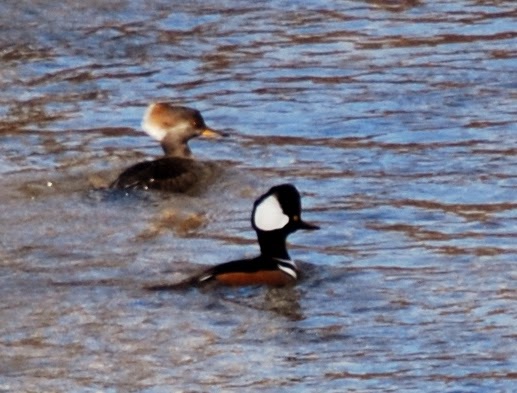
Towhees, red-winged blackbirds, and eastern bluebirds are back in abundance, and yesterday during my walk I spotted a pair of hooded mergansers swimming in our creek. They flew off upstream just out of sight so I crossed the property line and trespassed in our neighbors' hay meadow, which is still mostly brown and mucky from snowmelt, and while I carefully picked my way as quietly as possible toward the mergansers, I saw a pair of pileated woodpeckers climbing up either side of a tree trunk. Woodpeckers to the left of me, mergansers to the right--and right up the middle runs Hopeful, scaring them all away.

Good thing the dog can't scare away Spring!

Thursday, March 06, 2014

I shouldn't have to say this again, but someone wasn't listening!


1. "Works Cited" means what it says: a list of works that you have actually cited within your paper. There's a reason it's not called "Works Assigned" or "Works Vaguely Referred To" or "Works I May Have Heard My Professor Say Something about But Never Actually Opened Or Read." 

2. There is another way to start a sentence aside from "there is"; in fact, there are many other ways. Learn some verbs! More than one!

3. "Similar in some ways and different in others" is just boring. Don't bore me. I'm not happy when I'm bored, and you don't want unhappy hands controlling the gradebook. 

4. If I tell you a certain idea needs further development, I'm not asking you to restate the same idea three different ways without adding anything. That's not development; that's the written equivalent of a needle stuck in the same groove on a record. (I know you don't know what I'm talking about but I can't currently retrieve a more effective metaphor from my drivel-drenched brain.)

5. Plot summary is not analysis, and summarizing what I said in class is not even close to analysis, but if you're going to write an entire paper summarizing something I said in class, please get it right. Better yet, read the book! You might like it if you give it a try.
 

Wednesday, March 05, 2014

Zipping my lip (because I'm not Gordon Lish)

What can I say to my Creative Writing students? They're writing marvelous stuff and offering terrific suggestions during workshops, making all the points I would have made if I hadn't zipped my lip. By the time they're done, I have little left to say but "Carry on."

My writing workshop is very different from the one Carla Blumenkranz describes in "Seduce the Whole World: Gordon Lish's Workshop" (read it here). The legendary Lish "asked students to write to seduce him," explains Blumenkranz, and "if he really liked what you were doing, he might sleep with you, or he might publish your book."

That's not happening in my class,  and not just because I have no power to publish anyone's books and I cherish certain moral standards that disallow sleeping with students. I want my writing students to lure reluctant readers into their essays, but any seduction that takes place is strictly metaphorical. Of course, I'm not Gordon Lish, who, according to Blumenkranz, liked to keep his students off balance:
He created a situation in which each student had to approach him, like a stranger at a party or a bar, to see if she could catch his attention. Lish shot down these nervous suitors one by one, not even bothering to hear out the pickup lines they fretted over. Then he shifted in an instant to a masculine role: talking endlessly, enacting his charisma, awing his listeners into submission.
Again, not happening in my class. A writing workshop is where we work on writing, so if I'm "talking endlessly," something is wrong. I like to set them loose on a task and then get out of their way and let them run with it, which doesn't leave much room for "enacting charisma" or "awing listeners into submission." If they're going to be in awe of anything, it should be the power of words.

Lish seemed to love the aura of authority conferred by the professorial role, but I'm happiest in my writing classes when I'm sitting quietly as my students carefully read each other's work and offer insightful suggestions about how to improve. If they leave me little so say, so what? I may control the gradebook, but ultimately, they're not writing for me. They're writing because they are writers.
 

Monday, March 03, 2014

Is that your paper or the remains of your lunch?

Would I lie to a student in writing? Of course not. That would be wrong and awful and very, very bad. Nevertheless I confess that this morning I kept inserting this comment into certain students' drafts: "I'm sure you can find more about this in your notes from class."

It could be true. Some of my students take copious notes--I've seen them! But others, sadly, never crack open a notebook or pick up a pen in class. Some don't bring the textbook to class, and I'm afraid to ask whether they've bothered to open the book or, indeed, buy it. 

(You should have seen the blank looks on the faces of my students yesterday when I said that of course I expect them to do a bunch of reading over break: "You carry a book with you everywhere you go, right? So when you're stuck in a traffic jam or waiting at the dentist's office or standing in line at the bank you can read a few pages, right? Of course you do! Right?")

Some students sit through class after class with nothing on the desk in front of them except an early lunch. I suppose it's possible that a really dedicated student could gnaw some pretty good notes into the crust of a chicken finger, but I'm not betting any money on it.

So now I'm not surprised to be receiving papers that show no sign that the writer has digested anything from our class readings and discussions (except lunch). "You might find the phrase 'objective correlative' helpful here," I write. "I'm sure you can find it in your class notes."

Sure. Right. Look for it next to the chicken fingers.

Wild weekend, with white

What's all that white stuff?
I don't know which was more exciting: the Great Raccoon Rumble, the Sunday Morning Sing-Along, or the Monday Morning Massacre. Together they made for a pretty wild weekend.

The Great Raccoon Rumble occurred Sunday afternoon when everyone except me was taking a nap, so when my adorable grandbaby woke up and started chattering, I took her to the front window to look over a world covered with white. We were having a fascinating conversation regarding the activity around the birdfeeders ("Look, birds!" "Ta!" "Birds!" "Ah!" and so on) when I noticed just outside the front door a blur of fur that soon resolved itself into a raccoon.

It's unusual enough to see a raccoon in the daytime, but to see one right up on the porch is even stranger. I assume it was attracted by the birdseed, but soon our thrilling repartee ("Look, raccoon!" "Ta!" "Raccoon!" "Ah!") alerted the rest of the family, and then before you know it they were all out there wielding various weapons to try to scare away a raccoon that seemed set on staying. My son-in-law hit it with the slingshot a few times while my husband went scurrying around for the air-rifle, but by then the dog had discovered the intruder and had the situation well in hand. End result: dead raccoon, which we sincerely hope was not rabid.

The afternoon naps followed the Sunday Morning Sing-Along, which took place at two country churches suffering very low attendance. Only the most intrepid travelers braved the sloppy weather, which moved through various stages of rain, sleet, snow, and ice as the day wore on. I stood in the first service holding my granddaughter while my daughter held the hymnal and we all tried to sing, and soon little Lizzie joined us in her own special way ("Aaaah! Taaah!") while trying to turn the pages, close the book, climb over my shoulders, flop over backward, and otherwise infuse youthful energy into the situation.

I thought of the times when I used to attend two or three services every Sunday morning with my husband in the pulpit and me in the back pew with a two-year-old and an infant at my side and rarely any helping hand. I may have missed some important points in the sermon, but singing with babies makes my heart happy even when they don't know the words. My granddaughter is a girl on the move, much like her mother at that age, so while my daughter sang a lovely solo while I sat and held her squirming child (who added her own sound effects to the special number), it felt familiar, like coming home.

But then they left last night to go back to their own home and I watched the weather and waited for news, which arrived at 5:30 this morning: no classes before 10 a.m. and a Level II Snow Emergency, well deserved considering the ice hiding under that layer of snow all over the roads. I'm sure my American Lit Survey class appreciated the day off, but I'm struggling to adjust the syllabus so we can cover the material in a meaningful way. 

I could postpone the midterm exam until after spring break--but who wants to take an exam at 9 a.m. on the day after break? Instead, I'll opt to  give the midterm on Friday as scheduled but axe something from the reading list, and at this point the only options are William Faulkner's "Barn Burning" or Ernest Hemingway's "The Snows of Kilimanjaro." How can I delete either one of those from an American Lit Survey? I've only recently made peace with  chopping Henry James!

Finally I figured out a way to make my Monday Morning Massacre slightly less bloody: we'll discuss Hemingway in class on Wednesday and leave Faulkner alone. I'll chop Faulkner out of the required questions on the midterm but include him in an optional question, and I'll encourage students to discuss "Barn Burning" in online reading comments (since they were supposed to have read the story for this morning's class anyway). And I'll let Faulkner and James commiserate in the Authorial Afterlife, wherever that may be.

I'll tell my students to use their snow day wisely, but I'm just enjoying a little extra time to recover from my wild weekend. Snow--aaah!