Sunday, September 26, 2021

A full and colorful life (but now I need a nap)

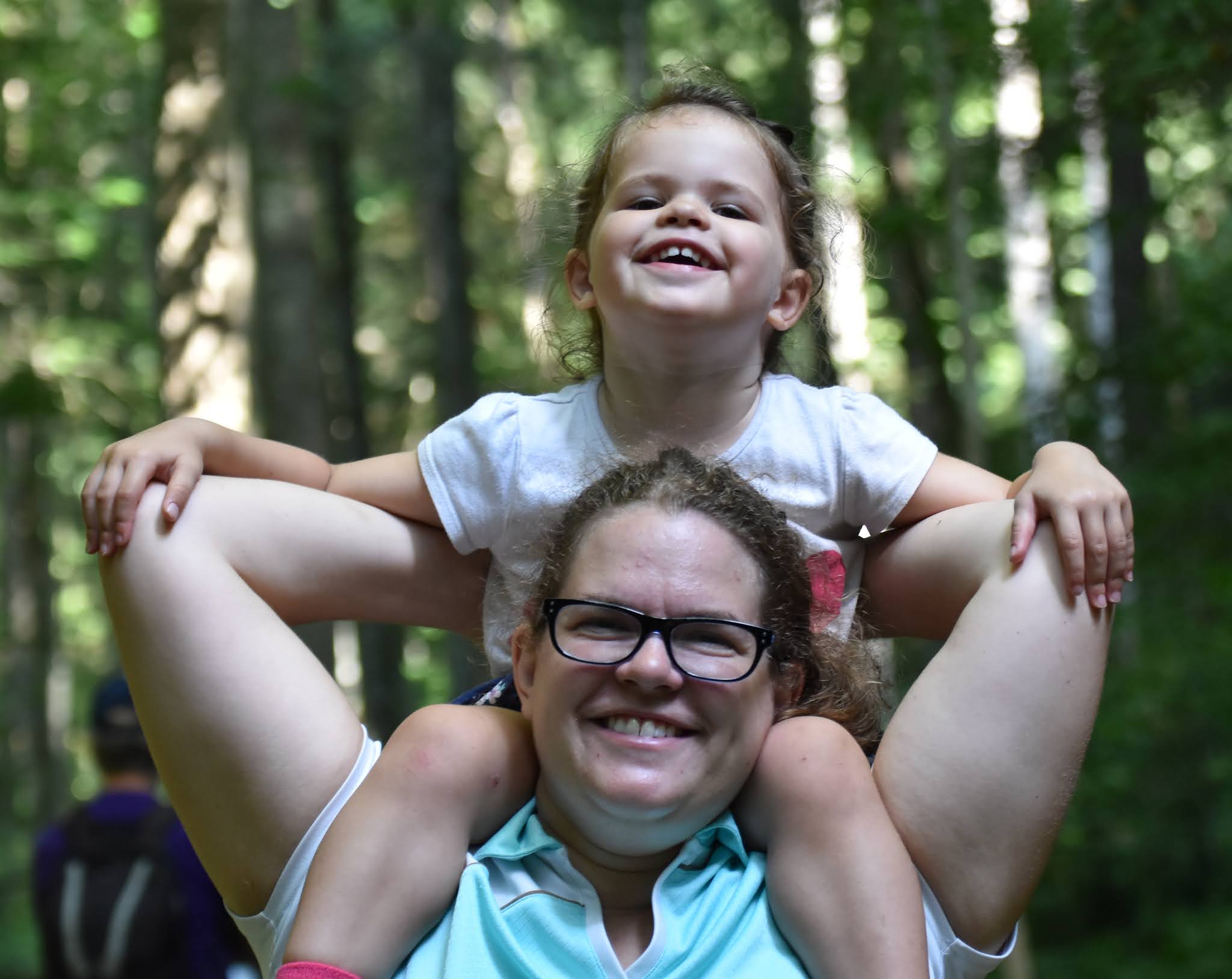
In just five days we managed to drive seven hours (twice!), stuff eight people into an AirBnb, eat way too much junk food, attend my nephew's wedding, watch my adorable granddaughter dance with Daddy and Grampa, eat a slice of the world's best wedding cake (apple spice!), sing Happy Birthday to my dad, hang out with both of my brothers for the first time in years, watch the grandkids splash in a pool that set their teeth chattering, and even teach an online class--and then come home to a new concrete front-porch slab! I'm having a full life over here, so full that I don't have time to write about it, and now I need to try to catch up on all my course work so you'll have to make do with photos.


With my brothers.

I guess we clean up well.

Cousins!


Great-Grampa had lots of help with his birthday gifts.


Taking Grampa out for a spin.

Dancing with Daddy

A feat of cheese engineering.


Some handsome dudes.

Beautiful wedding venue.


Monday, September 20, 2021

Mapping the imaginary

I showed my Honors Lit students a map of North Carolina this morning, but it was a singularly uninspiring map: here is Raleigh; here is Cold Mountain; here is a long stretch of state in between the two. The map comes alive only as we read Cold Mountain, following the footsteps of Inman as he walks across the state on his long homeward odyssey; students will follow Inman's internal map layered over William Bartram's descriptions of the state and the smaller maps other characters provide. "Island can only exist / if we have loved in them," wrote Derek Walcott, and I hope my students will love Cold Mountain enough to develop a vivid internal map, although it's just as likely that they won't.

My Postcolonial Lit students, on the other hand, showed me maps they'd made illustrating contexts of various works we've read so far this semester. Some of the maps are rudimentary, and I grade them on the quality of the information presented rather than on artistic merit, but a few stood above and beyond the rest. How, for instance, do you draw a map of a book of poems Chris Abani wrote about his time confined in a Nigerian prison? A talented student drew the outline of Nigeria, marked the places where Abani was born and imprisoned, and filled in the rest with important words from the poems. In the center is a small barred window filled with a work of art by Viktor Ekpuk, and together the art, map, and words evoke the freedom of creativity within captivity. Lovely.

Another student mapped Paule Marshall's short story "To Da-Duh, In Memoriam," in which a small girl travels to Barbados to visit her grandmother, who cannot believe the child's stories about life in New York City. The student juxtaposed maps of Barbados and New York, with the island map showing what the grandma loves the most--her house, her garden, the tall hill nearby. From the New York map, though, the Empire State Building throws its long shadow across the sea to hover over the island, a visual reminder of the way progressive urban values overshadow and ultimately overwhelm Da-Duh's agrarian island life.

When we shared these maps in class last Friday, students commented on how vastly the maps differed, even though some were mapping the same literary work. I reminded them that every map is an interpretation, pointing us toward the map-maker's values as well as the real world; these maps, though, are especially subjective because they focus on works of the imagination. A good map leads us to a destination, which is difficult enough when that destination is a point on the globe but infinitely more difficult when the destination exists outside the realm of gps. Who can map a poet's mind? Who can map the outline of abstract concepts? 

And how do we map the places that exist only because we have loved in them?

Wednesday, September 15, 2021

The Inland Island and the illusion of escape

I went for a walk to help me think last evening but found my ruminations interrupted by mosquitoes. Pesky critters--how am I supposed to think deep thoughts when I'm being dive-bombed by blood-thirsty vermin?

On the other hand, blood-thirsty vermin of a different sort play a part in the book that inspired my deep thoughts, The Inland Island by Josephine Johnson. The book had been recommended as something I might want to assign in the place-based class I'm teaching next semester, and while every description of the book makes it sound ideal, I found it deeply frustrating.

The Inland Island, published in 1969, recounts a year in the life of a plot of ground outside Cincinnati, Ohio, and given my longtime interest in nature writing and the Midwest region, it's surprising that I'd never read the book before. It earns high praise for its lyrical descriptions of nature, but Johnson occasionally interrupts those pastoral passages with sharp criticism of events taking place outside of her rural refuge: the Vietnam War.

The contrast is jarring--peaceful description of spring wildflowers followed by sudden images of children burning--and it reminds me of nothing so much as a poem by James Wright, "Lying in a Hammock at William Duffy's Farm in Pine Island, Minnesota" (click here), which transports us to a lyrical pastoral moment until the final line: "I have wasted my life." An interesting insight, but it's so unearned and abrupt that it feels like someone has flipped the hammock and dumped us unceremoniously on the ground.

As I was walking and swatting mosquitoes last night, I thought of other works that combine lyrical descriptions of nature with deep thoughts about philosophy, theology, or the human condition. Take Walden, for instance, or if you want something more recent take Annie Dillard's Pilgrim at Tinker Creek or Amy Irvine's Desert Cabal: the descriptive and ruminative passages are so intimately intertwined that you can't separate the strands; pull on one thread and it's all knotted up with everything else.

The Inland Island is different, and that difference is apparent in the title: the author's rural refuge is so separated from the outside world that the occasional dispatches from that world feel intrusive, disconnected, unearned. She could have found more effective ways to link the two worlds, but maybe the separation is the point: we need to retreat to a pastoral refuge to escape the horrors of everyday life. But when those horrors keep intruding despite our attempts to escape, it's hard to know where to turn.

I'm thinking of assigning one or two chapters of the book in my class next semester but I'm not sure what my students will make of those sudden irruptions of violence. Et in Arcadia ego, I'll tell them, and they'll look at me as if I'm nuts, which maybe I am. I don't particularly like the book, but sometimes we need to be reminded that even the loveliest setting might include mosquitoes.

Monday, September 13, 2021

Someone wake me when the fun starts

It's hard enough trying to teach classes when I'm wide awake--teaching in my sleep is darned near impossible. Nevertheless I keep trying to do it, tossing and turning in bed at night while my mind races to resolve all the issues arising over the next couple of weeks.

It's a tough part of the semester anyway, with all four classes turning in drafts or papers this week, one class preparing for an exam, all of this week's drafts being revised for resubmission next week, and the usual daily class preps. But then everything got way more complicated when my nephew scheduled his wedding for next Thursday and my family decided that it would be nice to celebrate my Dad's 88th birthday next Friday since we'll all be together anyway, and now I have a long drive to North Carolina and a whole lot of fun activities interrupting my already busy week.

So this week I need to respond to a pile of papers and prep next week's classes, including online activities for the two days I'll miss, but then I also need to prep classes for the Monday after I return from North Carolina since I won't want to do all that class prep on the road regardless of who's driving. It feels like three weeks of work being compressed into a few days--days already busy with papers demanding responses--and all that compressed work keeps contorting in my brain all night long.

This morning I took steps, trying to do all the things that can possibly be done before the papers start flooding in. I set up online activities for two classes. I wrote a study guide, wrote most of an exam, got all my ducks in a row for classes for the rest of this week. And now I need to start responding to student drafts, because I've scheduled one-on-one conferences with my first-year writing students for the next four days. 

And what about outside of class? I need to buy a dress for the wedding (but all the local stores I usually rely on have closed!), find wedding and birthday gifts, catch up on some mowing--and oh yeah, the guy who's replacing our front porch slab is slated to demolish the old one next Monday and pour the new one on Tuesday. If I do any sleep-walking that night, I'd better not wander out to the front porch.

All this fuss is leading up to what ought to be a delightful series of events, the whole family together for the first time in years, but I won't get to enjoy the fun until I move all the obstacles out of the way first--and if I can't find a way to do it while I'm awake, my subconscious is happy to take over at night.

Good thing I don't need to be mentally alert to read student drafts. (As if!)


Wednesday, September 08, 2021

Overheard in the hallway

Prof 1: Yeah, my students are a little needy, but I'm just trying to listen and be even nicer than usual.

Prof 2: I'm tired of nice. I just don't have the energy for nice.

Prof 1: But you've got tenure--you don't have to be nice! 

If only it were true....

Tuesday, September 07, 2021

My dream semester

I confess that my mind wandered during our department meeting yesterday as we were trying to assemble a schedule of English course offerings for the next two years, a task just as scintillating you might imagine. While the discussion hovered over issues outside my bailiwick, I asked myself a question: What courses would I teach if I could put together my dream schedule?

Course scheduling is like a jigsaw puzzle in which everyone holds tightly to certain beloved pieces while others lie neglected in a heap, and the complete picture won't come together without compromise and cooperation. We need enough composition classes, enough intro-level literature classes, enough upper-level classes, enough writing courses, enough service courses to make everyone at least partially happy. No one gets to be entirely happy all the time, but we're all willing to trade in a little happiness for the good of the order: I'll move my class to a different time so it doesn't compete for English majors with yours, and you'll move that upper-level class to spring semester so it doesn't compete with mine, and we're both moderately content.

But what would I teach if I didn't have to think about anyone else's needs, if I only had to please myself? What would my dream schedule look like?

It would start small: Only three classes instead of four. The four/four load becomes more exhausting every year, leaving little energy for writing, research, service commitments, or out-of-class activities like field trips. My dream semester will include only three classes, which means I'll have to sacrifice first-year composition. I don't mind teaching composition every semester and I think I'm pretty good at it after all these years, but if offered the opportunity to drop one course without repercussions, I would drop composition without a moment's regret.

Instead I would teach the upper-level writing course I haven't been able to offer for years: Nature Writing. Imagine spending a semester reading and writing about nature with advanced writing students! If I could bump a colleague's writing course to make room for Nature Writing without risking any hard feelings, I'd do it--but again, we're just dreaming here. 

So dream on: How about a Representative American Writers course focusing on Natasha Trethewey and Amit Majmudar? My upper-level courses generally focus on fiction, but spending a semester with these two very interesting contemporary poets would be a nice change. Both poets plunge deeply into the American experience for people of color, and both engage in formal experimentation to produce poems ranging from playful to somber. I would gladly spend a semester in such good company, if enough students would sign up for an upper-level poetry course.

And for my third course, I would love to reproduce my favorite teaching experience ever: the California Lit class that included a spring break trip to California. I wouldn't have to go to California; I could teach Florida Lit or Chicago Lit or literature focusing on some other area where I'd love to take students. Since we're dreaming, let's locate this dream semester at a time when Covid no longer makes travel so unpleasant, and let's imagine that I can find sufficient grant funding to make the trip affordable. It's hard to believe, but in 2011 my California Lit students each had to pay only $850 to cover their share of the cost of six days in San Francisco and Monterey, which covered airfare, lodging, admission to attractions, and some meals. The rest of the cost was covered by grants, and it's a good thing my dream semester includes only three classes, because a trip like that takes a lot of time to plan and finance.

So there's my dream schedule: Nature Writing, Trethewey/Majmudar, and a Concepts of Place class including a trip to somewhere interesting. What would have to change to make such a schedule possible? 

Well, I would. I would have to stop caring about what my colleagues want and what my department needs, and I would have to think only about what makes me happy. So maybe I'll save up this schedule until I'm ready to retire and then go out with a bang. By then the four/four load may have reduced me to nothing more than a composition-teaching robot, but a girl can dream, can't she?

Friday, September 03, 2021

At one with wonders

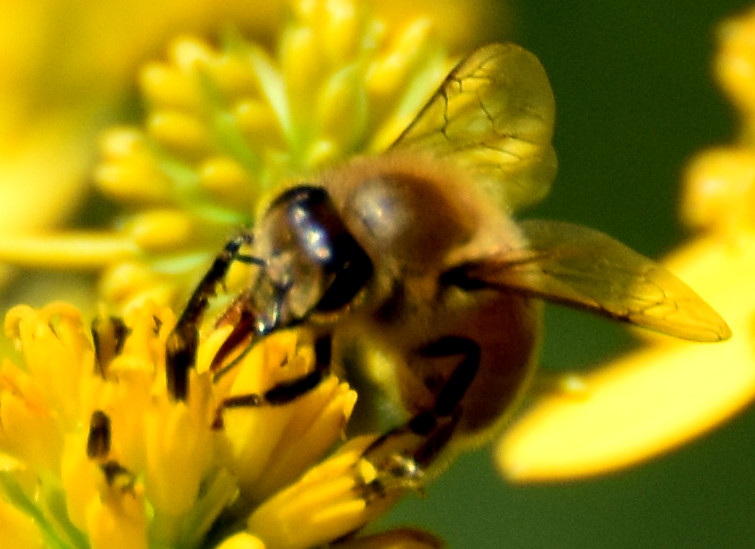
If you want to see wonders, stand still in the middle of a summer meadow and wait for a flash of movement and then follow the movement with your eye wherever it goes, turning as the bright flash of butterfly or bee flits hither and yon until it finally alights on a sunflower or ironweed blossom or tall scraggly weed, and if it never lights but keeps flying you'll still see wonders--the play of light and shadow on a milkweed pod or the deep purple berries hanging like strings of jewels from pokeweed stalks--and the fluttering of butterfly wings and buzzing of bees make you merge with the meadow to become an extension of the sunshine itself.


Photos from the Luke Chute Pollinator Habitat yesterday afternoon.


Tuesday, August 31, 2021

Nothing doing

If I could save time in a bottle--and there's an invention that's bound to earn someone a fortune someday--I'd take a solid hour out of this afternoon and mail it to myself about two weeks from now when I'll have a pile of drafts on my desktop demanding immediate attention and no time to attend to them. What is the point of office hours this early in the semester? No one really needs me right now and I'm thoroughly caught up on my work. I even spent some time this morning revising an essay but I still have a full hour to spend in my office waiting for nothing to happen.

Not that I'm complaining. Nothing is not a bad thing to have happening right now, considering all the somethings that could be happening. Hurricanes! The Delta variant! Cleveland Indians players getting injured! I keep reading about academics on other campuses agonizing over the absence of mask mandates and difficult decisions about whether to send their own children to school and I'm thankful for the relative sanity we're experiencing right here.

Not that everything is peachy. My literature classes are much smaller than usual, attesting to the marginalization of literary study in the general education curriculum, and I'm having the usual problems getting students to engage in discussion. I'm spending way too much time reminding first-year students to pull their masks up over their noses, and then I'm getting glares of contempt that make me sympathize with the 88-year-old psychology prof in Georgia who retired in the middle of class when a student refused to put on a mask. We have compliance here, mostly, but masking is another exhausting thing to have to think about all the stinking time.

And don't even get me started on the weather! I arrive here in the morning feeling as if I'm swimming through heat and humidity, and then in the afternoon I drive home through rain so heavy that I can't see the road. Two days in a row I've had to pull over and wait for a pause in the deluge, and tonight we've got flood warnings. I'd better take my laptop home--if our driveway washes out, it could be a while before I get back to campus.

But the fact that I have a whole empty hour this afternoon suggests that things are, on the whole, pretty good, all things considered. We've survived the first week of classes without any major meltdowns and we're well on our way through the second. Last year getting through a week of teaching felt downright heroic, but this year it's just another check-mark on the calendar, just more water under the bridge. (But let's hope it stays under the bridge because I don't have time to deal with a flood right now.)

Friday, August 27, 2021

Going bananas in the first-year classroom

At the end of a lively activity in my first-year composition class today, a student turned to her discussion partner and said, "You've convinced me to feel slightly less horrible about bananas." Progress is being made!

The students had read about the importance of listening to others before entering a discussion, and I wanted them to practice their listening and persuasion skills in small groups. First, though, they needed a topic to discuss, but I didn't want to let them get sucked into the black hole of highly controversial topics currently causing so much cultural division. Instead, I asked my students to write down a strongly held opinion related to food.

Everyone eats, right? And everyone feels strongly about certain aspects of eating--just ask a mixed group whether a can of carbonated beverage is soda or pop and see what happens. Based on what I heard in class today, it appears that my students feel very strongly about pizza toppings, energy drinks, potato chips, and, of course, bananas. ("They're mushy and gross," says one; "they're colorful and full of potassium," says another.)

Students had to write down three reasons supporting their opinion, explain their opinion to a partner, and then write a brief summary of the partner's argument just to make sure they'd listened closely. Next, the fun part: imagine that you strongly disagree with your partner and present reasons supporting your disagreement. Finally, find some common ground, some point on which you can agree. ("Bananas are a pretty color!")

This was a very basic low-stakes activity, but it got my students talking to each other about a nonthreatening topic--and listening too, which was the whole point. With so much rancor surrounding us in the media and elsewhere, it was fun to hear my students passionately argue in favor of potato chips or against fruit on pizza ("But tomato is a fruit!"). They got to know each other better while practicing listening skills; I got to learn a little more about my students, and no one came to fisticuffs. 

Were minds changed? Maybe not, but at least that one student feels a little less horrible about bananas. Baby steps, people! Baby steps! 


Wednesday, August 25, 2021

Notes from the IOF corner

Halfway through the first week of classes and I'm already worn out:

1. Textbook problems! Way back last spring I ordered a new composition text with readings, but the bookstore instead stocked the same text without the readings, and when I called the bookstore manager to get it straightened out so my students would have the text they need, he said well we have the correct text in stock but it just isn't listed as required for your class, which makes no sense since I ordered the correct text and marked it as "required." Now all the students who bought the wrong book have to take it back and exchange it for the right one.

2. Tech difficulties, not horrible but distracting all the same. I'm not using Zoom in classes this semester (unless...you know the drill) so starting class requires far fewer clicks than last year, but that doesn't mean everything is smooth sailing. I'm using a different type of online discussion in one class and I didn't get the settings quite right so none of my students could access it for today's discussion. I woke up in the middle of the night suddenly understanding what I'd done wrong and how to fix it, but I don't generally take my computer to bed so I couldn't do anything with it until this morning.

3. New masks! One style makes my glasses fog up so I can't see what I'm doing in class; the other style feels much flimsier but doesn't make my glasses fog up. It wears me out to have to make these life-or-death decisions every stinking day.

4. Emails! I'm not the only one having a rough start to the semester. I'm responding as quickly as I can but I sense a lot of anxiety among students who are panicking about every little thing. One student wanted me to summarize the entire plot of Homer's Odyssey, to which I responded, "You could easily go and read a plot summary online, but then you would miss out on the most valuable part of the learning experience: immersing yourself in an unfamiliar world and feeling your way around until it starts to make sense. If you feel lost, you're probably in the right place. It will become more clear the more time you spend there." I hope this is true.

5. I've been realizing for the past couple of years that my opinions and experiences are becoming increasingly irrelevant to the current academic climate. I try to stay up-to-date on what's happening in my field, but nevertheless I feel a steady but subtle pressure pushing me gently toward the Irrelevant Old Fart corner, and there's nowhere to go from there but out the door. This is the way the career ends, not with a bang but a whimper.

Monday, August 23, 2021

First-day-of-class fumblings

I had set my first-year composition students to work writing about their personal goals when a student raised his hand and asked, "Are we allowed to use first person?" Part of me wanted to point out that it's really difficult to write about our own experience without using I, but mostly I wanted to celebrate: He knows what it means to write in the first person! He's not an ignoramus!

Of course I don't expect my students to be ignorant, but on the other hand, we've been warned that this year's first-year students have faced educational disruptions during the pandemic and may have arrived on campus woefully unprepared for college-level work. On the other hand, maybe their pandemic experiences built their resilience and self-regulation; maybe they were forced to strengthen just the kinds of skills that will serve them well as independent learners. I mean, who knows? It would be a mistake to draw conclusions prematurely about what kinds of students this past year has produced. I'd rather see some evidence first.

Based on the evidence I've seen so far--two first-year classes first thing in the morning, two upper-level classes later in the day--all I can say for certain is that they were all present and followed directions. I did have to remind a few students to pull their masks up over their noses, but otherwise they were model students. But they all have reading and writing assignments due Wednesday, which will provide more evidence about essential skills like reading and writing and following instructions. 

As for me, I'm already worn out after only one day of classes and I still have to stick around for a department meeting this afternoon. I put up some new photos of my grandkids in my office to infuse the place with youthful joy, so now I can get to work reading my students' first-day-of-class writing while surrounded by happy grandkid smiles. There's nothing to despair about today, but ask me again in a couple of days and I'll be the first person to let you know. 

Friday, August 20, 2021

In the surreal world of Health Insurance Math

I spent a big chunk of my afternoon yesterday in an alternate universe where all the math rules we learned in elementary school no longer apply, and trust me: you don't want to go there, but someday you probably will. It goes something like this:

Me: I switched all our prescriptions from a 30-day supply at Pharmacy A to a 90-day supply at Pharmacy B, as instructed, but my husband's cholesterol medication went from $16 a month at the old pharmacy to $214 for three months at the new pharmacy. That doesn't add up.

Cheerful Health Insurance Person (hereafter CHIP): Well why would you make the switch if it costs more?

Me: Because I was told we were REQUIRED to switch to a 90-day supply at Pharmacy B.

CHIP: Well, you're not actually REQUIRED to switch. You have to switch only if you want your prescriptions to be covered by your health insurance plan.

Me: And why wouldn't I want our prescriptions covered by our health insurance plan?

CHIP: Because some of them will cost more.

Me: Then what's the point of having health insurance?

CHIP: The deductible! If you pay $214 for a 90-day supply at Pharmacy B, it counts toward your annual deductible, but if you pay $16 each month at Pharmacy A, it doesn't.

Me: Listen, if you add up my husband's medical expenses for his whole entire life, they wouldn't add up to our annual deductible. You want me to pay that much more for a prescription on the off chance that this is the year that he'll get hit by a heart attack or a brain tumor or a crosstown bus?

CHIP: Well, I may be able to get the price lowered with a coupon. I'll call the pharmacy and see what I can do.

[Time passes. I still can't do the math. The phone rings again.]

CHIP: I figured out the problem: you would pay less if your husband took more.

Me: Um, what?

CHIP: I have this coupon that allows Pharmacy B to lower the cost of the 20-milligram tablets to $55 for a 90-day supply. Unfortunately, your husband is taking the 10-milligram dosage, which is still $214 for a 90-day supply.

Me: So a 10-milligram tablet costs four times as much as a 20-milligram tablet?

CHIP: That's correct.

Me: Four times the cost for half the dosage?

CHIP: Right. I asked them whether he could get the 20-milligram tablets and cut them in half, but they said he can't.

Of course he can't. That's the kind of math we teach in elementary school: Cut this large thing in half and you get two things, each half the size of the original thing. We need to start telling kids that each half is worth four times the value of the original or they'll never make it as far as Health Insurance Math, which I'm convinced is designed to deter customers from ever asking questions about anything.

In the end we moved the prescription back to Pharmacy A, where he will continue to pay $16 a month that won't count toward our annual deductible. Then again, out-of-pocket medical expenses can be deducted on our taxes, provided that we itemize...and here we approach the surreal world of Tax Math, and trust me: you don't want to go there.

Monday, August 16, 2021

There will be yelling

Suppose you're hard at work in your office on a Sunday afternoon in a quiet campus building; you have to step just a few doors down the empty hallway to the ladies' room and you don't even bother putting on a mask because you're convinced that you're the only person in the building, but then you open the door to the ladies' room and see a man staring at you.

A strange man!

In the ladies' room!

I may have been a little bit startled. Okay, there may have been a modicum of yelling and jumping involved, but you'd be startled too if you saw a strange man where he didn't belong in a building you thought was empty.

A very strange man, in fact. It took me a moment to register that he was not a living, breathing human being at all but a cardboard cutout of Robert Pattinson--not someone I'd expect to encounter in the ladies' room of my campus building. Not sure what he was doing there but this morning he was gone. Maybe the yelling scared him away.

The thing is, I really wanted to do some yelling in my office Sunday afternoon. After years and months and days of working very hard to coordinate the efforts of more than 30 scholars, I finally put the finishing touches on the collection of essays I'm editing on teaching comedy, and I sent the whole mess off to the publisher with a very satisfying click. At that moment I might have appreciated a whole lot of hurrahs and confetti and drum rolls and applause, but it's hard to get appreciation from an empty building. 

In fact it's hard to get anything from an empty building except bored, so I suppose I should be grateful for the brief break in my dull routine that brought Robert Pattinson so unexpectedly into my life. Yes, there was yelling, but not quite the kind I'd expected. 

Friday, August 13, 2021

A finger in the dike

Finally, a resolution to our very fluid mask policy! Shortly after I posted yesterday, the Powers That Be issued a mandate requiring that masks be worn inside buildings on campus, starting today. This will replace the official [INSERT POLICY HERE] policy, which is a tremendous relief. A uniform mask policy will be less confusing and easier to enforce than a patchwork of separate policies differing across departments.

Like many professors, I'm glad I'm not at the University of Iowa right now, where the administration tried to prohibit faculty from even talking about masks or vaccines with students (read it here). According to Inside Higher Ed, the original order "said instructors 'may only make statements regarding mask usage or vaccinations in the context of course material discussions of health-related issues.'" If staying alive during a pandemic is not a health-related issue, I don't know what is.

In other teaching-related news, I finally found some new teaching shoes. They're ugly as sin, well deserving the term clodhoppers, but I ought to be able to stand up in them through four classes without massive foot and ankle pain. Gone are the days of cute teaching shoes! I'd rather be sensible than suffering.  

But maybe I can make up for it with some cute masks. The new mask policy is a finger in the dike of a very fluid situation, but until this flood dries up for good, I'm going shopping. 

Clodhoppers. Not cute.


Thursday, August 12, 2021

Embracing the fluidity, sort of

I keep getting emails telling me everything is fluid right now, a great description of the current state of my sinuses, which insist on reminding me of the power of ragweed pollen, that tiny particle that makes the entire content of my skull flow like Niagara Falls down the back of my throat. 

But the emails are not talking about my sinuses; they're talking about campus pandemic policies for fall semester, which begins one week from tomorrow. Those of us diligently working on syllabi (instead of putting them off to the last minute) were delighted, therefore, to receive an updated mask policy that must be included on all syllabi--until we actually read the policy statement, which consisted of a whole bunch of please-don't-sue-us language followed by [INSERT DEPARTMENTAL POLICY HERE].

I wish I were making this up, but alas, no: our official mask policy looks like a proofreading error. I suppose I could simply copy and past [INSERT DEPARTMENTAL POLICY HERE] on my syllabi, but then I'd be the one looking incompetent. (Could this be an administrative attempt to kick the incompetence can down the road?) A follow-up email from the Powers That Be said that yes, we will have a more specific policy eventually but we need to be patient because everything is so fluid right now, which makes me hate the word fluid with every cell in my body, including the cells that are so worked up right now about fighting off ragweed pollen. 

But there's nothing to be done at this point but to blow my nose and wipe my weepy eyes and embrace the fluidity, but have you ever tried giving Niagara Falls a big 'ol hug? Goal one for fall semester: embrace the fluidity without getting dashed to pieces on the rocks. It's a start.


Tuesday, August 10, 2021

A hand in the dark

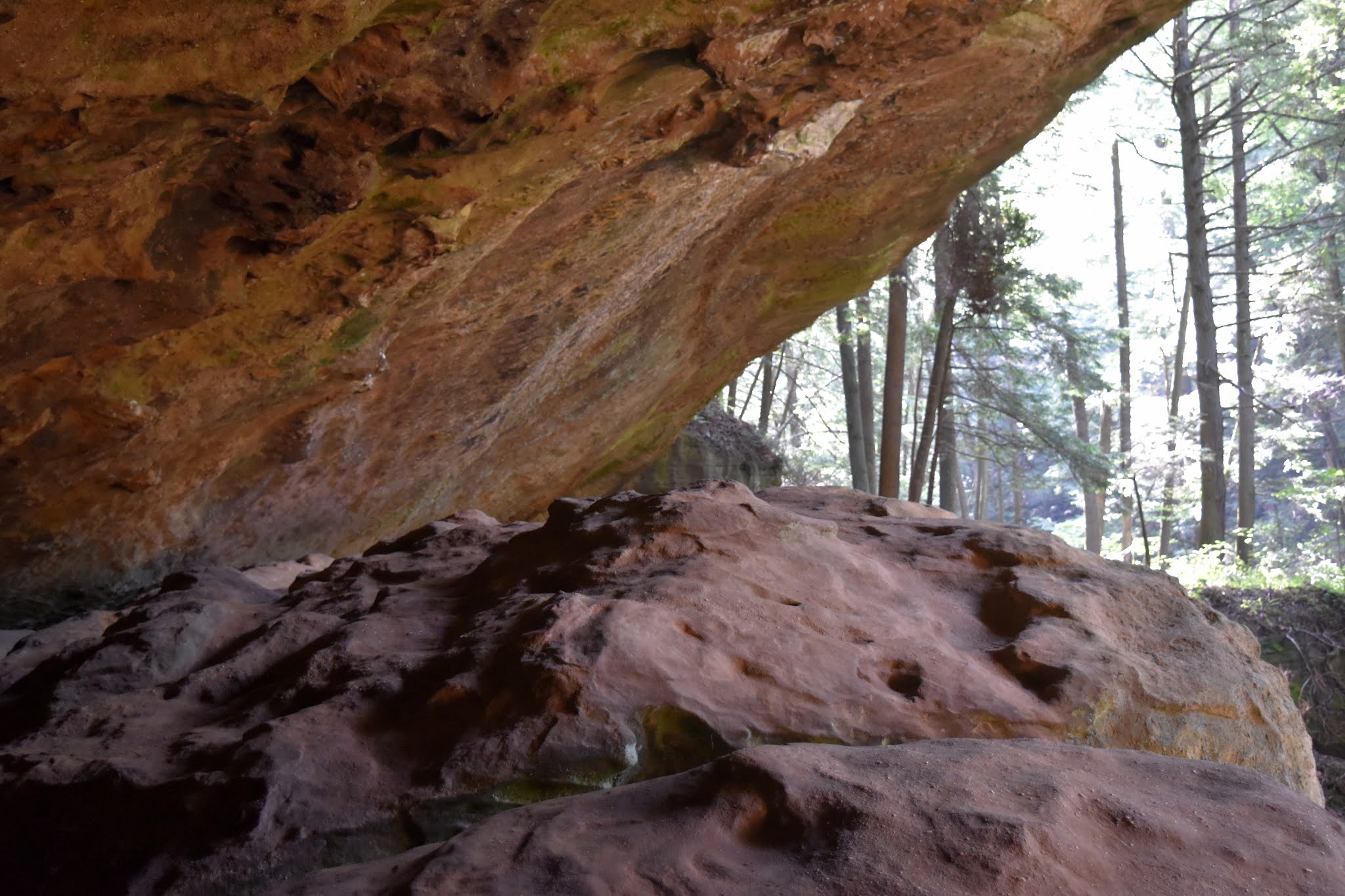
Fearlessness and energy abounded yesterday as our grandkids scrambled like mountain goats over rocks and ridges while making their way to caves at Hocking Hills. Meanwhile, I scrambled to keep up but often failed. They marveled over bugs and fungus, admired the caves, and played in the sand, but only one thing slowed them down: going through a dark tunnel through the rock on the trail to Old Man's Cave. The two older kids entered first, holding hands with each other, but soon they were reaching back in the dark to grab my hand. If my grandkids reach out for a hand in the dark, I'm happy to help--and they pay me back in smiles that keep me forging ahead even when the path is difficult. 


It's really not possible to capture the grandeur of the big caves in a photo.


Dancing in a cave


Saturday, August 07, 2021

Feeding on late-summer limbo

A doe and two fawns have been hanging around our yard lately, and yesterday morning I saw them nibbling amongst the tomato plants. That explains a lot. This year it seems I'm raising a garden to feed the wildlife and putting out bird-feeders to give the raccoons a challenge. And then one of my hummingbird feeders sprung a slow leak, which a horde of bees discovered before I did. I can't get close enough to take down the feeder without disturbing the bees, and one thing I don't want to do right now is disturb a horde of bees.

So I left 'em alone and went to Jackson, where this morning we saw some deer out at Lake Katharine and heard a whole lot of quiet. When the songbirds take a break, the woods just feel emptier. We saw rattlesnake plantain blooming in several places, their tiny white blossoms barely visible at the end of a narrow stalk. Otherwise it feels like the whole place is at rest, just gathering energy for the next big show--the fall color season.

Early August is a limbo time even when I'm not in the woods. I've finished much of my summer work and I can't get back to my course preps until I get some more clear guidance about teaching conditions. I'll enjoy some fun grandkid time over the next couple of days but then when I get back to campus, the hiatus will be over and it will be all systems go.

So it's nice to let all systems stop for a little while. Let the bees, fawns, and raccoons enjoy their feast; I'm baking zucchini bread.


Rattlesnake plantain orchid


Tuesday, August 03, 2021

Earning a perfect 10 on the birthday-cake floppage scale

I knew the exact moment when I ruined my son's birthday cake this morning: I'd rushed and mishandled the chocolate so that it wouldn't combine properly with the egg whites. If I were on the Great British Baking Show, I would have dumped the whole mess in the trash and started over, but I'd already used all the chocolate and I didn't want to drive to town to buy more and I don't have multiple mixers and bowls or a staff to clean up my messes and I just didn't have time to deal with it, so I guess my son is getting a flop cake for his birthday. I'll spoon some cherries and whipped cream on top. No one will ever know what it was supposed to look like.

Except me, of course. Always my own worst critic.

The reason I didn't have time to start over is that I'm scheduled for a long-delayed mammogram today, a prospect that fills me with what I would call The Twisties if I were an Olympic gymnast flinging myself into the air instead of a harried mom trying to fling together a birthday cake. Nobody gets a mammogram for fun, of course, but the prospect of being manhandled and brutally smooshed fills me with an internal twisting that makes it hard to concentrate on mundane matters like the right method for melting chocolate. 

I should have known better than to try to do anything requiring coherent thought on a day when I have a mammogram scheduled. Like many people, I postponed basic medical care during lockdown, so this summer I've been catching up on eye exams and dental care and routine diagnostic tests. Someone should create a routine diagnostic test to measure how the prospect of getting routine diagnostic tests can disrupt a person's mental state, as measured on a scale of birthday-cake floppage. Dental x-rays: no disruption at all; a beautiful and delicious cherry-filled Swiss roll results. Eye exam involving puffs of air, bright lights, and dilation: moderate disruption resulting in a flattish cake with droopy layers. Mammogram: maximum disruption resulting in a so-called "cake" that's unrecognizable and possibly inedible.

Fortunately, my son is a full-grown reasonable person unlikely to throw a tantrum over a ruined birthday cake, but that won't stop me from apologizing about a million times, even though it's not entirely my fault. I could blame the mammogram, but what does my son know about that kind of--well, discomfort hardly does justice to the situation. Garage door slamming down on your most sensitive bodily parts is more accurate but who wants to imagine such a thing over supper?

Let 'im eat cake. Even a flop cake is better than no cake at all, and whipped cream can cover a multitude of sins.